St. Augustine-Florida

Jul-30-2021

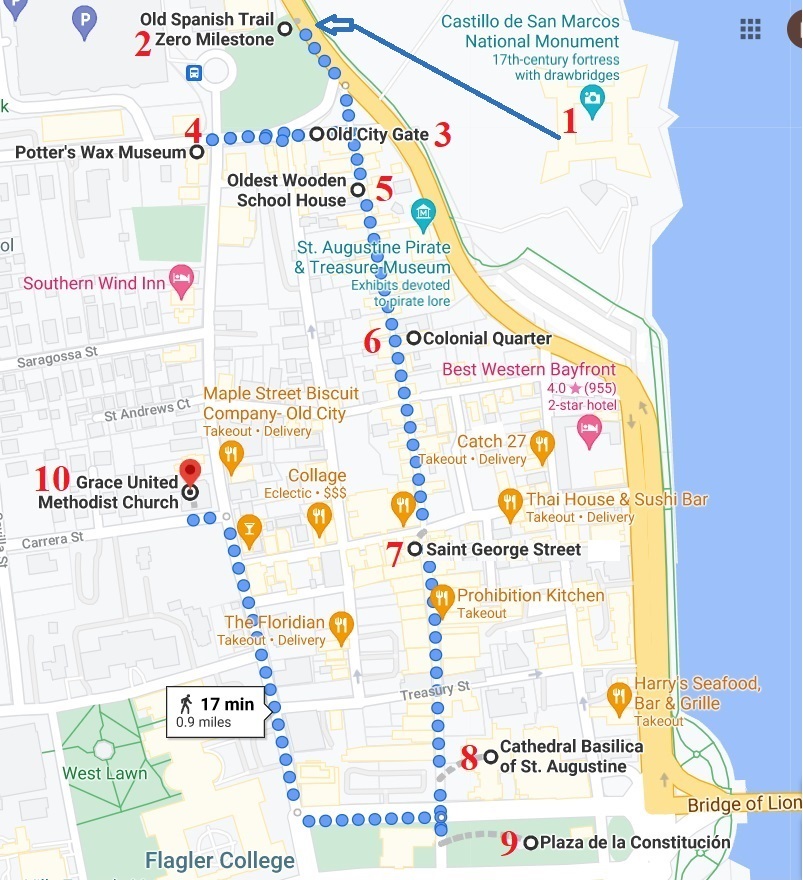
Old Downtown Part I: North.

St. Augustine is considered the oldest, permanent European settlement in the USA. It’s not a huge city area-wise, but it is filled to the brim with amazingly beautiful historic sites and attractions! This tour begins in the north at the Castillo de San Marcos fort and makes its way through the heart of the city-center, ending at the Grace United Methodist Church, where the next tour picks up if you’re interested in doing them back to back.

Guide Type: Self-guided Walking Tour
# of Attractions: 11
Tour Duration: 90 Minutes
Travel Distance: 1.6 Km or 1 Miles

Sights Featured in This Guide:

  • Castillo de San Marcos
  • Old Spanish Trail Zero Milestone
  • Fuentos de los Canos de San Francisco
  • Old City Gate
  • Potter’s Wax Museum
  • Oldest Wooden Schoolhouse
  • Colonial Quarter
  • St. George Street
  • Cathedral Basilica of St. Augustine
  • Plaza de la Constitucion
  • Grace United Methodist Church

https://goo.gl/maps/jWKSrFWtULbi4bWF9

1) Castillo de San Marcos
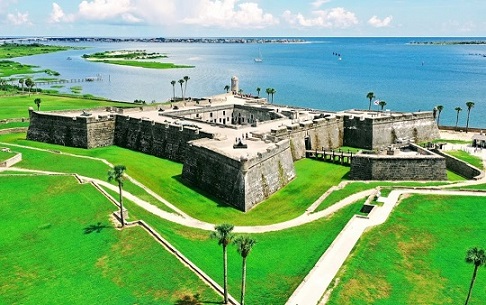
The oldest masonry fort in the continental United States, the Castillo de San Marcos is a large Spanish stone fortress built to protect and defend Spain’s claims in the New World. It’s a National Monument and, at over 315 years old, it’s the oldest structure in St. Augustine. It’s also one of the main attractions visitors to St. Augustine come to see

Passes to the Castillo may be purchased at the ticket booth on site (open from 8:45 a.m. to 4:45 p.m.) or online. Adults (16 years and older) $15.00 per person.

The metered parking lot at the Castillo allows visitors to park there and visit the city.

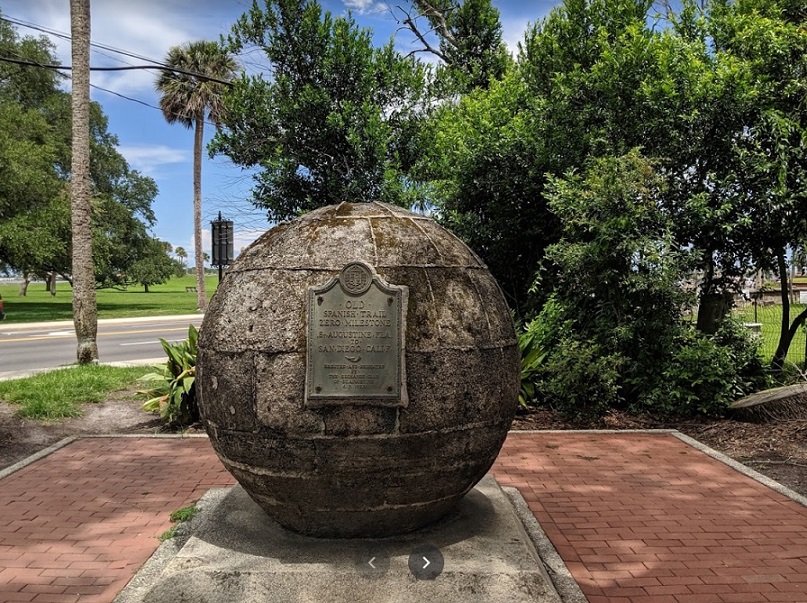
2) Old Spanish Trail Zero Milestone

In the 1920s, an ambitious transcontinental road project linked St. Augustine and San Diego. Called the Old Spanish Trail, Route 90 provided Jazz Age motorists easy access to the gracious towns strung along the interior of North Florida and beyond.

The Old Spanish Trail (OST) transcontinental highway was one of the most prominent and persistent American auto trails. It connects the old Spanish colonial towns of St. Augustine, Florida on the Atlantic coast and San Diego, California on the Pacific. The OST highway is not to be confused with the 19th century cattle trail of the same name that wound from Santa Fe to Los Angeles.
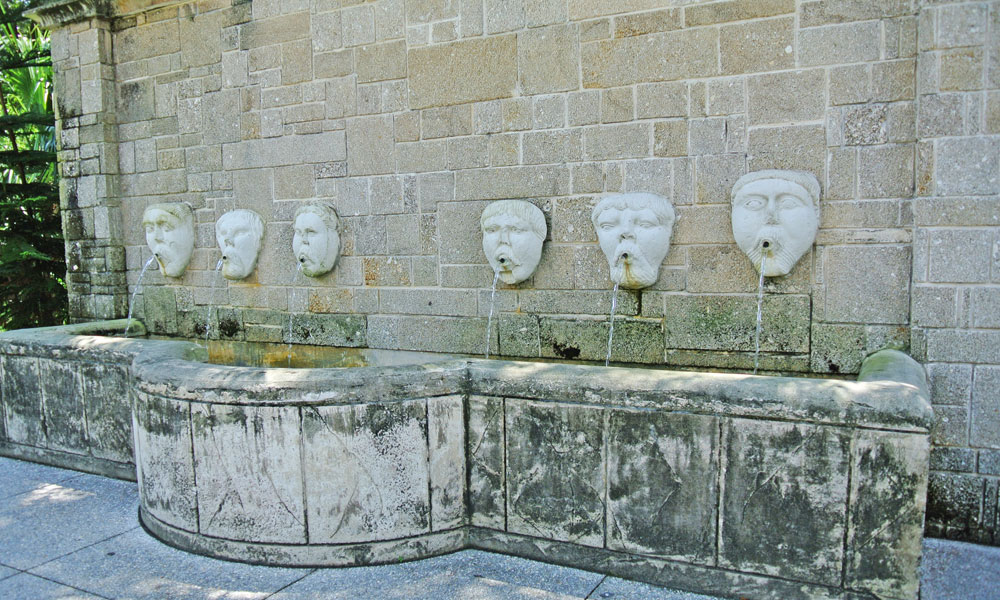
Other landmarks at the Visitor Information Center include a fountain on the side of the building that was given as a gift to St. Augustine from Aviles, Spain. The fountain is a replica of a fountain in Aviles known as the Fuentos de los Canos de San Francisco and features 6 faces with water pouring from their mouths.
3) Old City Gate
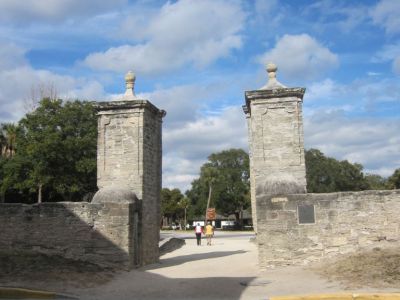
In 1808 the residents of St. Augustine erected the pillars of the City Gate using coquina blocks. The Cubo Line was also reconstructed at the same time. The City Gate pillars still stand today, along with reconstructed portions of the Cubo Line marking the beginning of St. George Street leading visitors though the heart of the city.

4) Potter’s Wax Museum

Potter’s Wax Museum is said to be the first wax museum in the United States. From famous politicians and entertainers to horror characters and historical personalities, Potter’s Wax Musuem seems to have it all. It also has a theater and a wax studio.
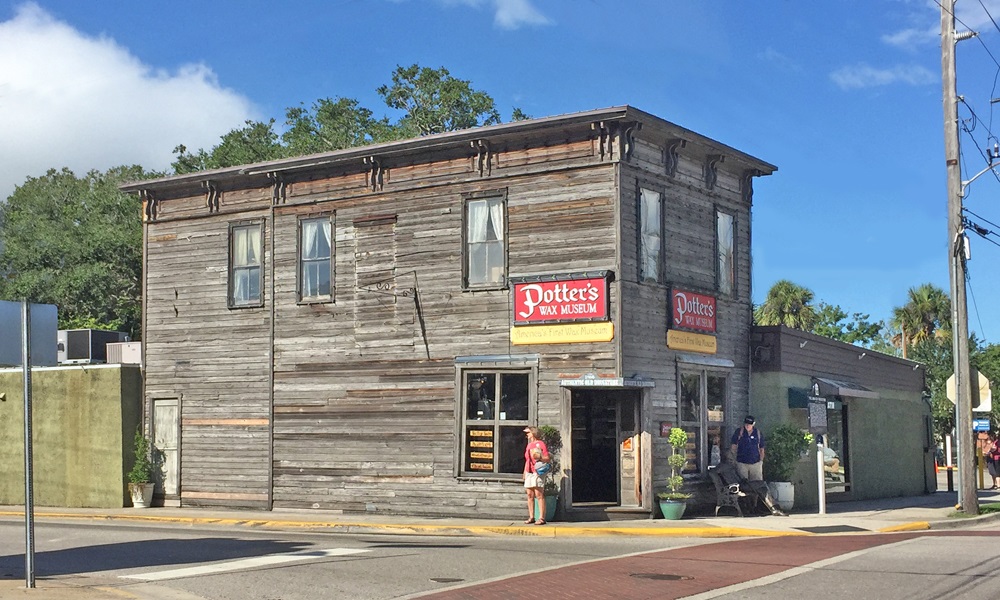
This unique attraction was founded over 50 years ago when George L. Potter began the business in 1949. He employed some of the finest talents in the world to make his wax figures, using meticulous research on every aspect of the person being depicted, right down to each freckle on the skin and hair on the head. The costumes of the original figures were created by B.J. Simmons and Nathan’s, Ltd., the finest costumers of their day, and certified for historical accuracy by the British Historical Society.

5) Oldest Wooden Schoolhouse
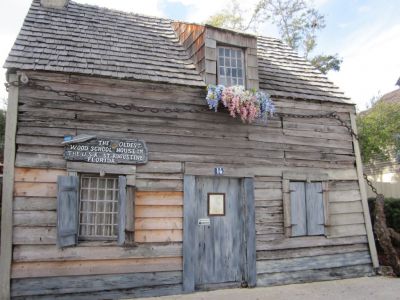
The Oldest Wooden School House dates back to the early 18th century and is located on St. George Street by the City Gate. Visitors to the Oldest Wooden School House can tour the property and become acquainted with the daily life of colonial school children.

Visitors can view copies of old textbooks and school supplies from the eighteenth century, and tour the kitchen and gardens, where a fruitful pecan tree has been growing for an estimated 250 years.

The house has a large chain wrapped around the exterior. The chain was added in 1937 in order to hold the house in place in case of hurricane-force winds and weather.

6) Colonial Quarter
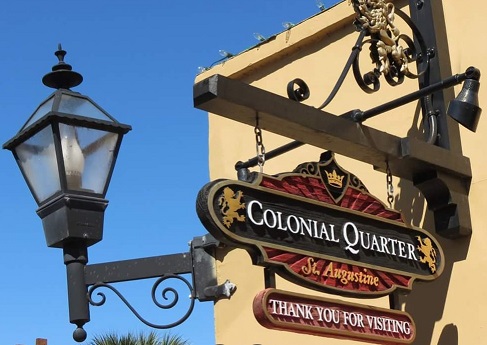
The Colonial Quarter is where visitors can experience hundreds of years of Colonial Spanish and British living history in St. Augustine. This two-acre revamped attraction takes vacationers and locals back in time through three centuries of the formation and creation of the nation’s oldest city.

7) St. George Street
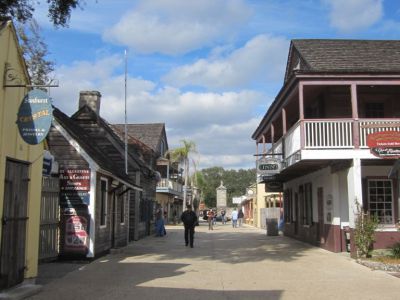
Walking around downtown St. Augustine, you’ll find our ‘sky-scrapers’ are church domes and historical spires. Our city noise is the sound of horse hoofs and trolley bells. Fast food means getting home-cooked baked goods from a local counter. We don’t have potted-plants, but a city built around plants, and St. George Street is where the hustle, bustle, and beauty of downtown converge. You’ll see the town square with its towering oaks. Further, into the shopping district towards Hypolita, you’ll see palm trees shading businesses, and strip malls filled with a multitude of shops selling clothing, wines, cigars, housewares, books, and souvenirs. The energy of St. George Street, the sights, all make for an invigorating

8) Cathedral Basilica of St. Augustine

America’s first parish and the oldest Catholic Church in the city. Free Entry
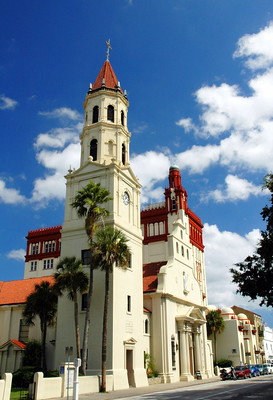
This is the oldest Catholic Church in the city, and the seat of the Bishop of the Diocese of St. Augustine. The architecture of the Cathedral is inspired by the city’s Spanish roots.

The cathedral walls are adorned with exquisite murals that depict scenes from the history of the Catholic Church in the development of the New World. There are also stained glass windows showing scenes from the life of Saint Augustine of Hippo, for whom the city was named.

Guided tours are offered throughout the day, and visitors are welcome to light candles for loved ones at any time. Mass is celebrated at 7:00 a.m. Monday through Saturday.

9) Plaza de la Constitucion
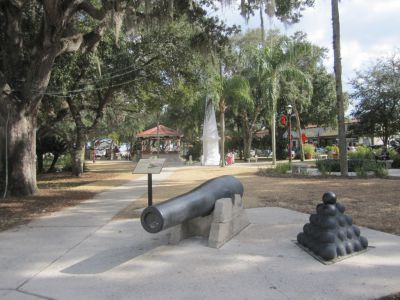
The plaza has been a central part of St. Augustine since 1573 when it was first laid out by the Spanish Royal Ordinances. The Ordinances required that the plaza be laid in a rectangular shape according to the compass points, with the length equal to 1 1/2 times the width in order to promote harmony. The plaza earned its proper name for the obelisk that was erected to celebrate the Spanish Constitution of 1812. Other monuments included in the park include a tribute to American Revolution prisoners, the Confederacy, and soldiers killed in WWII, the Korean War, and the Vietnam War. There is also a monument to commemorate the civil rights movement in St. Augustine known as the Foot Soldiers Monument, and a statue of Father Felix Varela in the East courtyard of the Cathedral.

10) Grace United Methodist Church
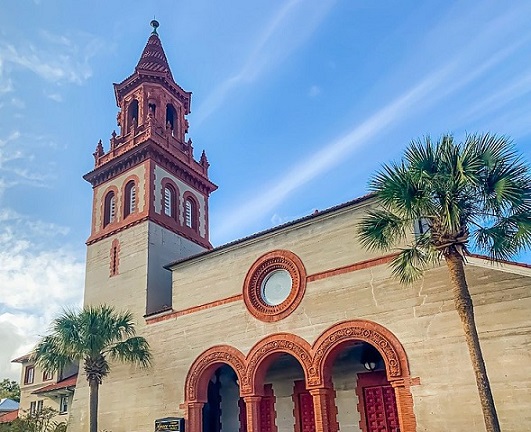
In 1886 Henry Flagler began construction on the Ponce de Leon Hotel. He had grand plans for this hotel and its courtyard, but there was one small problem; the Olivet Church sat where he wanted to build. To solve his dilemma Mr. Flagler bargained with the trustees. He offered to not only give them the land on the corner of Carrera Street and Cordova Street, but to build them a new, beautiful church as well, in exchange for the land on which the Olivet Church was located. They took him up on his offer and he had the same architects that would build his hotel build the trustees’ new church, which is why the Grace United Methodist Church has the same Mediterranean Eclectic style as the Flagler buildings.

Old Downtown Part II: South

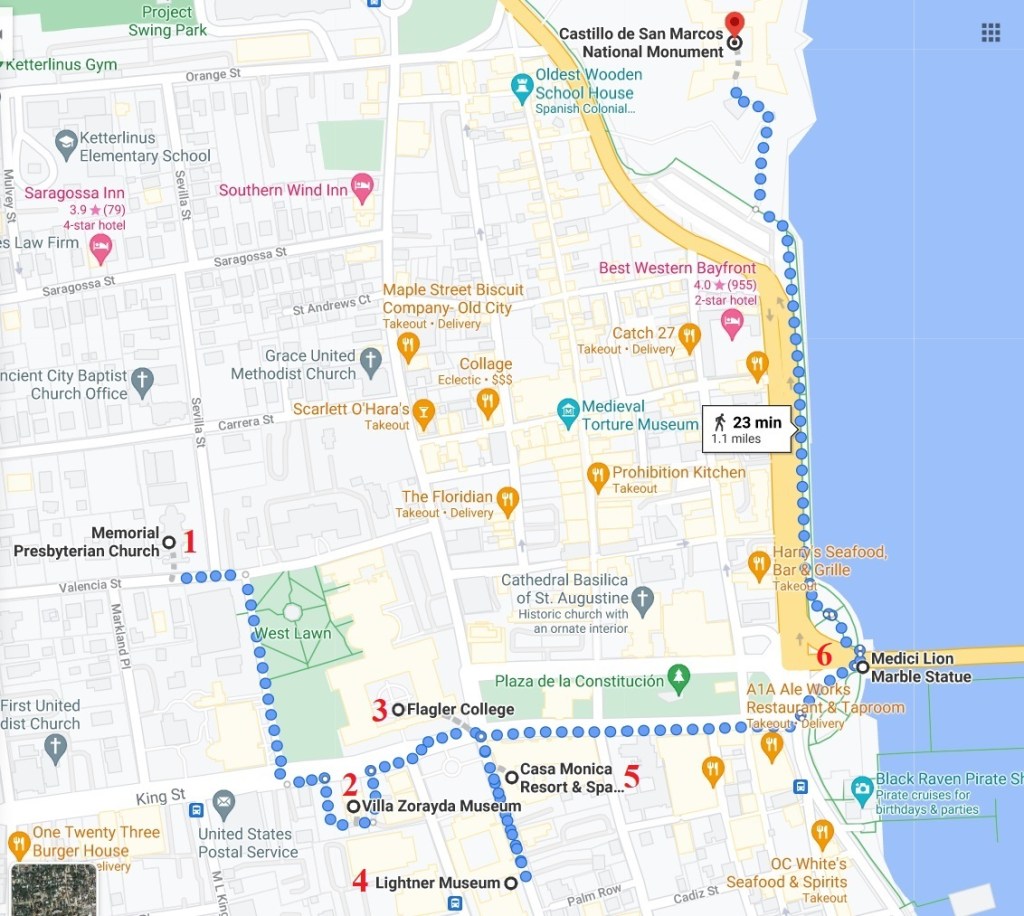
This tour begins at the Grace United Methodist Church, where the Old Downtown North tour ended, and explores the southern half of The Ancient City.

Guide Type: Self-guided Walking Tour
# of Attractions: 6
Tour Duration: 75 Minutes
Travel Distance: 1.1 Km or 0.7 Miles

Sights Featured in This Guide:

  • Memorial Presbyterian Church
  • Villa Zorayda
  • Flagler College/ Ponce de Leon Hotel
  • City Hall and Lightner Museum/Alcazar Hotel
  • Casa Monica Hotel
  • Medici Lion Statue on Bridge of Lions

1) Memorial Presbyterian Church
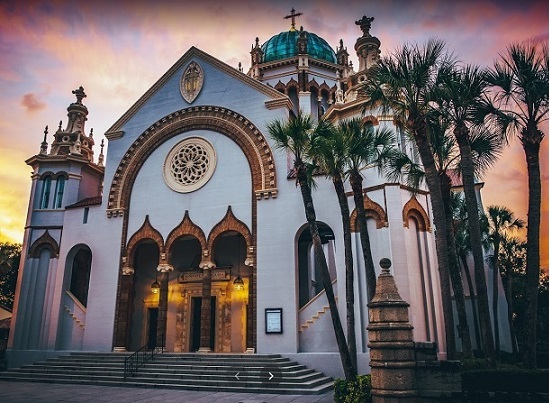
Flagler’s Memorial Presbyterian Church was dedicated on March 16, 1890. The old Presbyterian Church on St. George Street was vacated as the congregation moved to the new sanctuary with room for 480 worshipers. Flagler built the church for his daughter Jennie Louise Flagler, who died in 1889. He chose the same architects who built the Ponce de Leon for him, Carrere & Hastings. Its design is based on the Basilica of St. Mark in Venice, Italy.

Visitors are welcome to take a self-guided tour of the beautiful church between the hours of 11:00 a.m. and 3:45 p.m. on Monday through Saturday.

2) Villa Zorayda
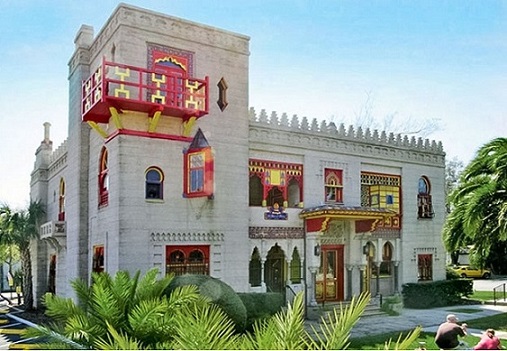
Designed by Franklin Smith in 1883 to be his private home, this structure is the first modern building in St. Augustine to have been created by poured concrete, which makes it among the first modern buildings in all of the USA to have been made this way. Listed on the National Register of Historic Places, this grand Gilded Age home is built 1/10th the scale of a portion of the Moorish castle, the Alhambra Palace in Granada, Spain. When Flagler later began his surge of building projects throughout St. Augustine he and his architects greatly imitated this building style, which reflects the city’s Spanish roots.

In addition to the magnificent architecture of the building is the collection of antiques and fine art, featuring paintings, seventeenth-century furniture, beautiful hanging brass lamps, oriental rugs, and an Egyptian rug over 2,400 years old that was originally taken from one of the pyramids in Egypt.

3) Flagler College

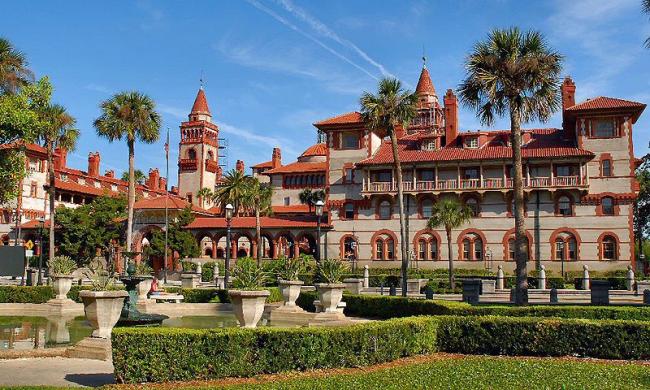
Flagler College, housed in what was once one of Henry Flagler’s most opulent Gilded-Age hotels in St. Augustine, is a private four-year college. The college opened in 1968 and now offers 32 majors, 44 minors, and two pre-professional programs. With an enrollment of 2,500 students, the college draws students from all over the world to study liberal and fine arts in this magnificent setting in the nation’s oldest city.

The Ponce de Leon hotel was built in 1887 and is listed as a National Historic landmark.
4) City Hall and Lightner Museum

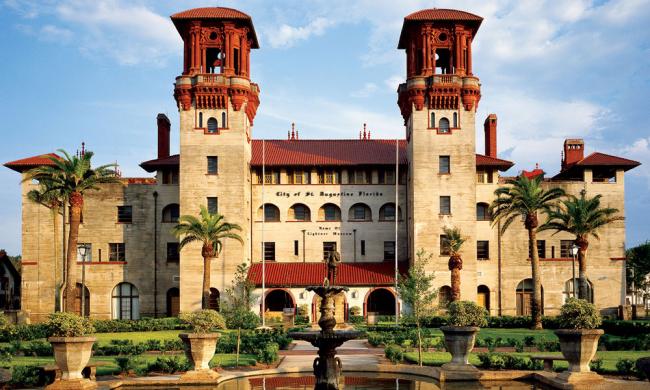
The Lightner Museum is housed in the former Alcazar Hotel, which was built in 1888. Henry M. Flagler commissioned architects Carrere and Hastings to construct this architectural masterpiece. The Alcazar closed during the Depression, and in 1948 the building was purchased by Otto Lightner, who was editor and publisher of Hobbies Magazine in Chicago. Lightner converted the hotel into a museum to contain his vast collection of decorative and fine arts. He bequeathed the building to a board of directors who then opened it to the public several years later. The building is on the National Register of Historic Places and today is home to both the Lightner Museum and City government offices.
5) Casa Monica Hotel

Franklin Smith built the Casa Monica around the time Flagler was building his hotels and is part of the reason that Flagler began investing in Florida. The Casa Monica is one of the oldest hotels in the country and is even listed in the “Historic Hotels of America” National Trust. It’s named after St. Monica, the mother of the city’s namesake, St. Augustine of Hippo. Shortly after the hotel opened, Franklin Smith ran into financial difficulties, and unfortunately had to sell the hotel and everything inside to his friend Henry Flagler. Flagler changed the name of the hotel to the Cordova Hotel.
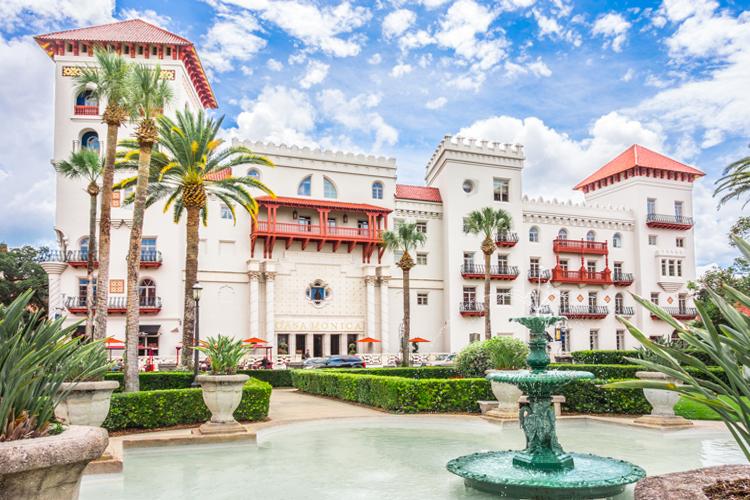
During the 1960s, the hotel was turned into the offices for the St. Johns County Courthouse. The iconic window above the Casa Monica lettering was decorated with a stained glass window portraying the scales of justice. It served as a courthouse for years, until it was purchased by Richard Kessler for $1.2 million. Kessler had previously been involved with the Days Inn chain and was looking to bring the hotel back to its former glory. Construction and renovations took less than two years, and the hotel was reopened in 1999.

This hotel is quite literally fit for royalty, with even the King and Queen of Spain as past guests. Former President Bill Clinton stayed here, as has former First Lady and Secretary of State, Hillary Clinton. Archbishop Desmond Tutu, a Nobel Peace Prize winner, rested his head at the Casa Monica. When the Gentlemen of the Road Tour came to St. Augustine, Edward Sharpe and the Magnetic Zeroes shacked up at Casa Monica along with John Fogerty and members of the Billboard-topping band, Fun.  

6) Medici Lion Statue on Bridge of Lions
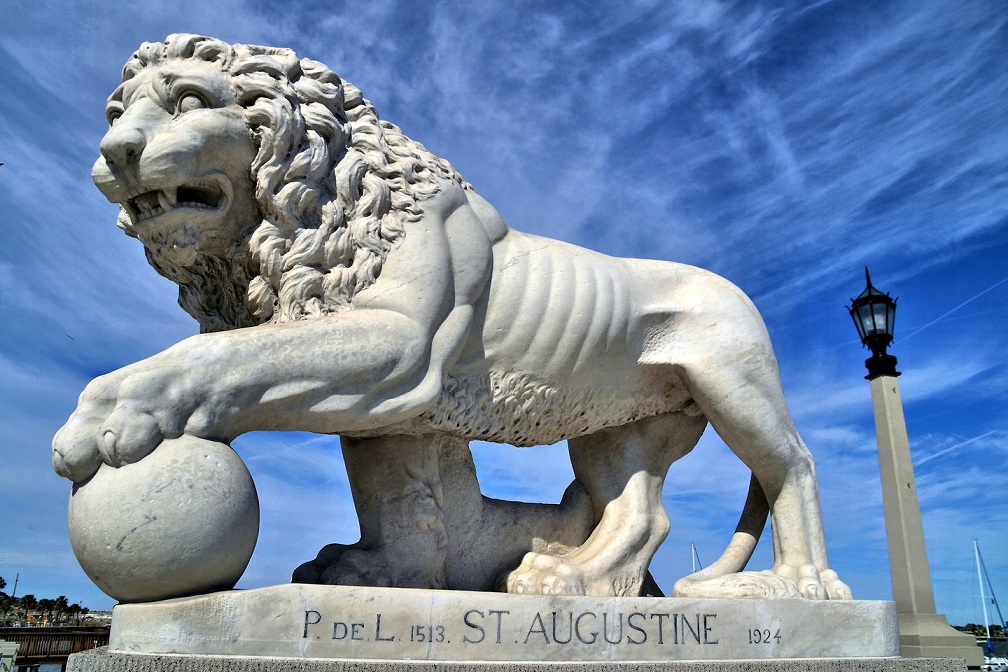
This Carrara marble Medici lion is one of two guarding the entrance to the Bridge of Lions in St. Augustine, Florida. These carvings by F. Romanelli were a gift from local philanthropist Dr. Andrew Anderson. The bridge has been called “The Most Beautiful Bridge in Dixie.” It is even more beautiful after an $80 million restoration was finished. The male lion with his paw on an orb was patterned after the originals commissioned in 1576 for the Italian garden of Ferdinando I dé Medici, the Grand Duke of Tuscany. The pair from the 16th century is now in the Loggia dei Lanzi in Florence, Italy.

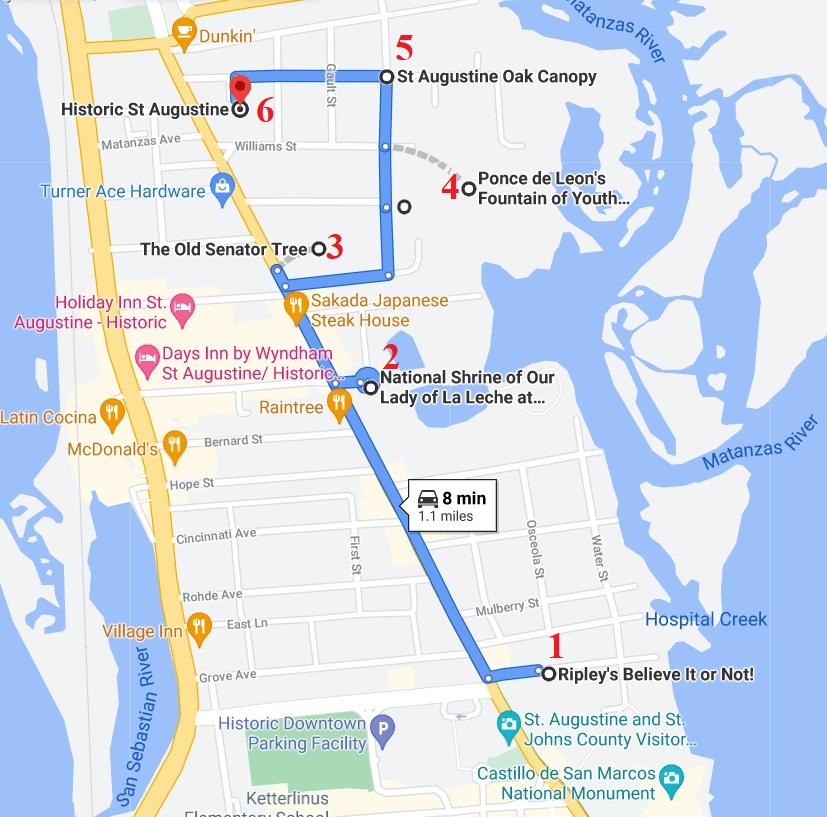
St Augustine Self-guided Driving Tour.

Sights Featured in This Guide:

  • Ripley’s Believe It or Not!
  • National Shrine of Our Lady of La Leche at Mission Nombre de Dios
  • The Great Cross
  • The Old Senator Tree
  • Fountain of Youth
  • St Augustine Oak Canopy
  • Historic St Augustine
  • Castle Otttis
  • Bridge of Lions
  • St. Augustine Lighthouse
  • Alligator Farm Zoological Park
  • Avendia Menendez
  • Gonzalez-Alvarez House
  • Upham Winter Cottage

https://goo.gl/maps/1nWFXENgoPvs2Gsw8

1) Ripley’s Believe It or Not !

The museum is the original Ripley’s Believe it or Not, opening in 1950 just a few months after Robert Ripley’s death. Here, people can explore and interact, witness incredible illusions and see for themselves what Ripley collected from his travels around the world—many too outlandish to believe.
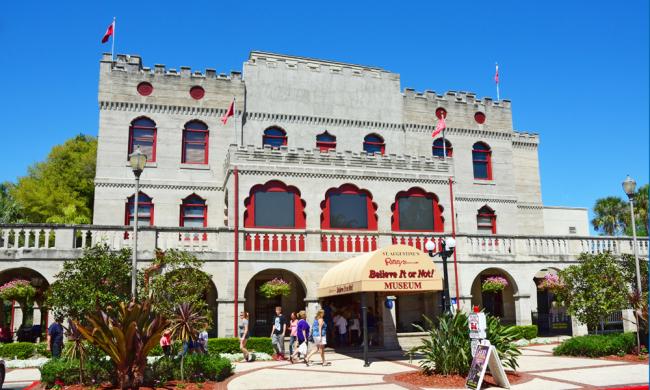
Ripley’s Believe It or Not! in St. Augustine is housed in the former Castle Warden Hotel, so even the building is curious! Many employees of Ripley’s say they hear or see the ghosts of the two women that died in a fire at the Castle Warden in April of 1944. The hotel’s own eccentric past made it the ideal location to showcase Ripley’s fascinating collection after his passing in 1949.

2) The Shrine of Our Lady of La Leche at Mission Nombre de Dios

The Shrine of Our Lady of La Leche at Mission Nombre de Dios traces its origins to the founding of the city of St. Augustine in 1565. On September 8, 1565, Pedro Menéndez de Avilés landed and proclaimed this site for Spain and the Church. Menéndez named this site Nombre de Dios, meaning Name of God. He put Father Lopez in charge of the mission, making him the first parish priest in St. Augustine.
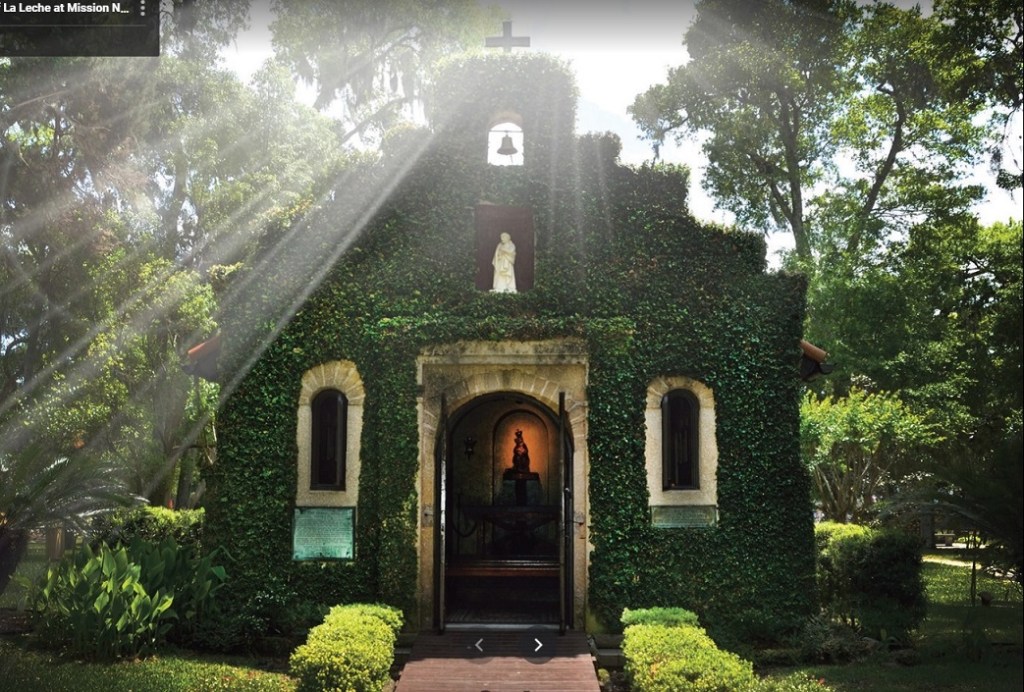
It was on these grounds that Father Lopez celebrated the first parish Mass and began the work at America’s first Mission. At Mission Nombre de Dios, guests will find numerous artifacts, both sacred and secular, from the very beginning of the Spanish settlement in St. Augustine.

A walking tour of Mission Nombre de Dios includes a number of interesting stops: the Prince of Peace Church, the Father Lopez Statue built by Dr. Ivan Mestrovic, the Great Cross, the Mission Plaque, Our Lady of Guadalupe Shrine, the Our Lady of Perpetual Help, Chapel of Our Lady of La Leche, and Our Lady of La Leche Shrine, and the Rustic Altar. Visitors can also tour archaeological excavation sites or go into the Shrine Shop.
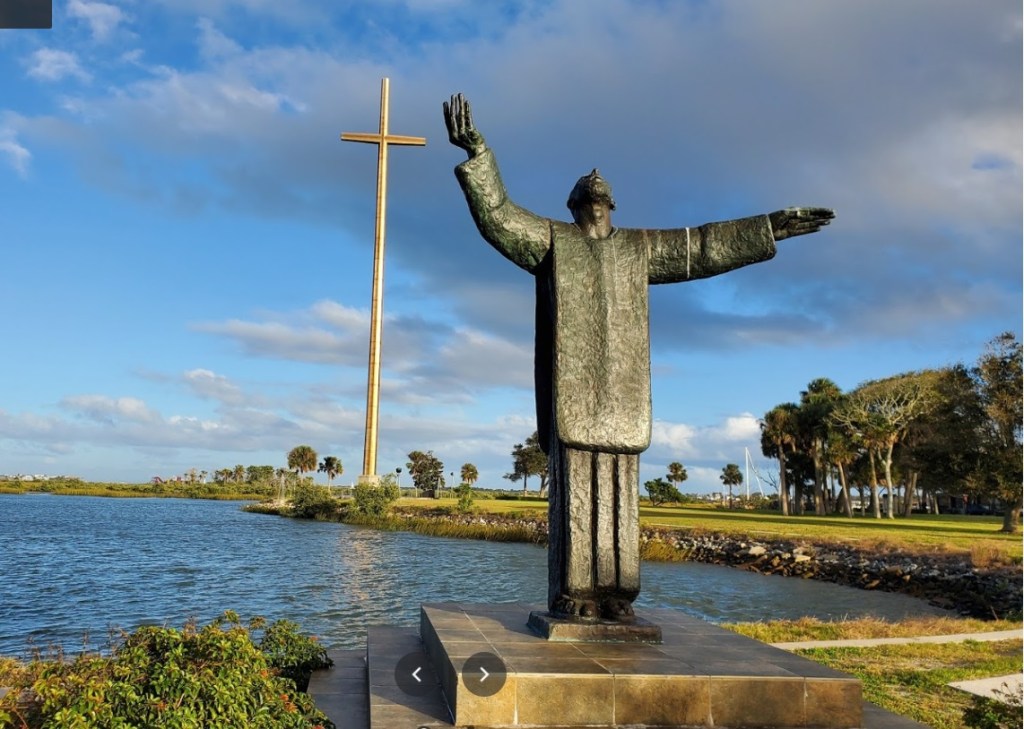
The Great Cross

The Shrine of Our Lady de la Leche at Mission Nombre de Dios is the oldest Marian Shrine in the U.S., and it was recently elevated to a National Shrine by the U.S. Conference of Catholic Bishops.

The Shrine of Our Lady of La Leche at Mission Nombre de Dios is located at the Great Cross just north of downtown St. Augustine. Parking is free. Entrance to the grounds are restricted to their daily hours, 9:00 a.m. to 5:00 p.m. Monday through Saturday, and noon to 4 p.m. on Sunday. Only service animals are allowed on the grounds.

3) Old Senator Live Oak

Visit the oldest resident of St. Augustine, the “Old Senator” Live Oak tree,

“Old Senator” is over 600 years old and grows in the courtyard of Villa 1565 on San Marco, just a short distance from historic downtown St. Augustine.
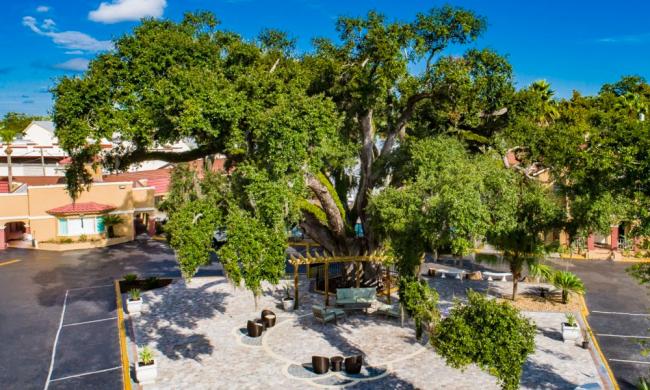
According to the website “Monumental Trees,” in 2016 “Old Senator’s” girth measured over 21 feet and “his” height was over 56 feet. Long considered to be St. Augustine’s oldest resident, “Old Senator” could certainly tell many stories about St. Augustine’s history and people.

4) Fountain of Youth

The Fountain of Youth Archaeological Park is a 15-acre, waterfront historical attraction, where visitors can learn about the first Spanish settlers who came here in the 1600s and the native Timucuans who were here to greet them. With a working archaeological dig on site, as well as several re-created Spanish and Timucuan buildings and dwellings, the park is bursting with history.
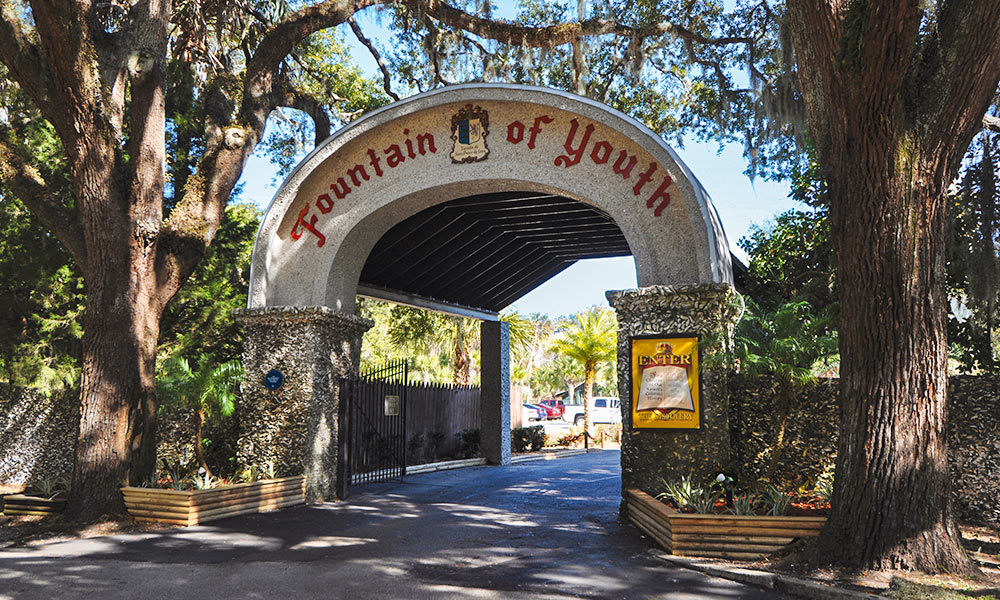
The Fountain of Youth Archeological Park is the site of the first Spanish settlement in the new world. Founded by Spanish explorer Pedro Menéndez de Avilés in 1565, this is the oldest continuously occupied European settlement in North America. Long before the Spanish came to La Florida, the Timucuan Indian village was established at this site for nearly 3,000 years. In 1513, Juan Ponce De Leon claimed Florida for the Spanish crown, though no colonies were successful here until Menéndez arrived in 1565.

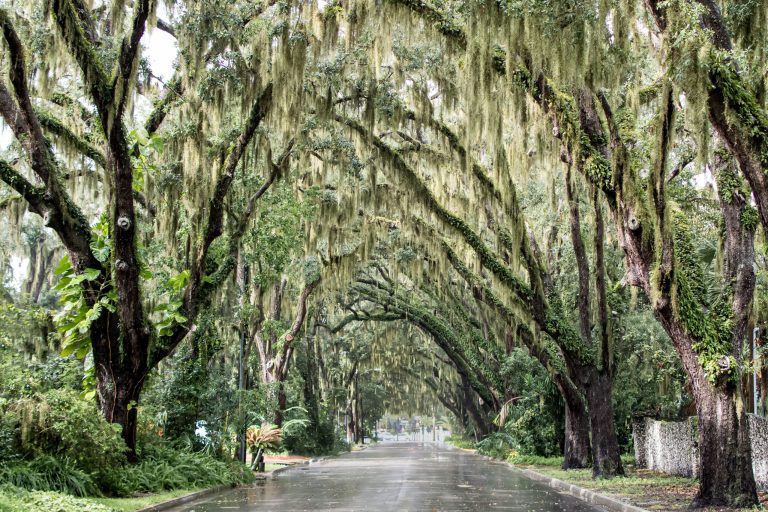
5) St Augustine Oak Canopy

Magnolia Avenue in St. Augustine is one of the most beautiful streets in the United States because of the arching live oak canopy and Spanish moss. 
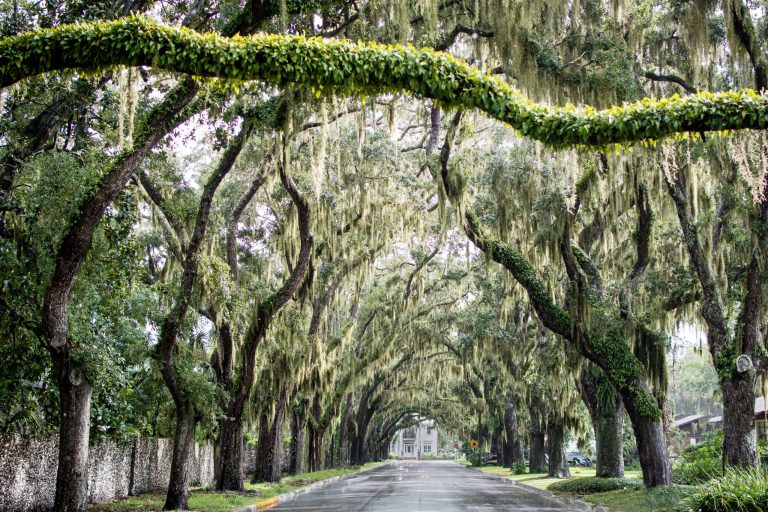
Right side view of Saint Augustine’s most beautiful street on Magnolia Ave
Left side view of Saint Augustine’s most beautiful street on Magnolia Ave

6) Historic St Augustine

This historic jail served the city of St. Augustine from 1891-1953. Visitors can take tours of the jail during the day or night, experiencing history as inmates in period dress guide them through the women’s cells, men’s cells, and the maximum security cells where only the most dangerous criminals were kept.
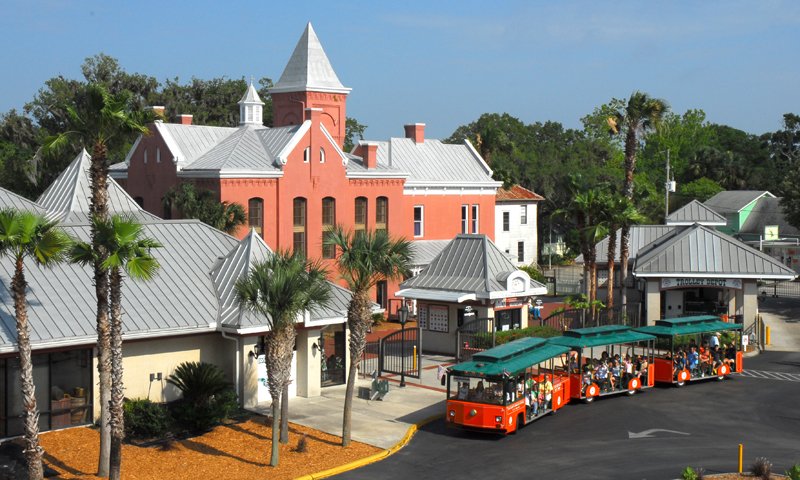
The Old Jail’s unique history is full of fascinating stories about individual inmates that once occupied the cells and the sheriffs (and their families!) who lived just across the hall from them.

The Old Jail is located at Old Town, along with the Old Town Trolley main station, The Oldest Store Museum, The St. Augustine History Museum, and a gift shop.

7) Castle Otttis

CASTLE OTTTIS (YES, THREE ‘T’S) was built by Ottis Sadler and Rusty Ickes between 1984 and 1988. Based on Irish castles from 1,000 years ago, it was designed to be a landscape sculpture, open to the elements and rising up more than 50 feet.
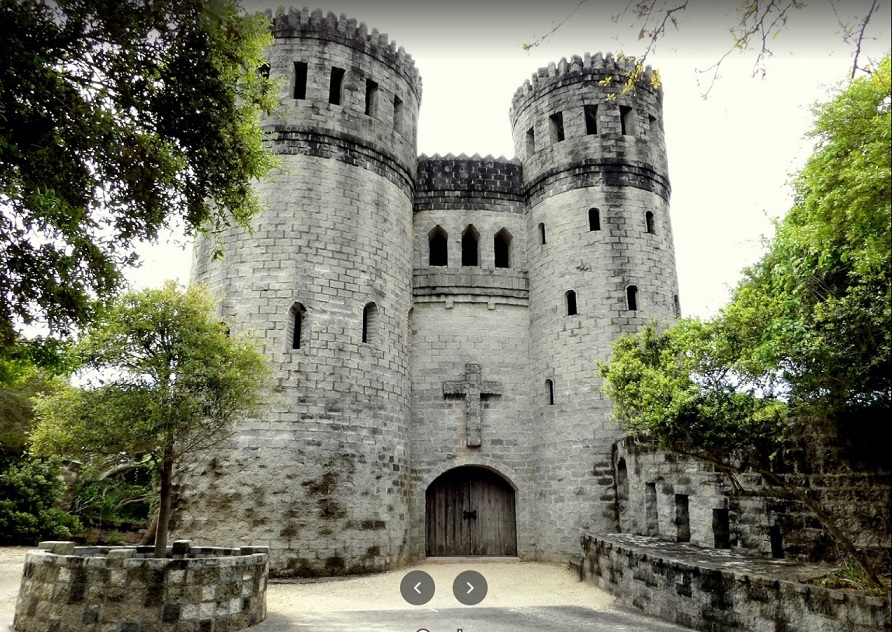
When Sadler and Ickes began work on the castle, it was never intended to be a residence or a business. Their ultimate aim was to create a work of art, one that would invoke the spirit of an old Irish abbey or Christian church.
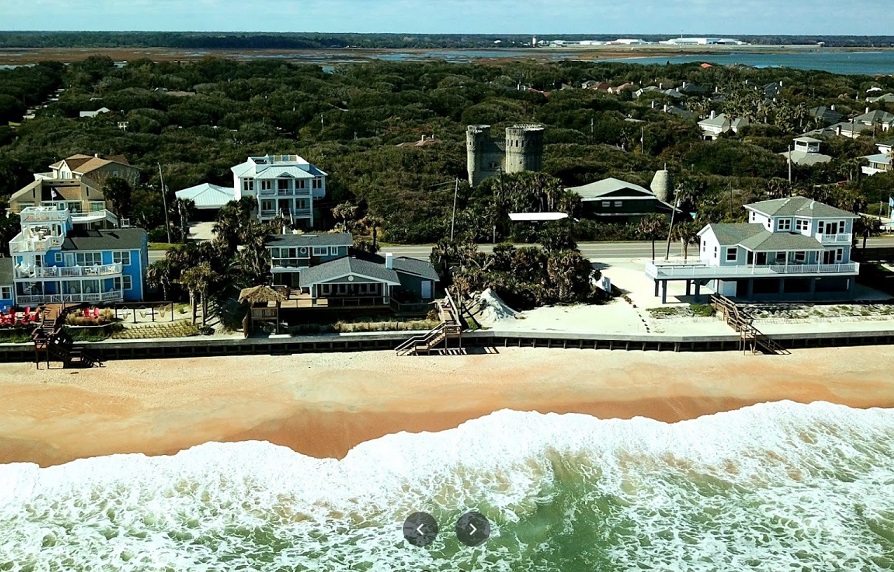
The final result: a majestic stone castle built as an expression of artistic and spiritual devotion. And, of, course, an impressive new landmark along the St Augustine shoreline, one officially recognized by the American Institute of Architects in 1992.
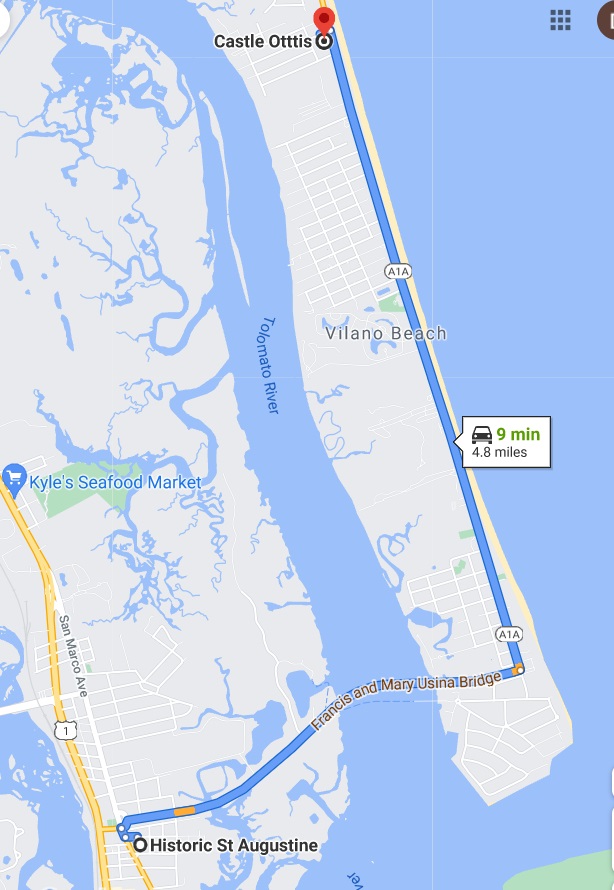
https://goo.gl/maps/k6SAmzgiZMzWwaUz7

+++

————————————

8) Bridge of Lions

The Bridge of Lions was built in the mid-1920s as a way for automobiles to travel from St. Augustine on the mainland to Anastasia Island, where significant development was just getting underway.

Though the original development was considered a failure, it did provide the impetus behind the creation of St. Augustine’s beautiful Bridge of Lions, which was completed in 1927 and has been an icon of historic St. Augustine ever since.
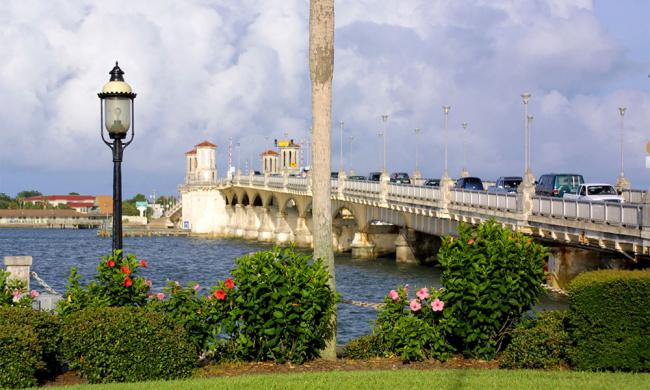
The bridge is a double-leaf bascule bridge, also known simply as a drawbridge, which allows commercial and recreational boats to pass through a center channel when the moveable span is in the up position. In 2010, it was renovated by the city of St. Augustine and still serves as a major thoroughfare from downtown St. Augustine to Anastasia Island.

The Bridge of Lions is listed on the National Register of Historic Places and is on every visitors list of must-see while in St. Augustine.

9) St Augustine Lighthouse 

The St. Augustine Lighthouse is one of the city’s most treasured attractions. It stands as a testament to the ancient city’s perseverance and captivating history. The lighthouse dates back to 1874, but it doesn’t show! It is still a glorious attraction, with stunning gardens surrounding the space and an intriguing maritime museum for you to explore.
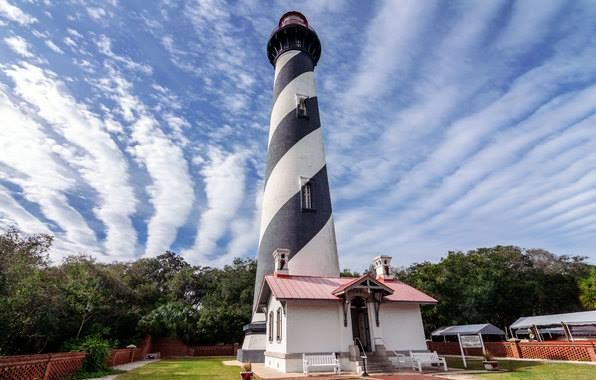
Free parking is available at the Museum. Summer hours are 9 a.m. – 7 p.m. The Museum is closed on Thanksgiving and Christmas Day.  The Museum is located on Anastasia Island on the road around the corner from the fire station, across from the Alligator Farm.

10) St. Augustine Alligator Farm Zoological Park

The Alligator Farm Zoological Park features a variety of animal species, including hundreds of native alligators. The allure of wild reptiles and their powerful presence entice thousands of vacationers to visit the park in St. Augustine each year. Exhibits include lemurs, Komodo dragons, toucans, and a sloth exhibit. The park is the only place in the world to see all 24 species of crocodilians in one place.
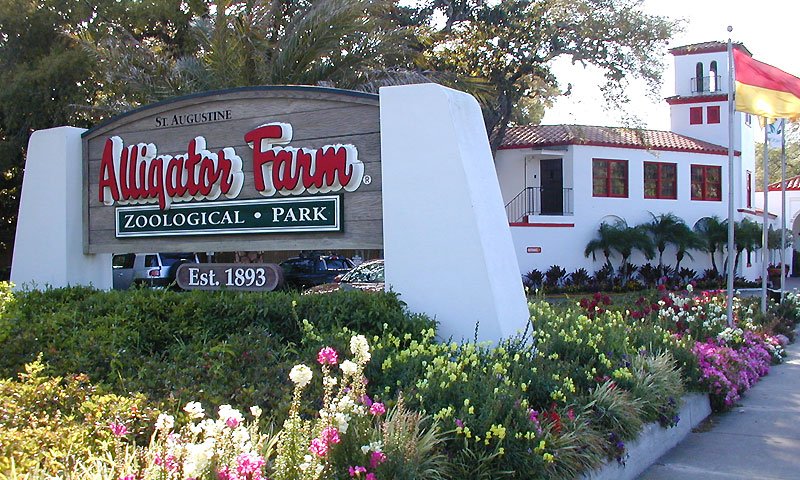
Opening their doors in 1893, the St. Augustine Alligator Farm Zoological Park is one of the oldest attractions in the area. George Reddington and Felix Fire began this attraction with their own collection of alligators in South Beach on Anastasia Island. After a series of storms and fires, the St. Augustine Alligator Farm was moved to its current location closer to historic downtown St. Augustine.
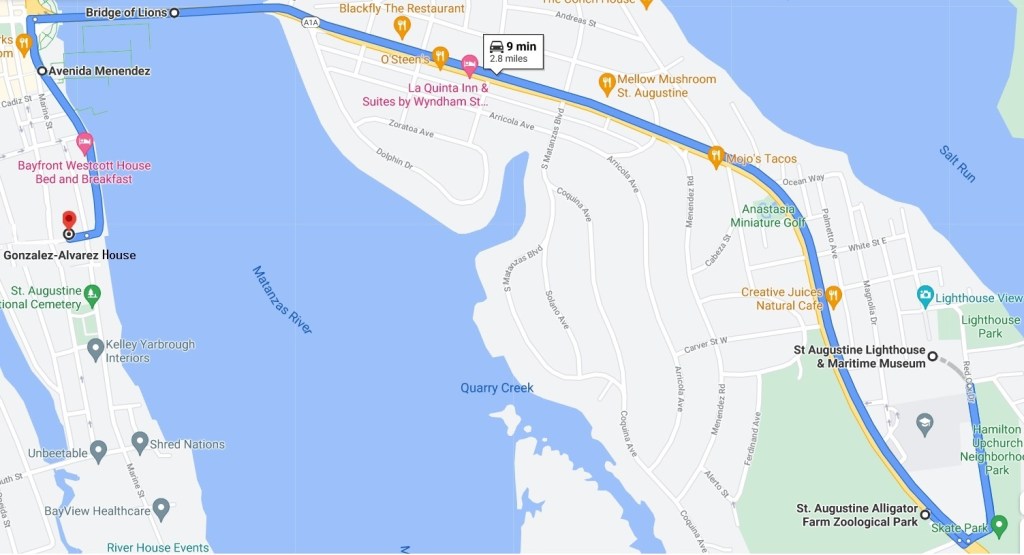
https://goo.gl/maps/rQPqfLxxJDX5t87k6

11) Avenida Menendez
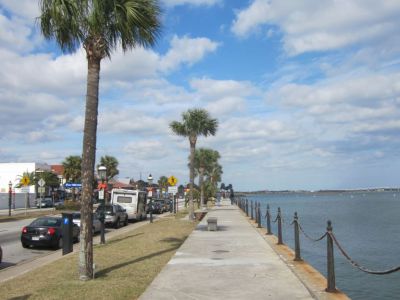
The Avendia Menendez is a scenic north-south road that was named after Pedro Menendez, the Spanish explorer and admiral who founded St. Augustine in 1565. The first sea wall against this street was constructed in the 1690s and was repaired several times until the 1830s when the United States of America finally replaced the original stone-shell coquina with concrete and granite. The section of the seawall north of the Plaza de la Constitucion is from the 1950s; at that time the street that is now Avenida Menendez was widened and that part of the seawall had to be rebuilt once again. Enjoy a stroll along the beautiful avenue.

12) Gonzalez-Alvarez House

The González-Alvarez House on St. Francis Street is commonly called “The Oldest House.” It is the oldest standing home from St. Augustine’s Spanish colonial period. A National Historic Landmark, the Stone Vernacular-style house dates to the early 1700s. It is part of the Oldest House Museum Complex, operated and maintained by the St. Augustine Historical Society.

The original structure was a simple home built of coquina, a sediment formed by ancient seashells. Additions and changes were made over the years. A small kitchen is separate from the main house. The complex includes a museum, garden and art gallery.

13) Upham Winter Cottage

The 1892 12-room Victorian cottage was originally built as Colonel John Upham’s winter home. It changed to apartment buildings some time in its past, but was restored to a private residence in the 1970s. It is not open to the public. It is said to be haunted by a pretty young woman named Claire who likes to play harpsichord music. Legend has it that her sea captain husband kept Claire imprisoned in the attic while he was away, and during one of his trips, she died there.
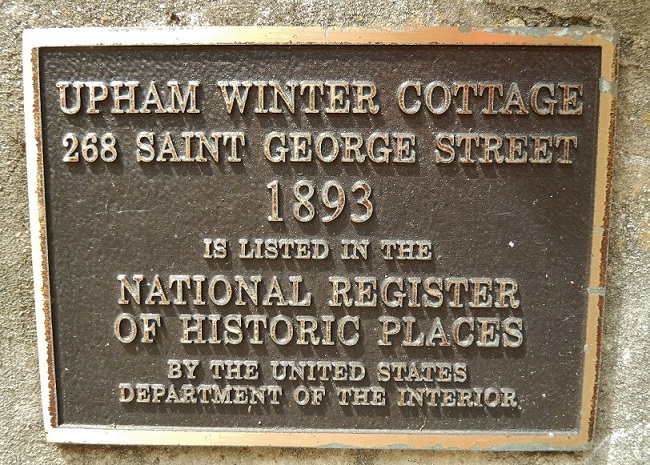
Upham Winter Cottage Marker

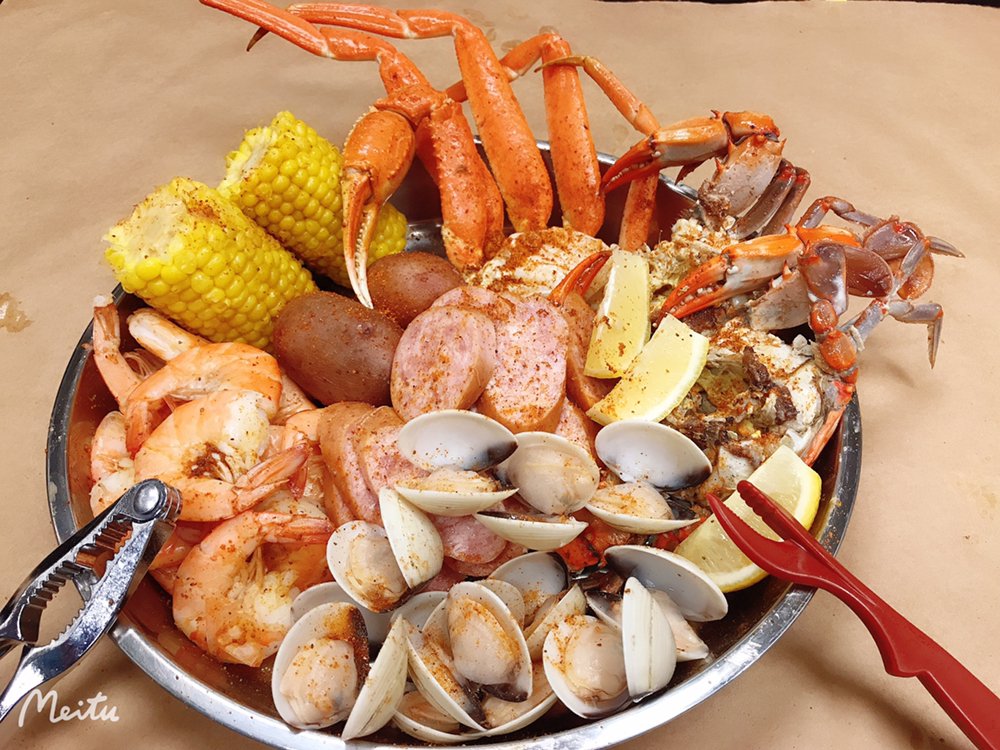
Cajun Crab Hut

2125 US Highway 1 South Suite A St, Augustine, FL 32086
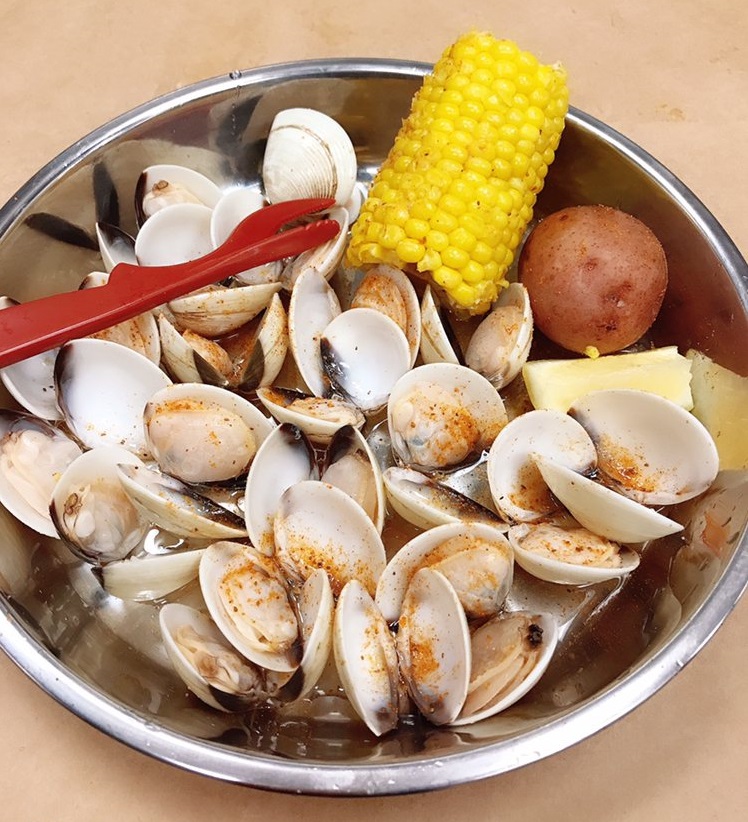
http://www.cajuncrabhut.com/

—-

A1A Crab House Togo only

667 W King, St. Augustine, FL 32084

http://a1acrabhouse.com

FLORIDA

Bài viết của NGUYỄN GIỤ HÙNG (CN09)

Florida thuộc về những tiểu bang được gọi là Miền Nam (The South) của Hoa Kỳ.

Theo phân chia địa dư, Miền Nam gồm 11 tiểu bang được kể từ trên xuống dưới và từ đông sang tây trên bản đồ gồm: Virginia, North Carolina, South Carolina, Georgia, Florida, Kentucky, Tennessee, Alabama, Mississippi, Akansas, Louisiana.

VÀI NÉT VỀ SỰ PHÁT TRIỂN BAN ĐẦU CỦA FLORIDA


Tiểu bang quan trong nhất của Miền Nam (The South) là tiểu bang Florida.

Vào trước năm 1900, Florida còn gần như là đất hoang. Chỉ có vài thành phố tuơng đối lớn cách biệt riêng rẽ không có đường xá hay xe lửa để nối kết với nhau.

Nếu như Thủ đô Washington D.C ngày nay được coi như một đài tưởng niệm của kiến trúc sư Pierre Charles L’Enfant, người đầu tiên đã “layout” ra thành phố ấy vào năm 1791, thì tương tự, toàn bộ bờ biển phía đông của Florida là đài tưởng niệm của ông Henry M. Flagler, người đầu tiên đã “layout”, khai phá, mở mang miền đất này trở thành khu vực trù phú và đẹp đẽ như ngày nay.

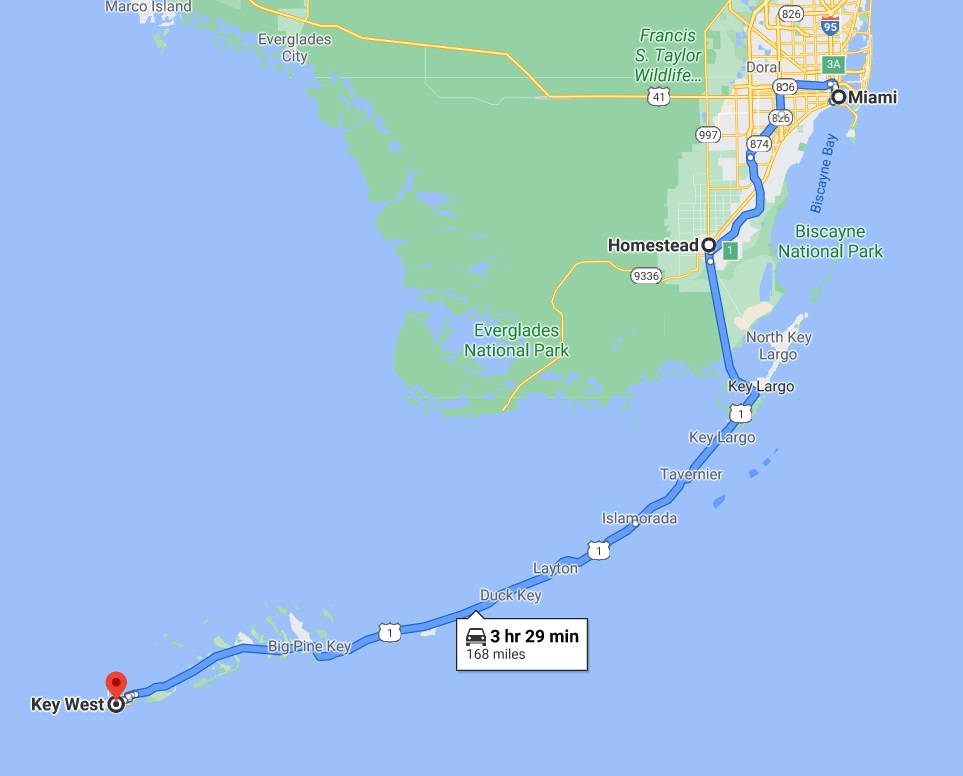
Vào năm 1888 khi ông Flagler tới Florida, cả một dải dài bờ biển phía đông của Florida không có một thành phố nào ở phía dưới thành phố Jacksonville ngoài thành phố St Augustine. Tất nhiên St Augustine là thành phố cổ nhất của Hoa Kỳ được xây dựng từ người Tây Ban Nha. Cho tới năm 1913, Flagler chết, đường xe lửa đã được thiết lập cho tới mũi Key West và một chuỗi thành phố đã được xây dựng như Daytona Beach, Palm Beach, Ft Lauderdale, Dania, Hollandale, Miami, và Homestead.

Flagler không phải là nhà thám hiểm cũng không phải là khai phá rừng vì ông chưa từng đốn một cây nhỏ. Ông đến Florida khi tuổi ông đã “chớm già” nhưng lại là người rất giàu có. Khai thác Florida được coi ông như là một sở thích (hobby) lúc về già. Ông nhìn thấy được nơi đây đang tiềm ẩn một triển vọng rất lớn về kinh tế mà ông muốn khai thác.

Flagler sinh năm 1830 trong một thành phố nhỏ ở tiểu bang New York trong một gia đình nghèo. Thời còn là thanh niên, ông đã tới Ohio làm việc vất vả và để sau đó ông trở thành một thương gia thành công. Năm 1867, ở tuổi 37, Flagler hợp tác với người bạn trẻ của ông là John D. Rockefeller đang làm chủ một công ty dầu nhỏ (oil company). Hai người cùng nhau thiết lập và phát triển thành một công ty dầu lớn và nổi tiếng sau này là Standard Oil Company. Đó là cơ hội lớn nhất cho Flagler, ở tuổi 50, tài sản của ông đã đạt tới 50 triệu đô la thời bấy giờ. Tuy nhiên, khi lớn tuổi, Flagler cảm thấy mệt mỏi với việc kinh doanh dầu hỏa (oil business) nên đã tìm tới một công việc khác thú vị hơn.

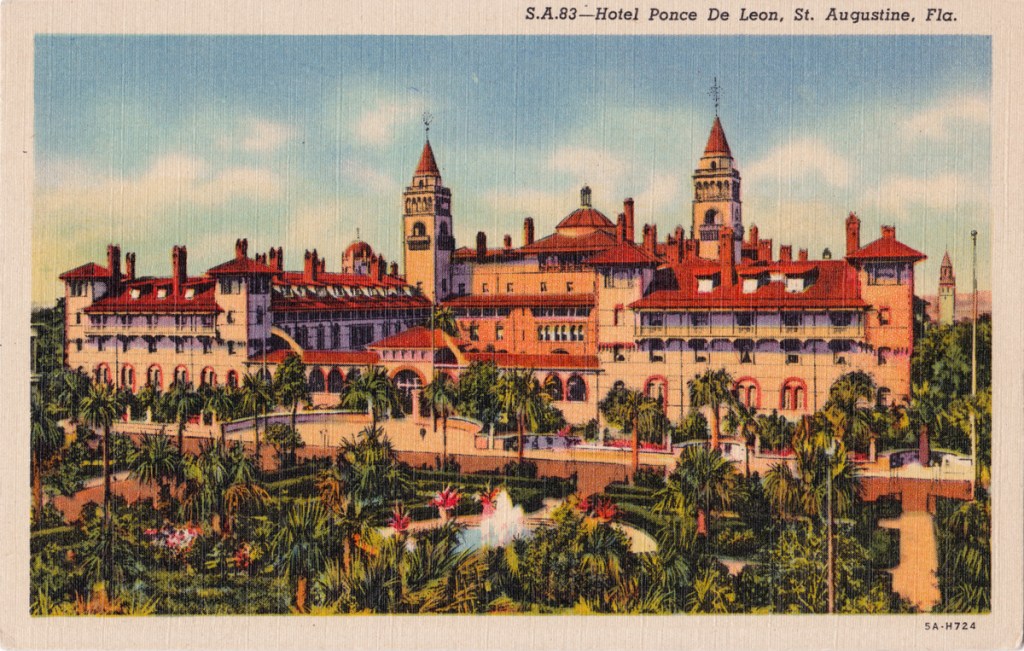
A historic postcard of the resort from the early 20th century. Flagler built this and other hotels along his Florida East Coast Railway which accelerated tourism and commercial development throughout the state.

Năm 1884, Flagler đã cùng vợ con đến thành phố St Augustine để hưởng những ngày nghỉ mùa đông ấm áp. Ông thấy rất thích thú với cảnh đẹp và khí hậu ở đây. Sau khi trải qua một mùa đông ở St Augustine, ông đã quyết định xây một khách sạn lớn (hotel) ở thành phố này. Hai năm sau khách sạn Ponce De Leon hoàn tất và đã nhanh chóng trở nên nổi tiếng vì là khách sạn được đánh giá đẹp nhất trên thế giới vào thời bấy giờ. Càng ngày Flager càng thấy thú vị và hấp dẫn với St Augustine, ông đã cho xây thêm vài khách sạn lớn nữa. Nhưng có một điều là không có đường xe lửa để nối Jacksonville đến St Augustine, ông quyết định cho xây đường xe lửa này. Và sau vài năm đường xe lửa được xây dựng, không những chỉ qua St Augustine mà còn được kéo dài tới Palm Beach. Tại Palm Beach ông cho xây thêm một khách sạn lớn nổi tiếng nữa mang tên Royal Poinciana. Ông tiếp tục tiến xa tới phía nam của Miami và ông cho xây một khách sạn lớn.

Năm 1896, Flagler xây dựng đường xe lửa đi sâu xuống phía nam hơn nữa, qua Miami tới tận Homestead. Công việc này quả thật rất khó khăn. Đầu tiên, ông phải thuê mướn 40,000 công nhân, đa số là từ miền bắc đến để đảm trách những công trình xây dựng khác nhau. Có hai việc ưu tiên mà ông phải đương đầu:

  • Việc phục vụ sinh hoạt hàng ngày như nơi ăn chốn ở cho số lượng công nhân lớn lao.
  • Những vật liệu xây dựng phải mang từ những tỉnh miền bắc xa xôi xuống.

Để giải quyết cho những vấn đề trên ông phải xây dựng thành phố, trồng cây công viên cho nhân viên và những cơ sở phúc lợi cho công nhân đo đó nhiều thành phố tân tiến dọc theo bờ biển phía đông Florida được mọc lên; làm đường lớn, mở rộng sông ngòi, đào sâu thêm các cảng cho việc chuyên chở vật liệu đến tận những nơi cần thiết.

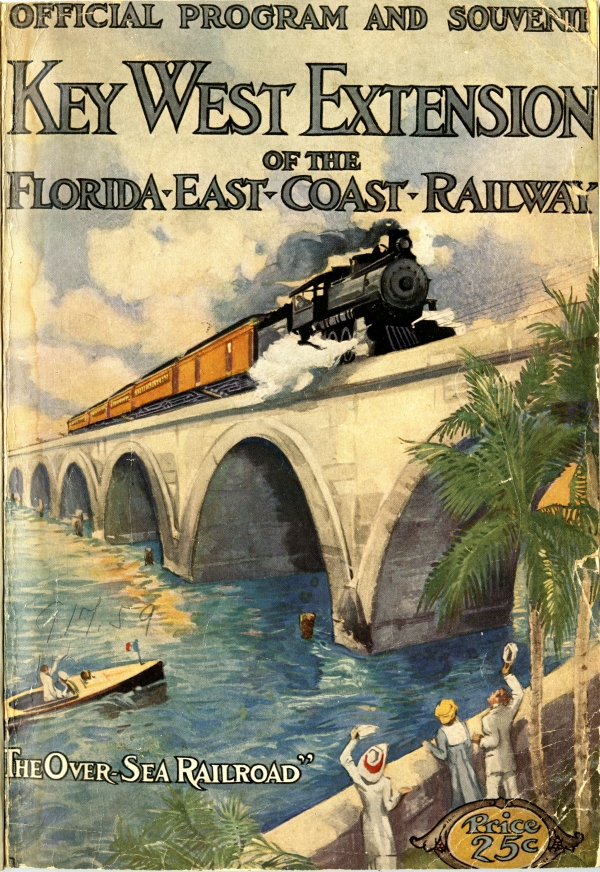
This souvenir program for the opening of Henry Flagler’s Florida East Coast Railway Key West Extension includes a history of the railway company and the Key West Extension; information about other investments Flagler made in Florida such as the hotel system along the railway route; cities along the east coast; advertisements for different businesses in Florida; the histories of Jacksonville, St. Augustine, Daytona, Palm Beach and West Palm Beach, Miami, Key West, and Havana and Cuba; and a program of the celebratory events happening in Key West.

Công việc xây dựng to lớn cuối cùng của Flagler là tuyến xe lửa tiếp nối từ Homestead tới Key West được mang tên Florida East Coast Rairoad với 150 dặm. Key West là phần đất cuối cùng phía nam của Florida và của cả Hoa Kỳ. Nhiều người vào thời đó cho rằng tuyến đường xe lửa này khó thực hiện được và không thực tế vì nó kết nối một chuỗi kết hợp nhiều hòn đảo nhỏ trên biển được gọi là “keys”. Nhiều cầu bắc ngang qua các đảo này được thực hiện, có cây cầu dài tới 7 miles.

Flagler đã quyết tâm thực hiện công tác xây dựng này trước khi ông chết. Công tác được khởi công năm 1908 và phải mất 8 năm mới hoàn tất. Ông đã ngồi trên chuyến xe lửa đầu tiên đến Key West. Lúc này ông đã 92 tuổi. Sau đó mấy năm, ông mất ở Palm Beach.

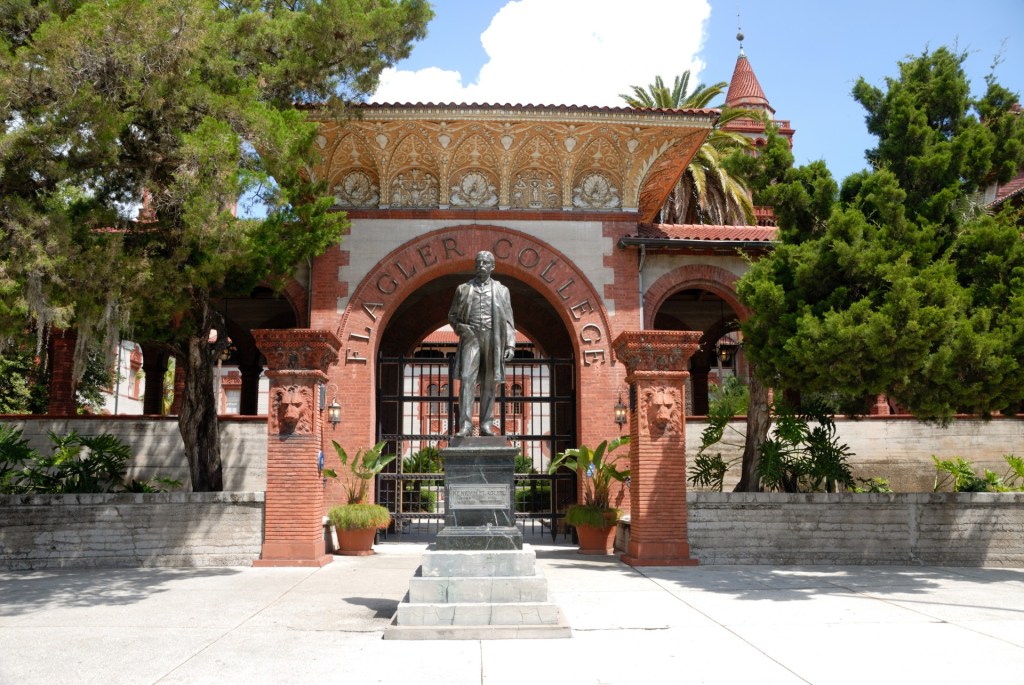
Flagler statue outside the Ponce de Leon Hotel on King Street on the campus of Flagler College in St. Augustine, Florida

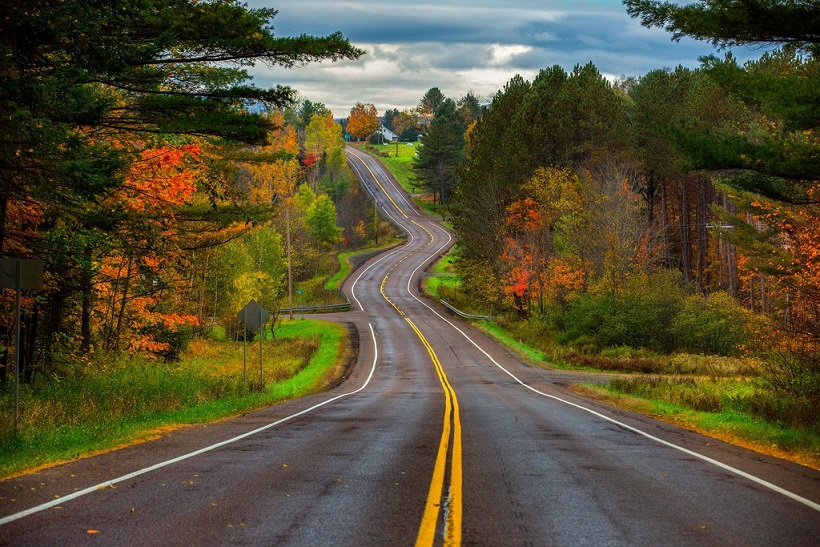
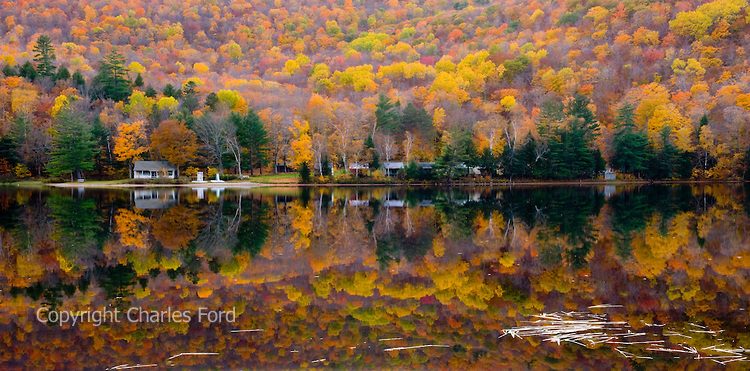
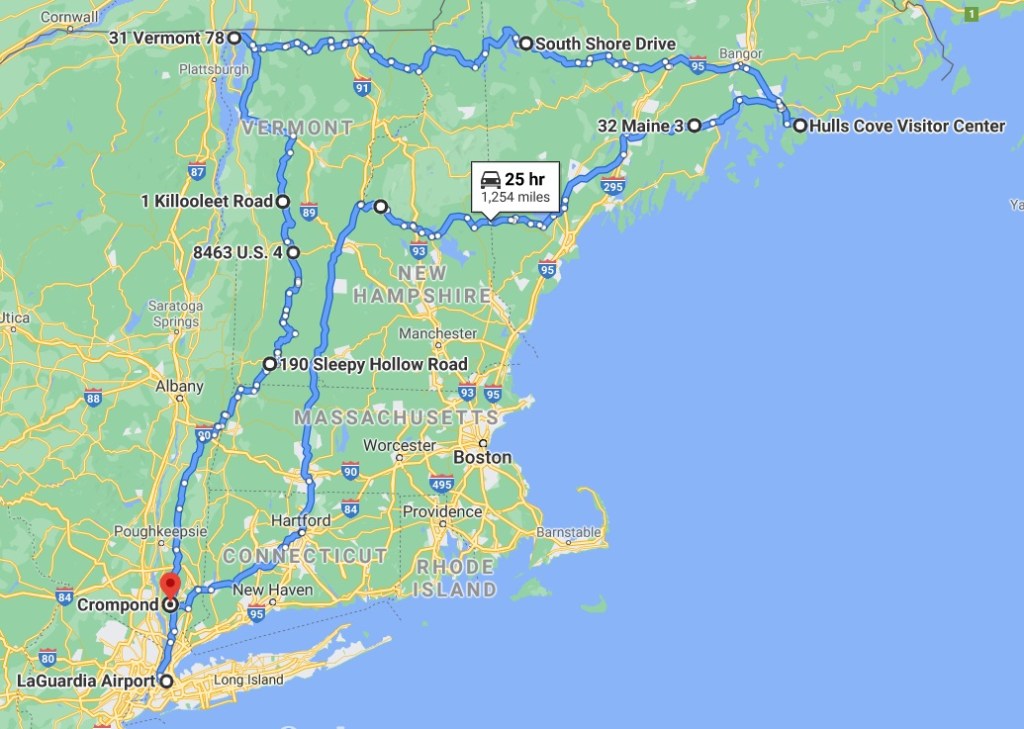
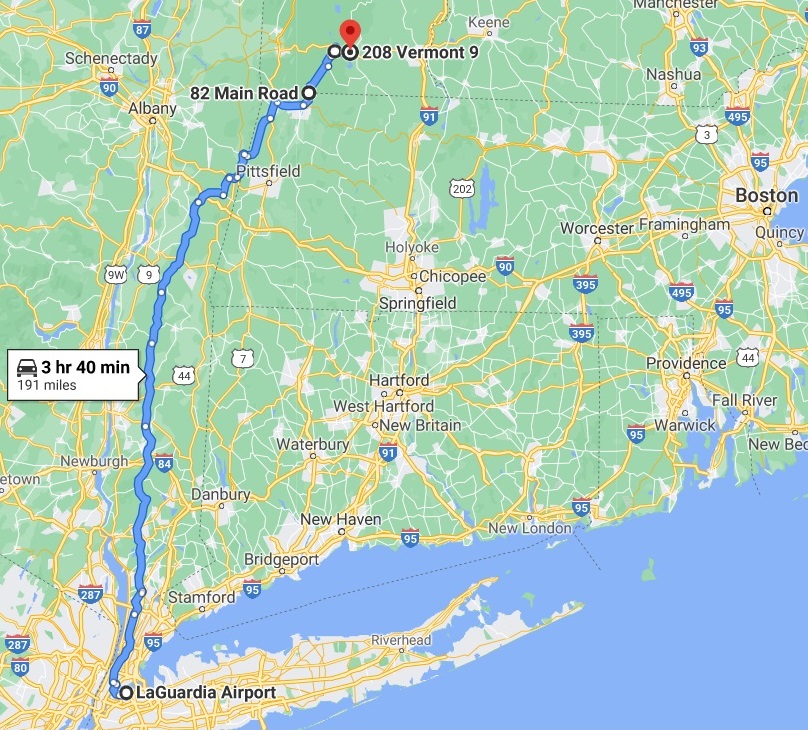
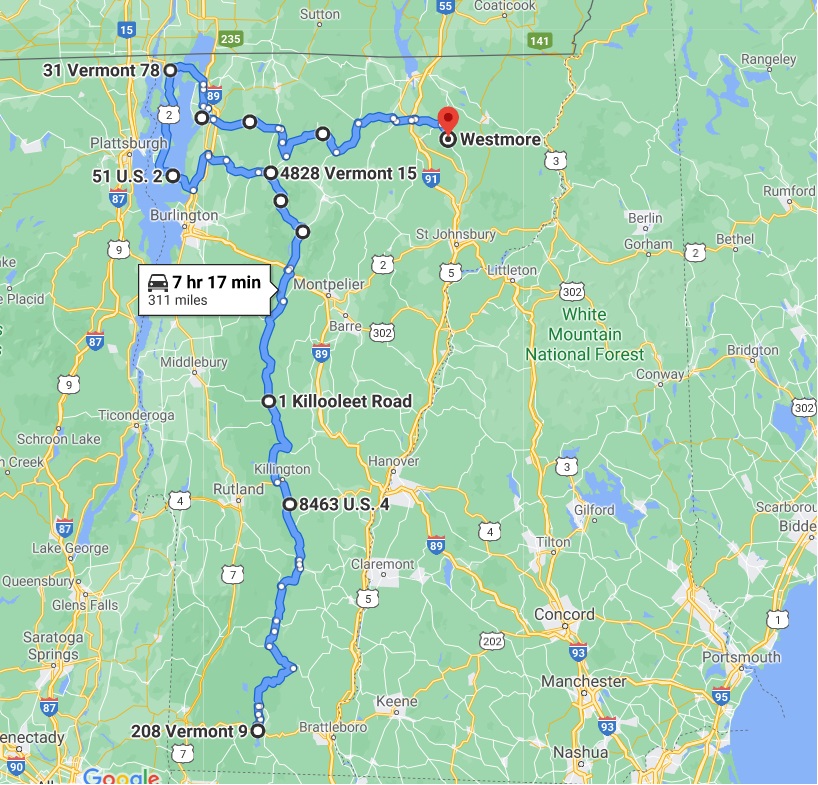
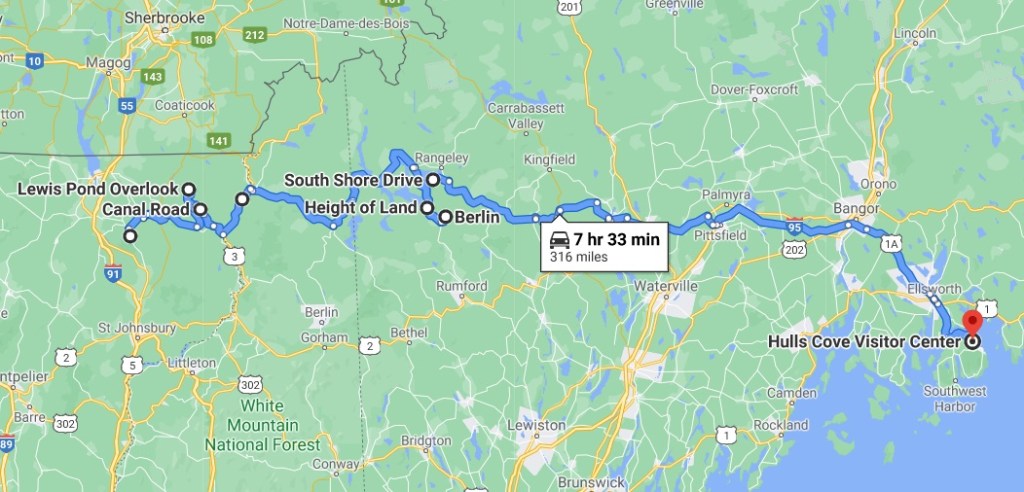
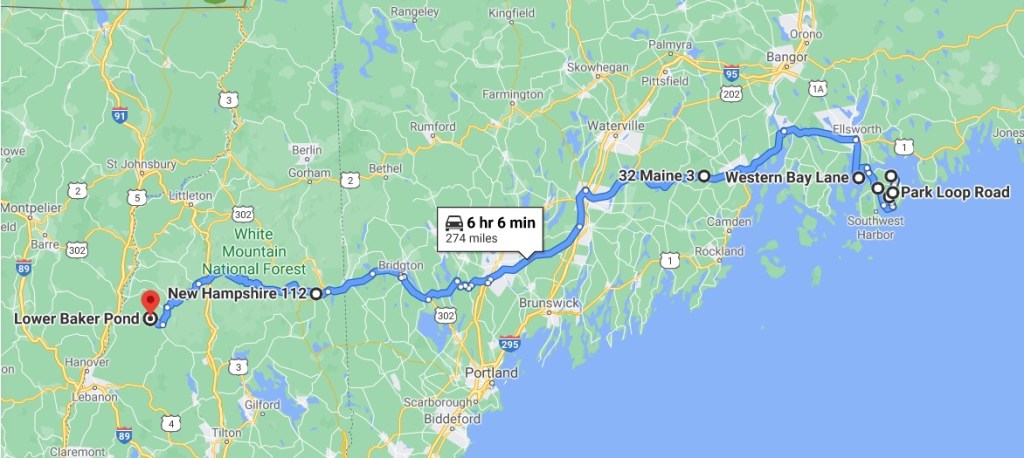
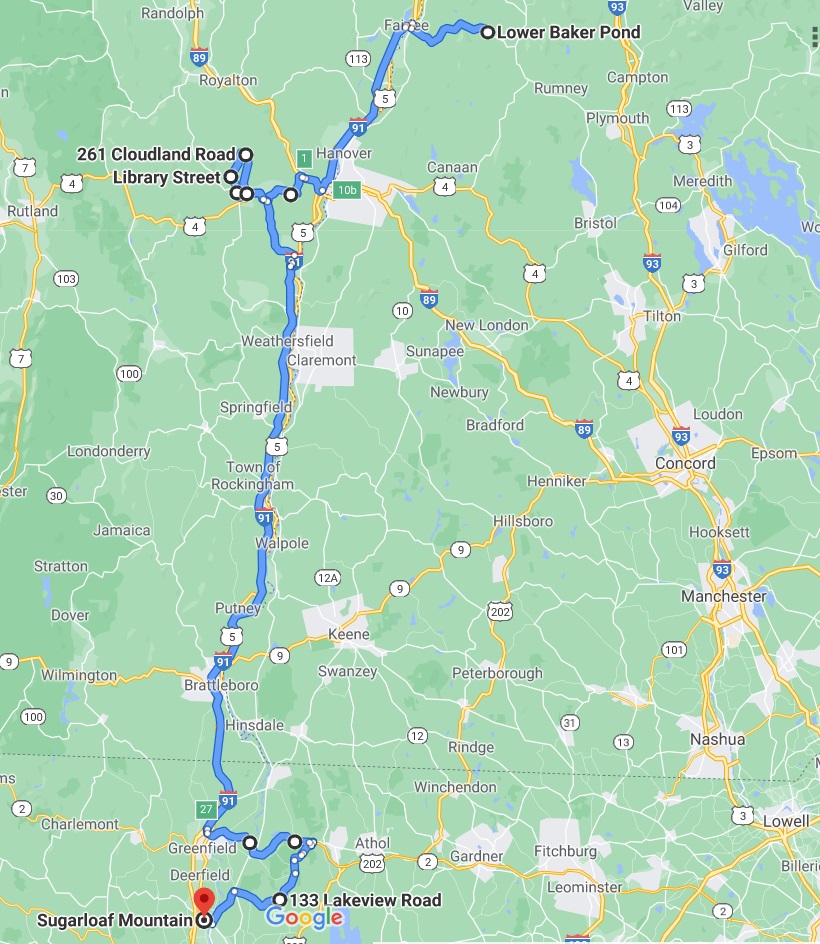
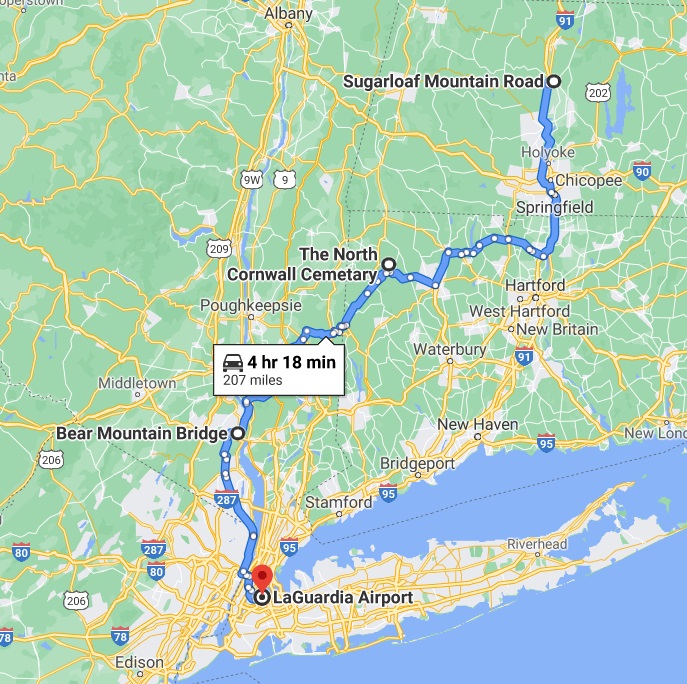
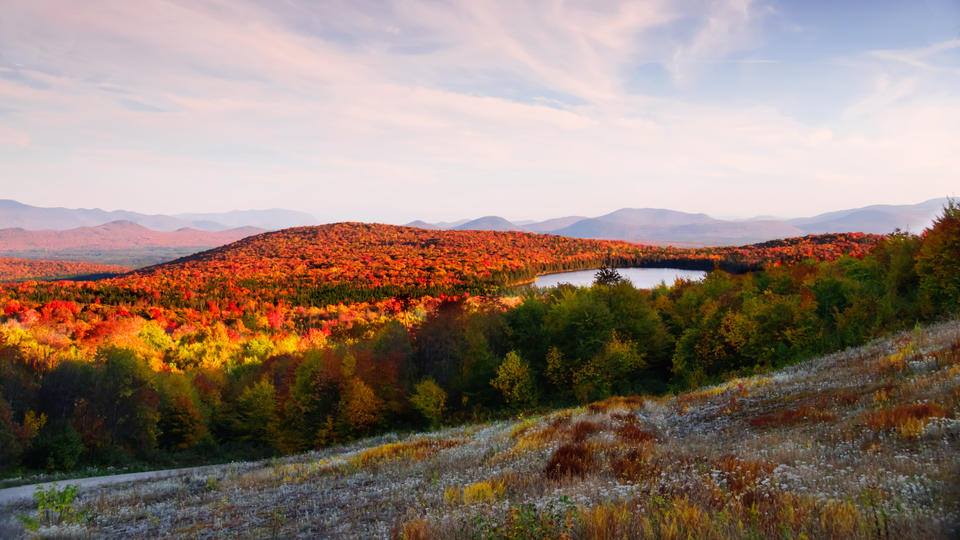
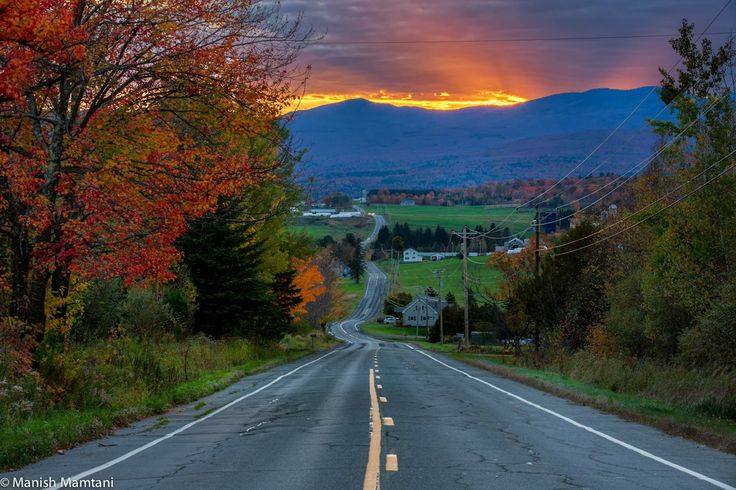
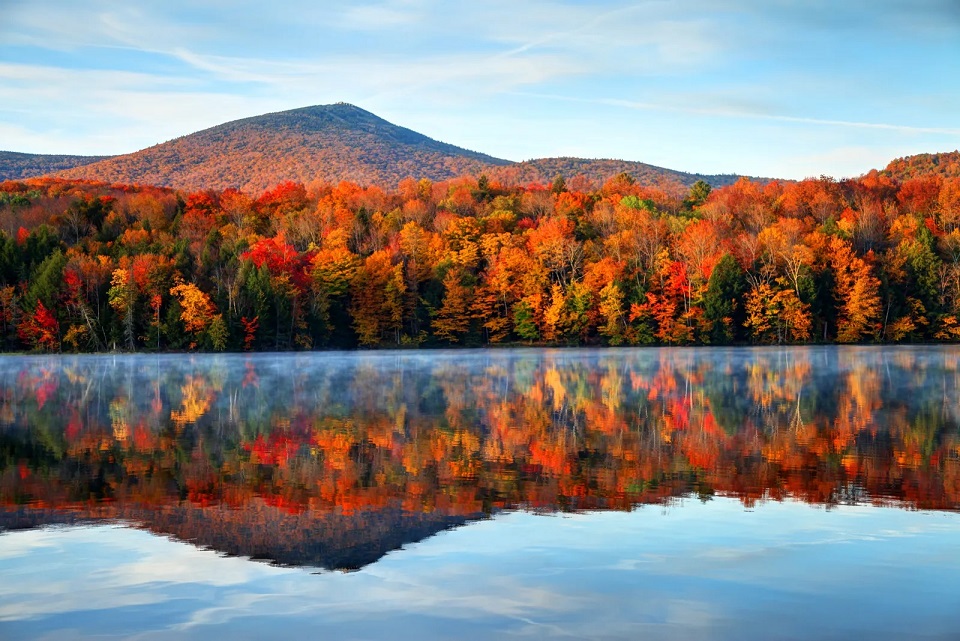
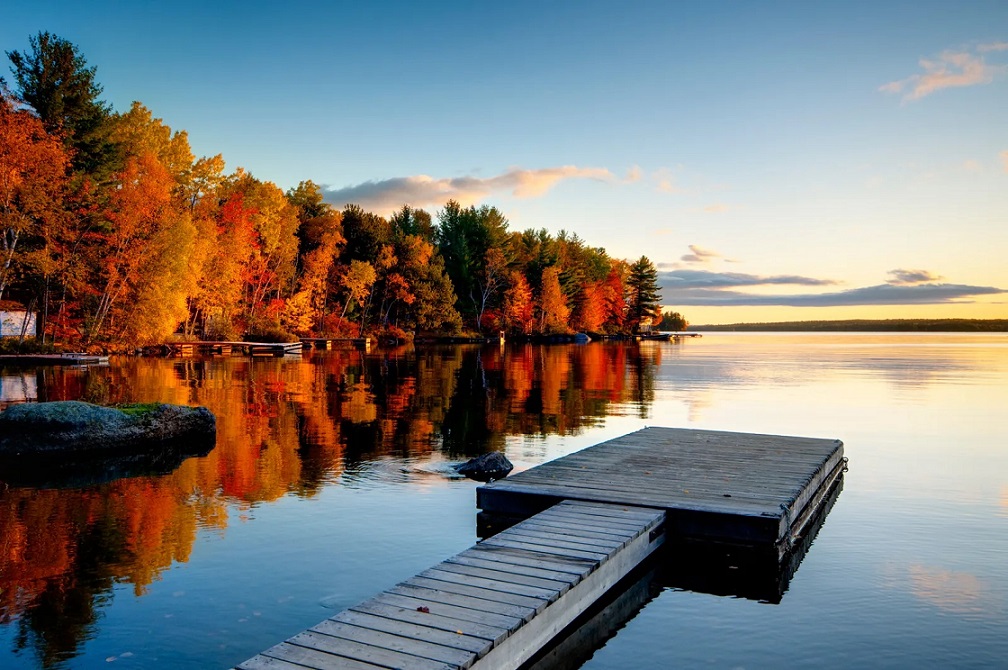
New England Fall Foliage Roadtrip

Road trip mùa thu USA đi qua các bang Connecticut, Massachusetts, New Hampshire, Vermont, Maine.

• Points of interest:

  1. Fall Foliage Vermont Route 100
  2. Lewis Pond Overlook
  3. Height of Land
  4. Acadia National Park
  5. Kancamagus Highway
  6. Lower Baker Pond
  7. White Mountain National Forest
  8. Sugarloaf Mountain
  9. Bear Mountain Bridge
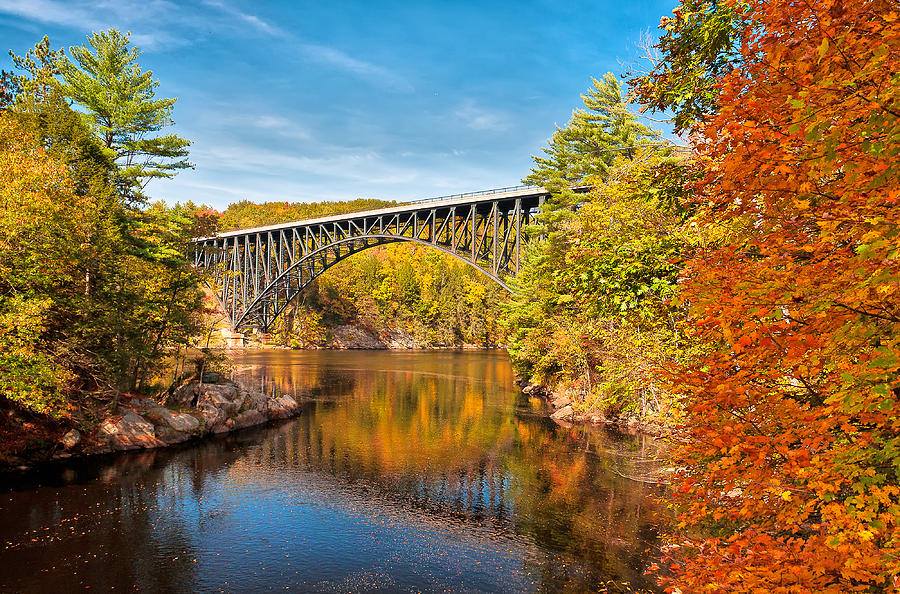
  10. French King Bridge
  11. Sleepy Hollow Village
  12. Rangeley Lake

Day 1:

https://goo.gl/maps/DYSFcFhByjWQt9fT6

Day 2:

https://goo.gl/maps/av1tQNbfPpNLGEww8

Day 3:

https://goo.gl/maps/ikMzNmcVSbyAp3y6A

Day 4:

https://goo.gl/maps/8XvLXdnnHoPehyTq6

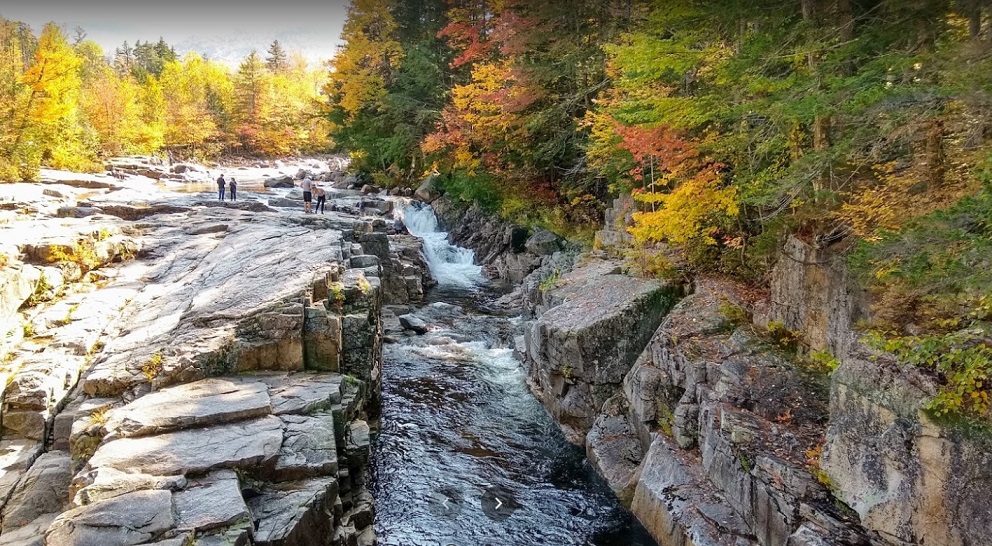
Rocky Gorge Scenic Are – Kancamagus Highway New Hampshire 112

Day 4+5:

https://goo.gl/maps/HpCBwStgqWgBqsEm7

Day 4+5:

https://goo.gl/maps/nehuFZszLhtxs1PV9

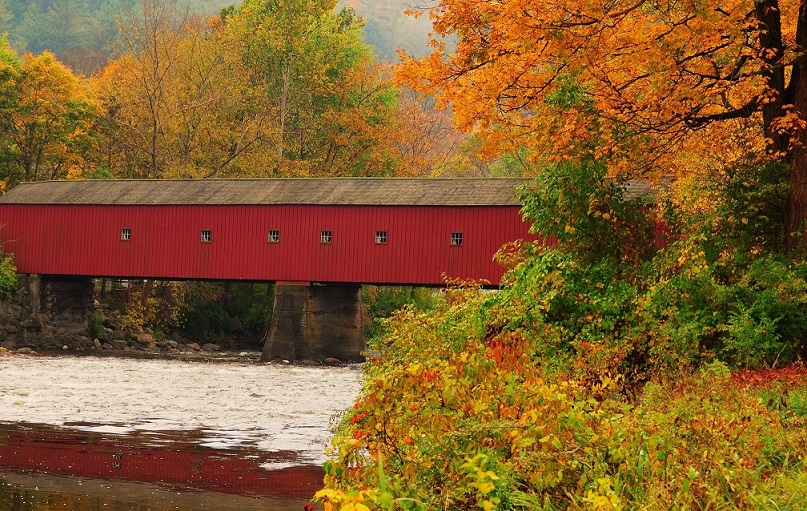
West Cornwall Bridge – Connecticut

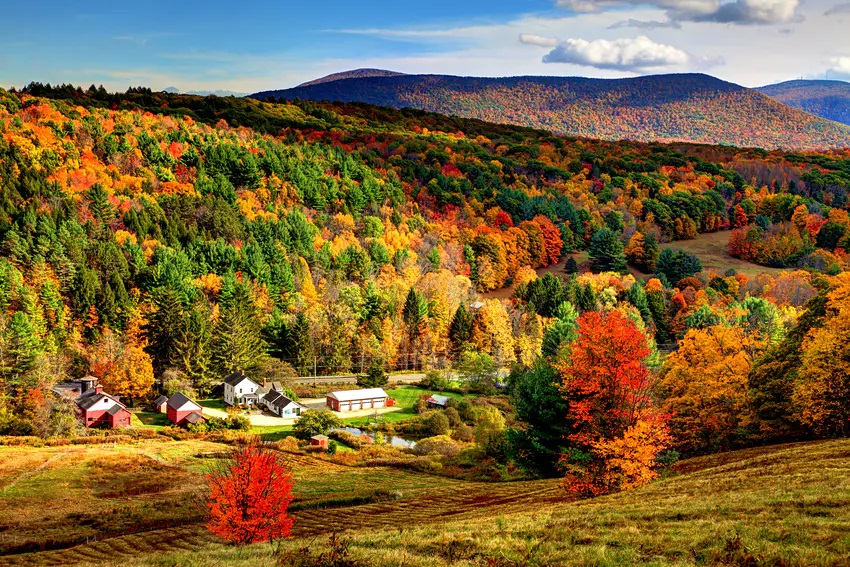
The Berkshires turn crimson and gold, making for a spectacular fall, in the hills of Massacusetts.

Vermont

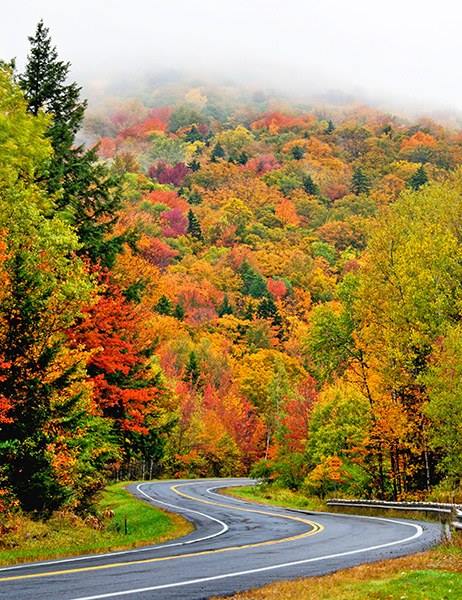
Killington – Vermont

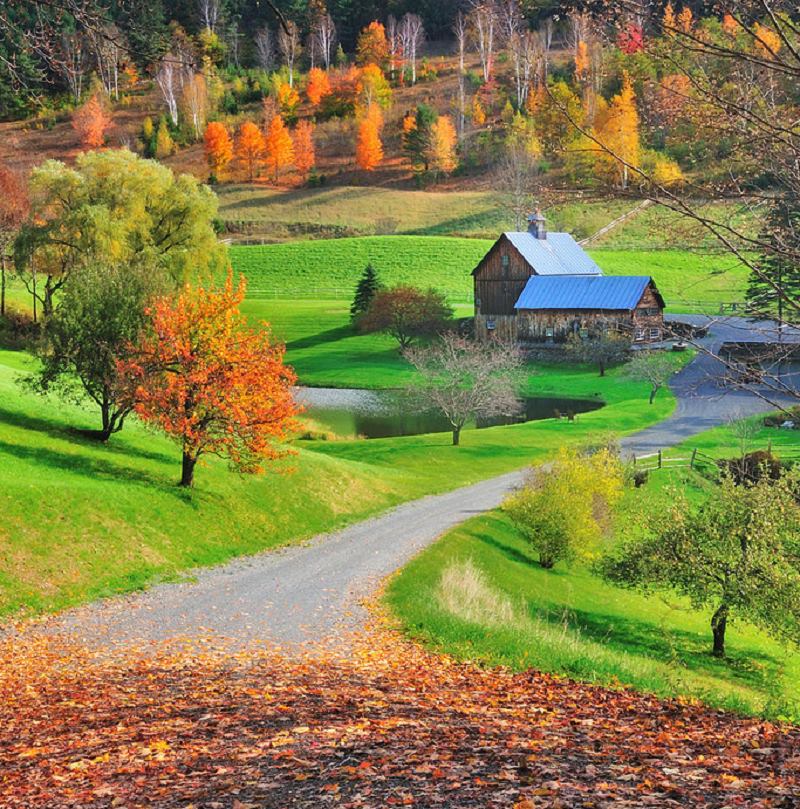
New England leaf peeping is at its finest in Vermont, where wilderness covers 75 percent of the land. Surrounded by more maple trees than anywhere else in the region, you’ll find the brightest of yellows, oranges, and reds on nearly every highway and country road. (Considering this is the best-of-the-best foliage, we’ve even created an entire guide of 15 ways to find fall in the Green Mountain State.)

Since most colors pop early October in northern Vermont, mid- to late-October visitors should consider central or southern Vermont. Visit Manchester and climb Equinox Mountain, taking in colorful panoramas that stretch from New York to New Hampshire. Or go to Woodstock, one of the most beautiful towns in the U.S., from where you can be up and down 1,250-foot Mount Tom in about 90 minutes.

Maine

Maine – Baxter State Park

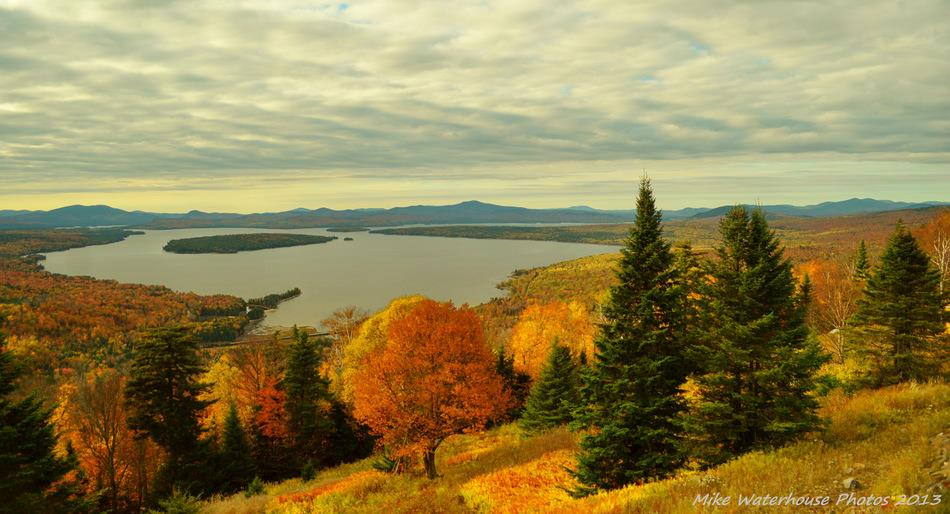
Maine is home to vast stretches of breathtaking coastline, but true immersion in the Pine Tree State’s wild crimson, pumpkin, and amber-hued woods requires heading deeper inland. For superlative fall foliage, go hiking in northern Maine in early October. Explore Baxter State Park and the forests to the southwest, the contiguous Nahmakanta Public Reserved Land and Appalachian Mountain Club 100-Mile Wilderness Conservation Area. There are enough hiking trails to keep all skill levels happy, and regardless of which you choose you’ll find paths lined with deciduous trees and towering evergreens, and punctuated by boulder-strewn streams, lakes, and ponds. (Bonus: This is prime moose-spotting territory.)

Tampa Bay- Miami

Khu Vịnh Tampa (Tampa Bay Area) có 3 thành phố quan trọng. Clearwater có bãi biển rất đẹp, được nhắc đến như thiên đàng cát trắng vùng vịnh Mexico. Hai thành phố kia là Tampa và St. Petersburg có nhiều người Việt Nam sanh sống.

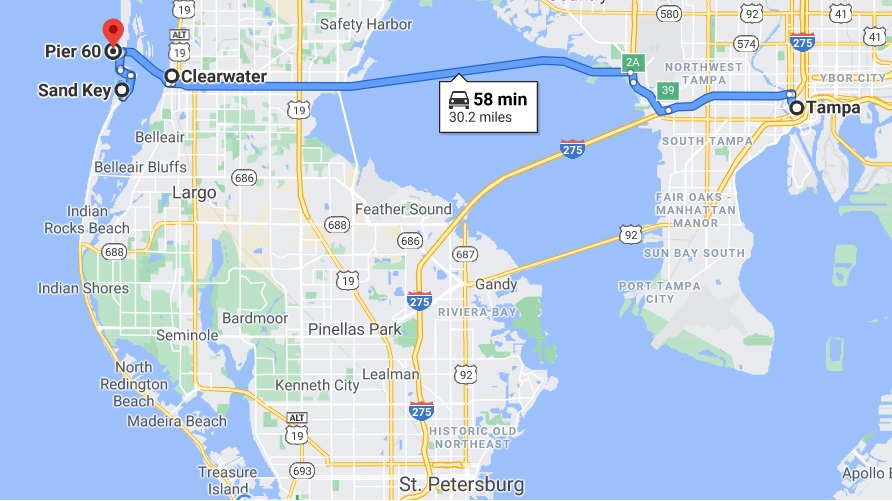
• Từ Tampa có biển Tampa Bay, chạy khoảng 50 phút qua đến Clear Water bờ biển đẹp nổi tiếng của Mỹ, sôi động ngày đêm nhưng ở đây chỗ đậu xe rất ít nên nếu đi vào những dịp lễ lớn thì khó kiếm được chỗ đậu xe và hay bị kẹt xe có khi mất cả 1 hay 2 tiếng đồng hồ để đi vô hay đi ra biển. Đi sâu vào phía trong khoảng 3 miles nữa là biển Island Sand Key có nhiều resort đẹp và yên tĩnh.

Khi trời bắt đầu tối, mời các bạn đi thăm viếng Pier 60” nổi tiếng, rất vui, nhiều nghệ sĩ trình diễn ngoài đường, nhiều trò chơi cho trẻ con và người lớn, nhiều người bán hàng thủ công nghệ, một khung cảnh vui nổi tiếng của bãi biển Clearwater.

Lễ hội hoàng hôn tại Pier này bắt đầu hoạt động mổi ngày, 2 giờ trước mặt trời lặn, và 2 tiếng sau khi mặt trời đã lặn xuống biển. Đây là một sinh hoạt nổi tiếng của vùng vịnh Tampa. Người Mỹ gọi lễ hội này là “Pier 60 Sunset Festival” (Lễ hội hoàng hôn ở bến tàu 60). Tại sao 60? Tại vì xa lộ 60 kết thúc ở bãi biển Clearwater này.

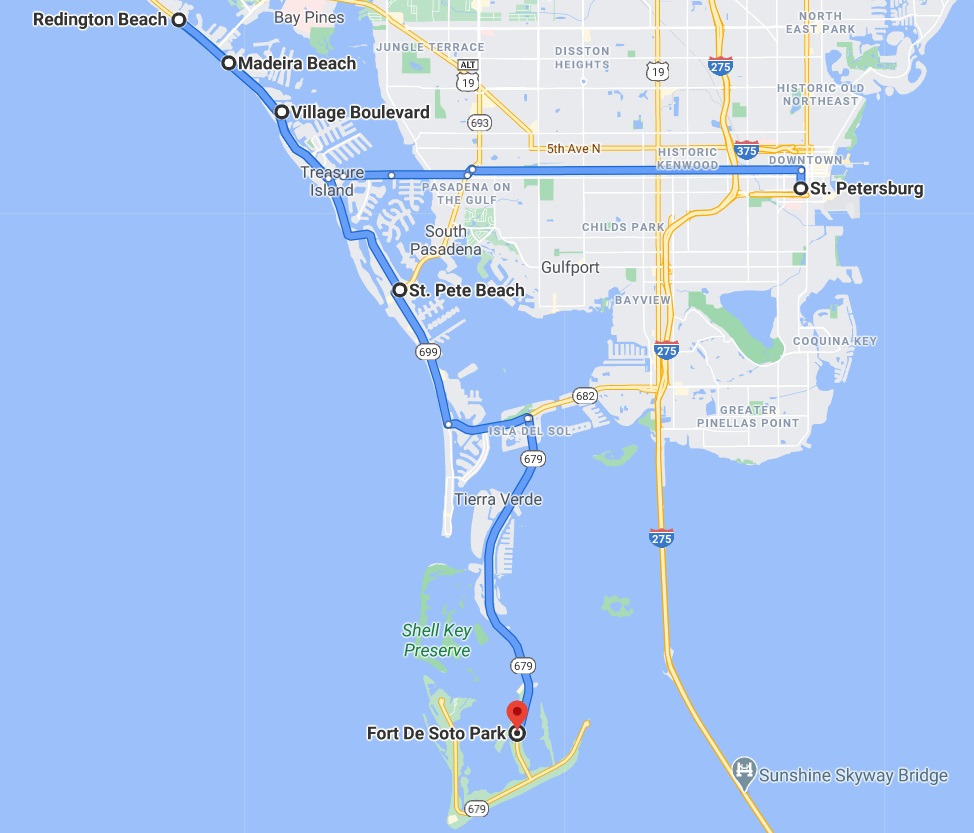
• Qua bên St. Peterburg cách Tampa khoảng nửa tiếng thành phố sạch, đẹp, có biển St. Pete Beach dọc theo khu này có những nhà hàng sea food khi mình câu được cá đem đến họ sẽ làm và chế biến thành món ăn cho mình, mình có thể order thêm side dishes hoặc các món khai vị. Vòng vòng khu vục này có biển Redington Beach, Mareida Beach có khu John Pass Village walk around cũng vui lắm. Cách St.Peteburg khoảng 20-25 phút có Ft. Desoto State Park bãi biển sạch, đẹp, hoang sơ, có chỗ cắm trại, câu cá, kayak, chèo canoe, thích hợp cho gia đình.

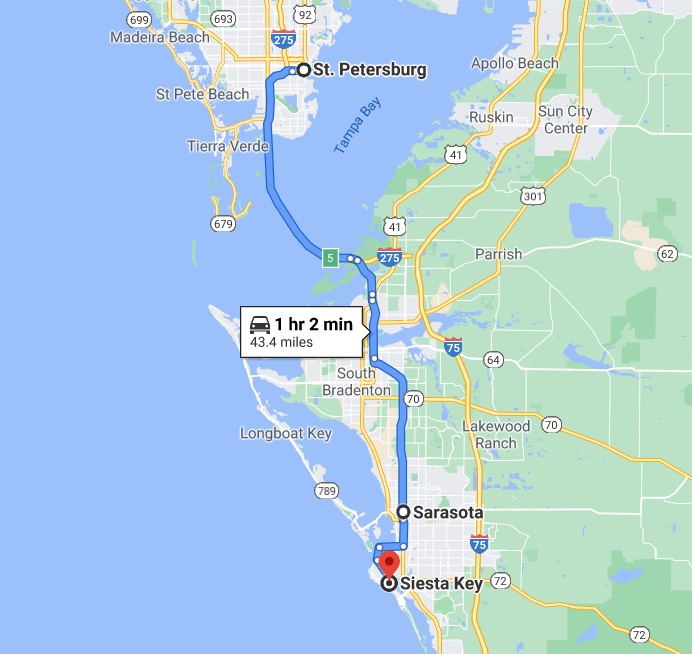
• Từ St. Peterburg chạy theo xa lộ 275 South hay khoảng 45 phút thì có biển Siesta Key thuộc thành phố Sarasota là 1 trong 10 bãi biển đẹp nhất của Mỹ vì thế lúc nào cũng đông vui náo nhiệt. Đi xuôi theo Siesta Key về hướng Nam vô đến cuối đường là biển Turtle Beach cũng khá đẹp và yên tĩnh thích hợp cho gia đình.

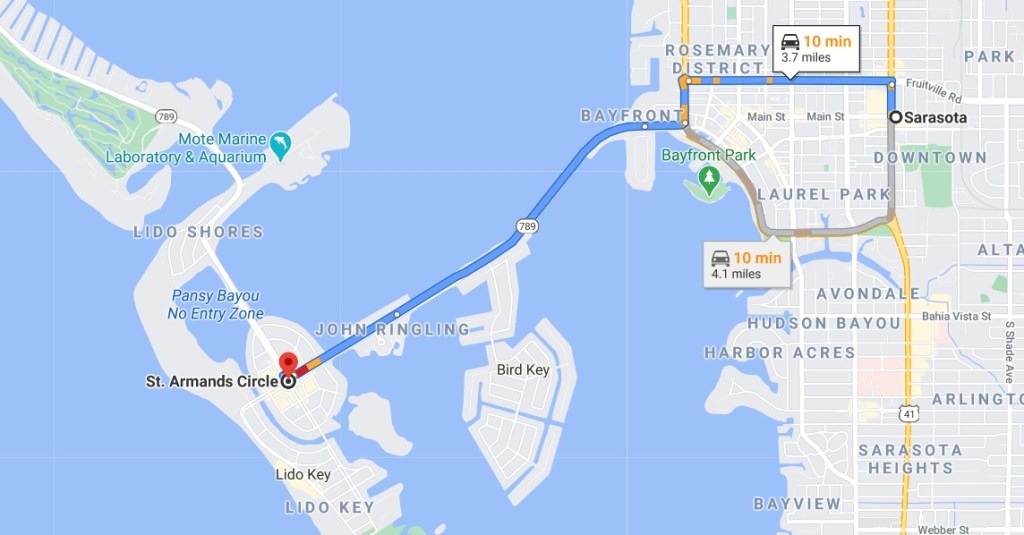
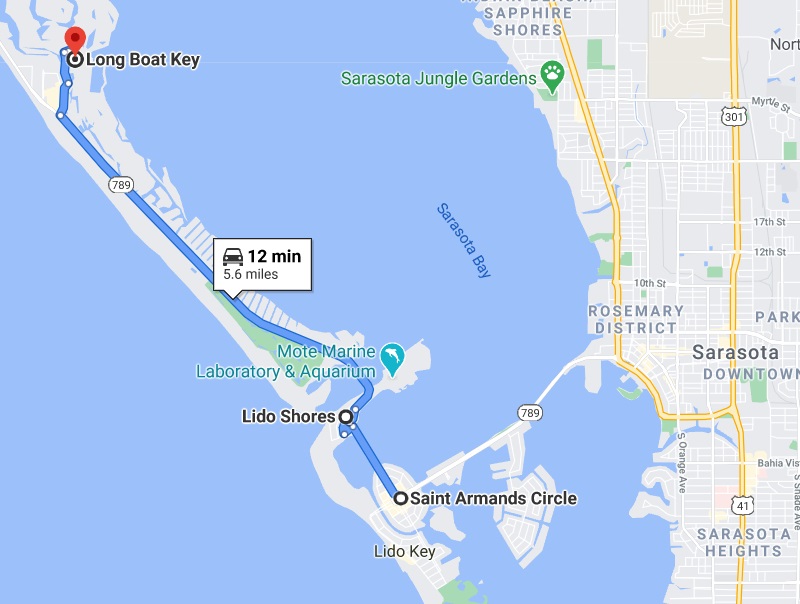
Từ thành phố Sarasota chạy qua cầu để đi đến khu St. Armands Circle là khu walk around mà đa số là dân quý tộc, giàu có, ở đây có nhà hàng, quán kem, cà phê ngồi lề đường ngó ông đi qua bà đi lại rất vui và nhộn nhịp.

Từ St. Armands đi vô thêm tí nữa có biển Lido BeachLongboat Key cát trắng, yên tĩnh.

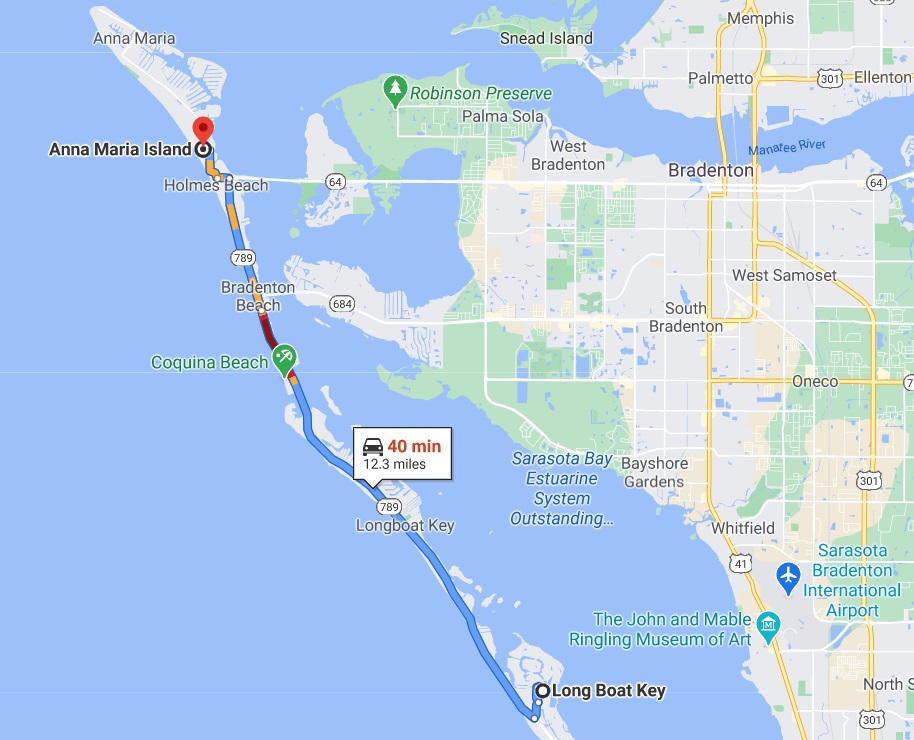
• Từ Longboat Key của Sarasota chạy lên phía Bắc khoảng 12 miles nữa thì có biển Anna Maria Island hoang sơ, cát trắng, sạch đẹp.

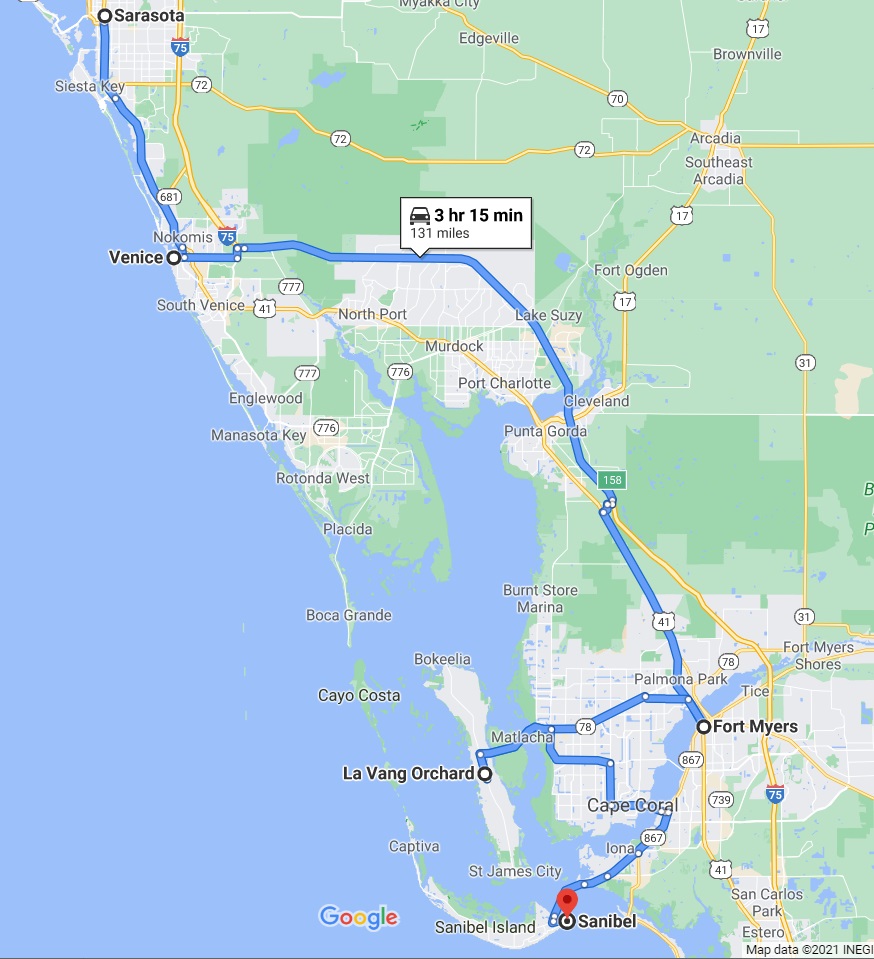
• Từ Sarasota đi tiếp I-75 South xa thêm 1 chút thì có Ft. Myer, Cape Coral, Sanibel có biển cũng đẹp và có J N Ding Darling National Wild Life Refuge, đi vô sâu tận cùng là Captiva đẹp hoang sơ .

Biển Sanibel này nổi tiếng trên thế giới về bãi cát đầy vỏ sò. Cát biển ở đây nhỏ xíu, trắng và mịn. Nước biển trong vắt như nước lọc và có màu pha lê rất đẹp.

In a word — spectacular! Sanibel is known as the Shelling Capital of the World! And while we can’t say for sure if that’s true, honestly — it’s that good. Shelling is one of the reasons you come to Sanibel. The precious gifts from the sea wash up on the shore by the tons, tickling your legs and feet as you stoop down to snatch them up.

All of our Sanibel beaches are great for shelling. You won’t be disappointed with any of them. The island’s unique formation and east-west stretch is ideal for finding special shell treasures. Low tide is best to venture out and find seashells. If you can go after a storm the shelling choices will be even better. Don’t forget a bag, sunscreen and water. It’s fun, it’s free, and best of all it’s never-ending!

Lighthouse Beach on Sanibel is the place to go if you’re hunting for smaller shells. The larger shells tend to wash ashore more frequently as you work your way along the coast toward the west end. For that reason, we recommend checking out Sanibel’s Blind Pass Beach.

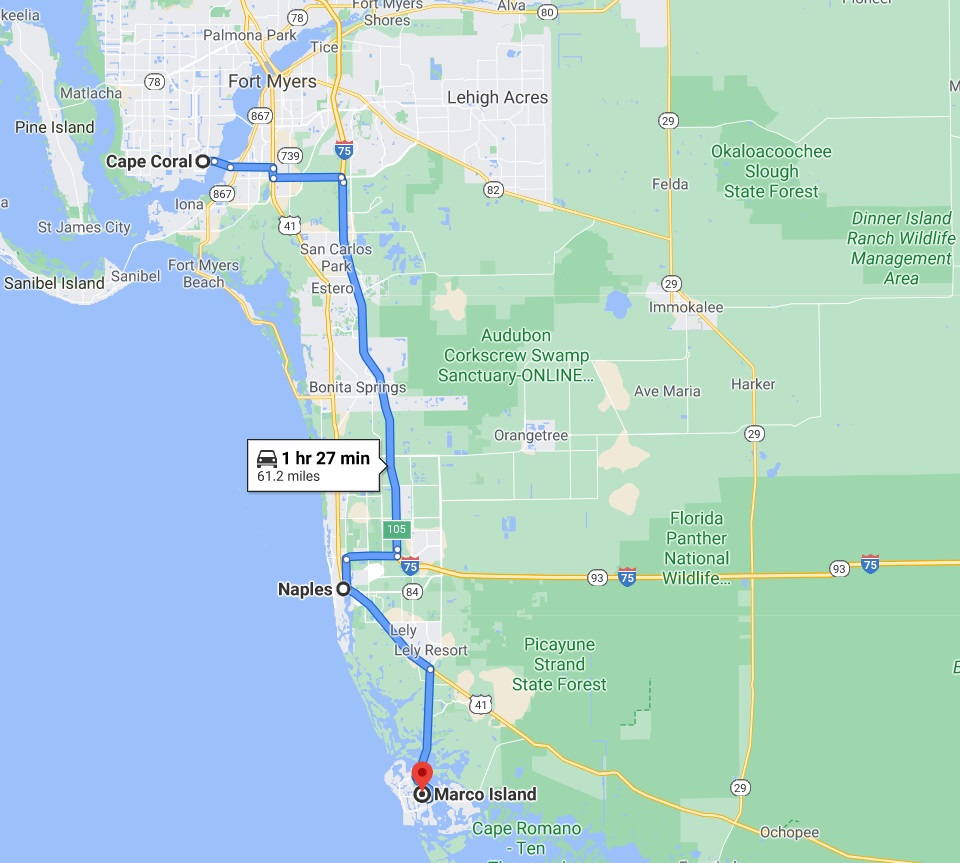
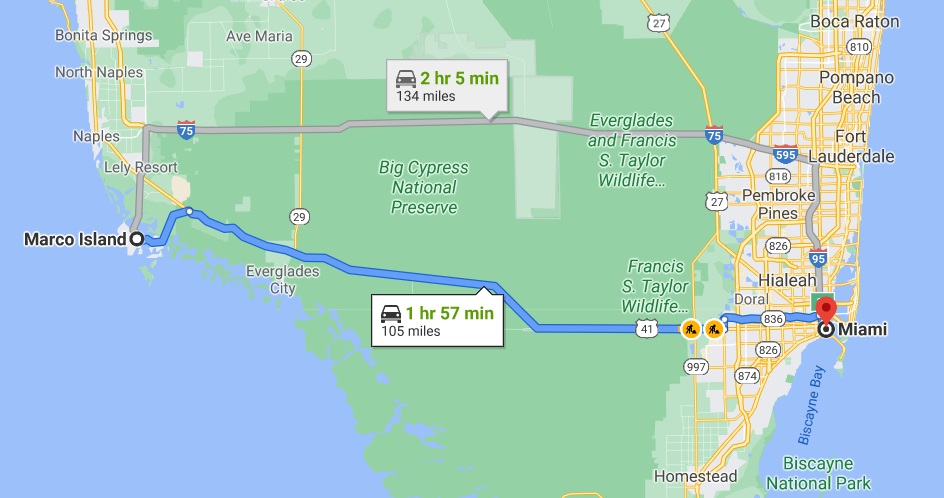
• Kế đến là Naples, Marco Island. Thành phố Naples là của dân nhà giàu và quý tộc ở, giống như phía bên bờ Đông West Palm Beach nơi có nhiều nhà của những tài tử điện ảnh và nhân vật nổi tiếng. Vô tận cùng là Marco Island có nhiều resort đẹp, sang, yên tĩnh.


• Qua hết những biển này là đến Everglade National Park. Nói chung biển Florida đều có chung 1 đặc điểm là bờ cát rộng, chạy dài mút mắt, không có núi và đá như bờ biển ở miền Tây như California.

Grand Canyon South Rim

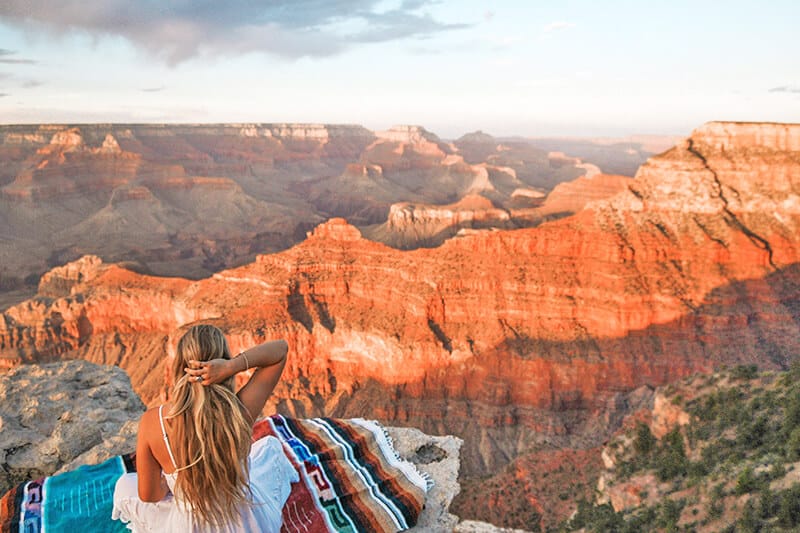
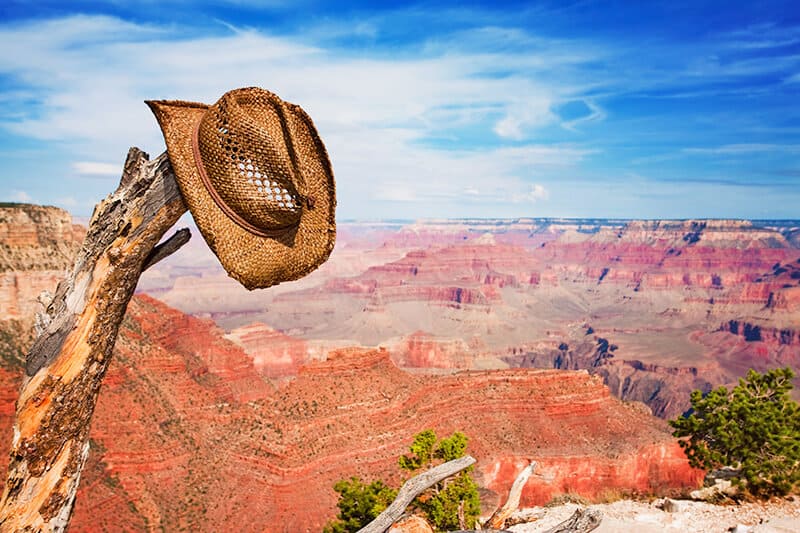
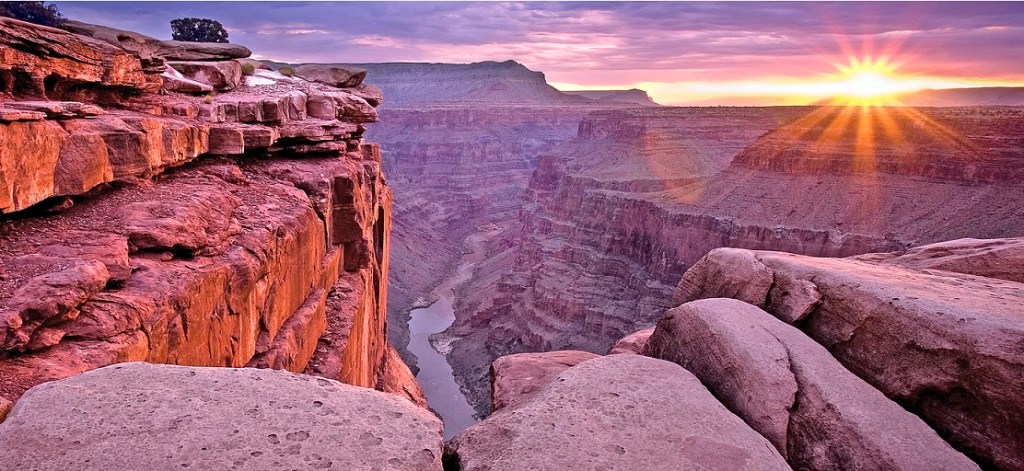
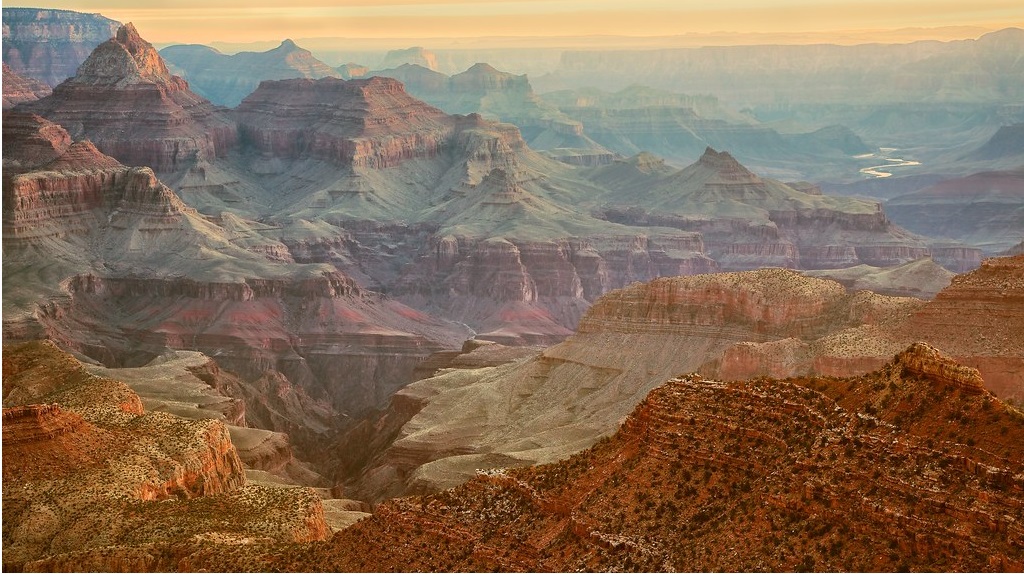
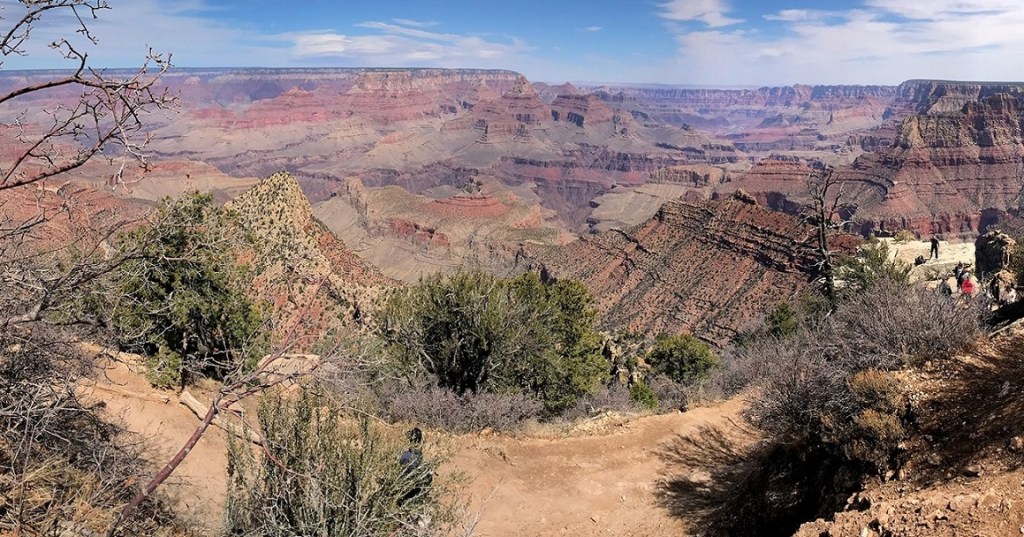
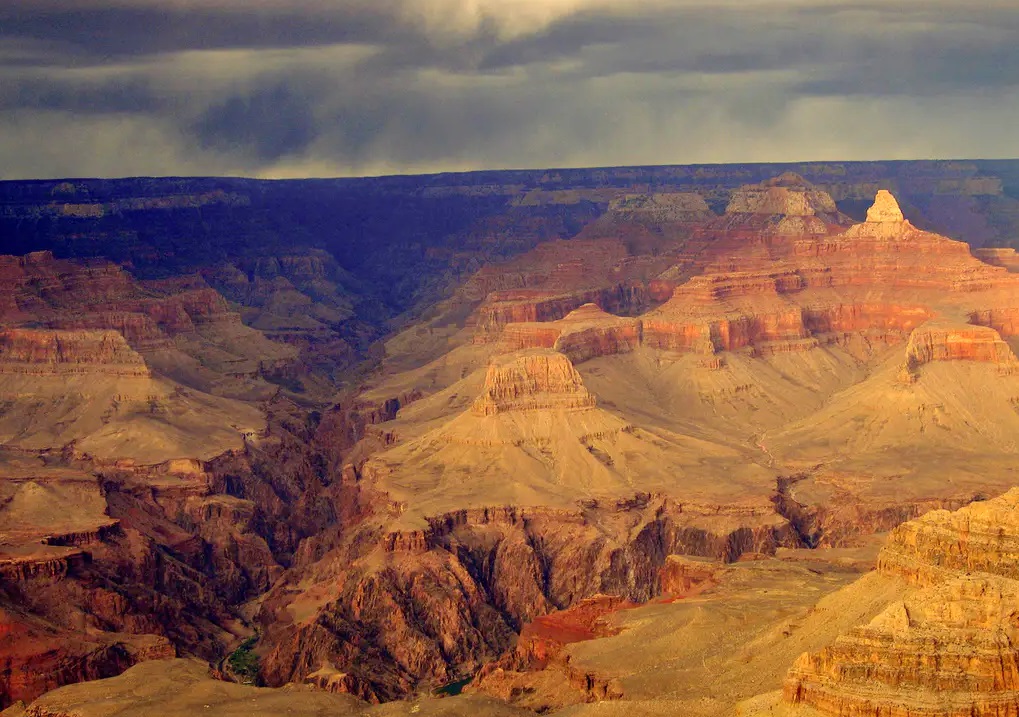
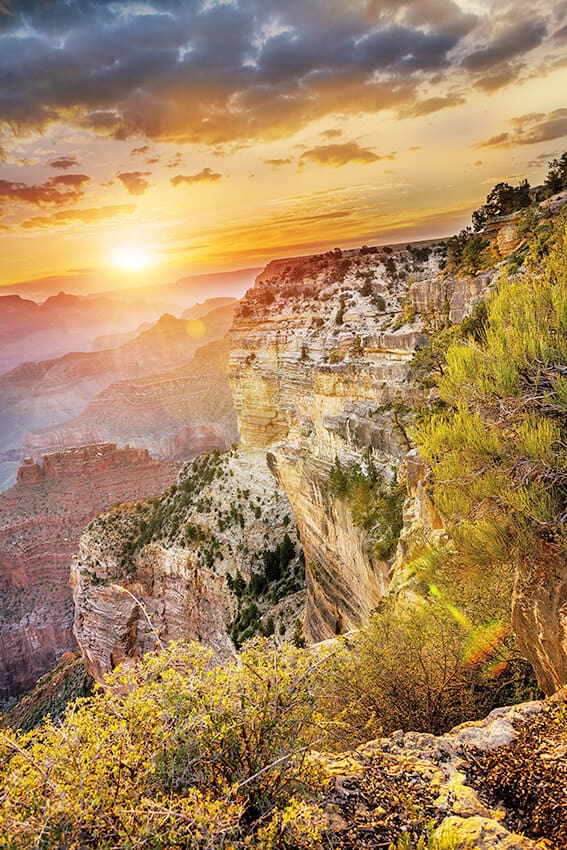
Điều đầu tiên mà tôi ấn tượng mãi khi đến tham quan nơi này là dãy núi đá trùng trùng, điệp điệp, kéo dài dường như vô tận. Kỳ lạ là quần thể này luôn chuyển màu theo vị trí, ánh sáng mặt trời và thời tiết. Lúc thì toàn vùng núi nhuốm màu đỏ sậm nhưng sau đó, lại là một màu tím ngăn ngắt hay vàng quạch, cứ lớp lớp chồng lên nhau, nằm xen kẽ với những hẻm núi khổng lồ, hiểm trở và bao quanh là con sông Colorado xanh ngắt, uốn lượn, tạo nên một bức họa vĩ đại của thiên nhiên.

Theo lời của hướng dẫn viên, đại vực Grand Canyon là một trong bảy kỳ quan thiên nhiên thế giới ở bang Arizona, nước Mỹ. Hàng triệu năm trước, con sông Colorado từ phía bắc rẽ xuống phía tây, bào mòn cao nguyên Colorado để tạo ra một hẻm núi lớn đầu tiên ở nơi này. Một thời gian sau, con sông này lại kiến tạo ra một hẻm núi khác ở phía đông. Sau đó, hai hẻm núi này bị vỡ, gặp nhau và tạo thành quần thể núi đá trùng trùng điệp điệp. Grand Canyon dài 446km, rộng từ 0,4km đến 29km và sâu hơn 1,6km.

 Giữa cao nguyên mênh mông, mặt đất bỗng sụt xuống tạo thành một lòng chảo khổng lồ, sâu hoắm, đầy những vết cắt ngang dọc. Từ lòng chảo đó mọc lên vô số những ngọn núi đá màu nâu đỏ, hình thù tựa như những ngôi đền cổ, nằm trùng điệp bên nhau. Những ngọn núi nơi đây có hình dáng rất kỳ lạ với những vân đá rất đều nhau và kỳ vĩ. Nước, gió và thời gian đã góp phần tạo trên bề mặt của nó những lớp đá, hình thành một dạng địa chất vô cùng đặc biệt.

  Các nhà nghiên cứu cho rằng Grand Canyon có niên đại gần 2 triệu năm tuổi. Những hòn đá tạo nên hẻm núi lớn nhất thế giới này có xuất xứ từ vùng bờ biển phía Đông giáp với Đại Tây Dương và nguồn gốc lượng cát bao phủ 350.000km2 miền Tây nước Mỹ, bồi đắp nên các tảng sa thạch ở Grand Canyon khoảng 150 đến 300 triệu năm trước.

Trải qua hàng triệu năm chịu sự bào mòn của mưa, gió và dòng sông Colorado, Grand Canyon hiện nay có rất nhiều hình thù kỳ lạ. Ở nhiều nơi, các ngọn núi tựa như những ngôi đền, những lâu đài, thành quách hàng triệu năm tuổi nằm ẩn hiện trong sương mù. Grand Canyon có đến 12 tầng đá cổ, rất dễ phân biệt qua sự chuyển màu từ đỏ vàng sang đỏ tươi, đến nâu đỏ và nâu đậm trên các ngọn núi. Tầng cổ nhất nằm dưới chân núi có tuổi đời khoảng 1,84 tỉ năm, tầng mới nhất nằm trên đỉnh núi có 270 triệu năm tuổi. (Trái đất được cho là hình thành cách đây khoảng 4,5 tỉ năm).
Đã đành kỳ quan thì ở đâu cũng đẹp, nhưng Grand Canyon là cái đẹp không nơi nào có được. Đó là cái đẹp vừa hùng vĩ vừa sâu lắng, vừa hiện thực vừa mộng mơ, vừa rực rỡ vừa dịu dàng, vừa muốn bay lên vừa muốn chìm xuống, vừa thấy ta bé nhỏ vừa thấy mình bao la… Mà thôi, không nói nữa. Cách tốt nhất là bạn hãy đến đó mà chiêm ngắm, cảm nhận, giao hòa, và thổn thức.

Khi đã lên đến được đỉnh của đại vực, nhìn ngắm bức họa vĩ đại của thiên nhiên bày biện trước mắt trong một không gian tĩnh lặng, ban sơ, bạn sẽ thấy mình nhỏ bé biết bao. “Trực tiếp đối diện, ngắm nhìn thắng cảnh hùng vĩ tại Vườn Quốc gia Grand Canyon cũng như Hẻm núi Grand Canyon, bạn sẽ thấy thế giới dường như lớn hơn, bão tố, hoàng hôn và bình minh rực rỡ và ngoạn mục hơn”, trích từ một tài liệu giới thiệu về Grand Canyon. 

Rồi cũng như khi kết thúc một ngày, bình minh xuất hiện với dáng vẻ dịu hiền và khoan thai của ông mặt trời. Bức tranh Grand Canyon bắt đầu dậy lên muôn sắc màu: trắng, xanh, vàng, tím, đỏ, hồng… lộng lẫy, kiêu sa. Rất dễ có cảm tưởng như Grand Canyon là một mâm đồ chơi của các thần, ở đó vị thần nào cũng muốn gắng gổ phù phép cho đồ chơi của mình đẹp hơn, lung linh hơn, độc đáo hơn – tầng tầng lớp lớp những đỉnh đồi, chóp núi, khe, vực… trong tay các vị thi nhau khoe sắc; đến cả cây tuyết tùng chơ vơ bên bờ vực cũng cố sáng lên điểm tô cho bức tranh thêm màu minh triết. Cho đến khi ông mặt trời hoàn toàn hòa thân vào cái vũ trụ sáng bao la kia thì cũng là lúc trò chơi kết thúc. Nếu tôi là giám khảo cuộc thi, tôi sẽ không ngần ngại chấm điểm cho tất cả các thần thí sinh đều đạt loại ưu.

Thế nhưng, đó chưa phải là điều tuyệt vời nhất khi bạn tham quan nơi này. Nhiều người đến đây, trong đó có tôi, đã phải công nhận rằng: “Hạnh phúc nhất có lẽ là cảm giác được chạm chân đến tận cùng của đại vực, thò chân xuống dòng nước màu xanh mát lạnh của dòng sông Colorado. Bạn sẽ không hiểu mình đang đặt chân ở ngưỡng cửa thiên đường, nơi tuyệt đối yên bình tĩnh lặng hay còn đang ở giữa đường đi sâu xuống lòng trái đất”.

Bright Angel Trail gập ghềnh, khúc khuỷu, thoai thoải, uốn lượn giữa hai bờ vực. Bên kia lối mòn, dọc dài những vách đá dựng đứng; đó là loại đá sa thạch đỏ, nâu, vàng, tím, hồng… xen đá granit, lớp lớp chồng lên nhau, kỳ vĩ và đẹp mê hồn. Với các nhà địa chất, đó là cuốn biên niên sử của trái đất, với chúng ta, đó là kiệt tác của tạo vật cất dấu trong nó bao câu chuyện của thời gian. Gió từ các hẻm núi mang theo hơi lạnh cùng thứ âm thanh rất riêng của nó. Có lẽ đây là nơi duy nhất con người thấy được sự chuyển động của thời gian và nghe được âm thanh của vĩnh cữu.

Đường xuống vực, mỗi khúc quanh mở ra một cảnh giới mới, mỗi cung đường hứa hẹn điều ngạc nhiên. Tôi đặc biệt xúc động về những cây tuyết tùng chơ vơ trên bờ vực. Chắc nhờ đại vực mà nó sớm ngộ ra lẽ đời: đã không có gì tồn tại vĩnh hằng thì mắc mớ chi phải bận tâm về chuyện tồn tại hay không tồn tại, thì cứ an nhiên mà đùa giỡn với gió núi mây ngàn, mà lay lắc reo ca. Có lẽ nhờ thế, qua hàng triệu năm, trên các vách đá cheo leo loài tuyết tùng vẫn thay nhau mọc, mặc cho sự tàn phai.

Grand Canyon South Rim Tour from East Entrance

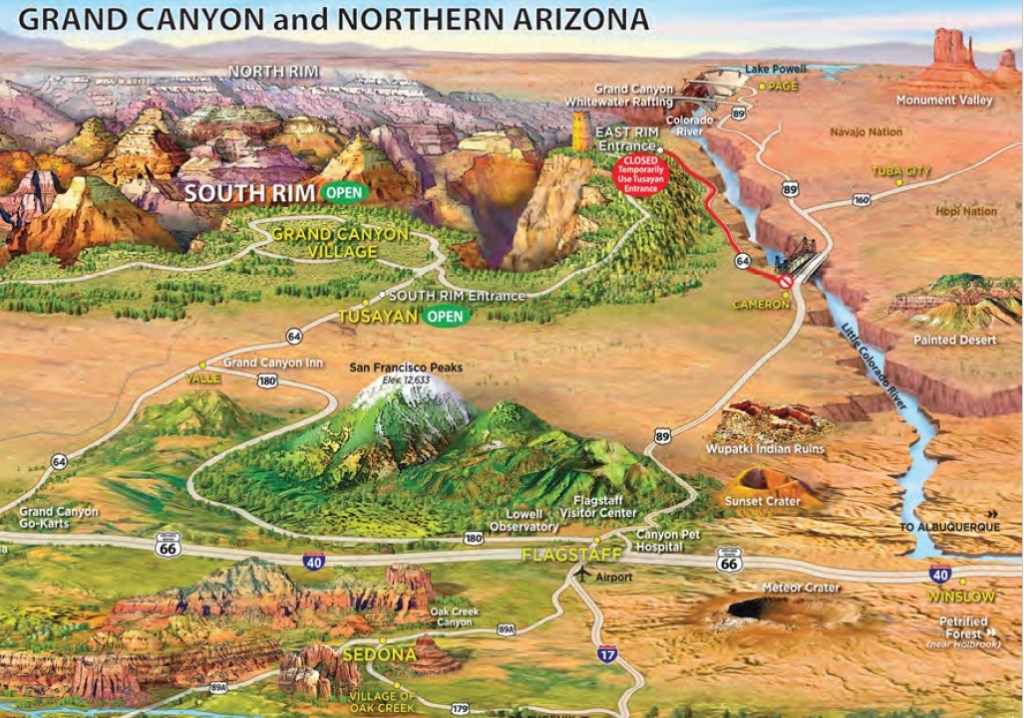
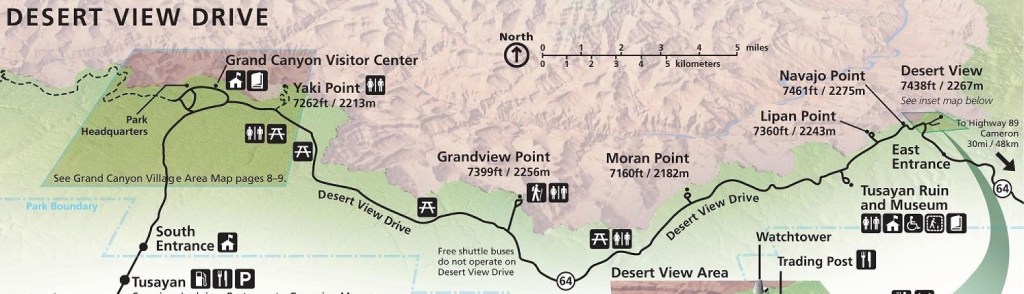
Desert View Drive

Desert View Drive is the most popular scenic drive in Grand Canyon National Park, providing spots to stop and take in the amazing views and breathtaking beauty of the canyon.

The Desert View Drive at the South Rim of the Grand Canyon is a very scenic stretch of Arizona Highway 64 that extends 25 beautiful miles along the canyon rim, running from the Desert View Overlook to the Grand Canyon Village area. It is the main scenic drive that can be done by private vehicles, and passes a large number of overlooks and other points of interest.
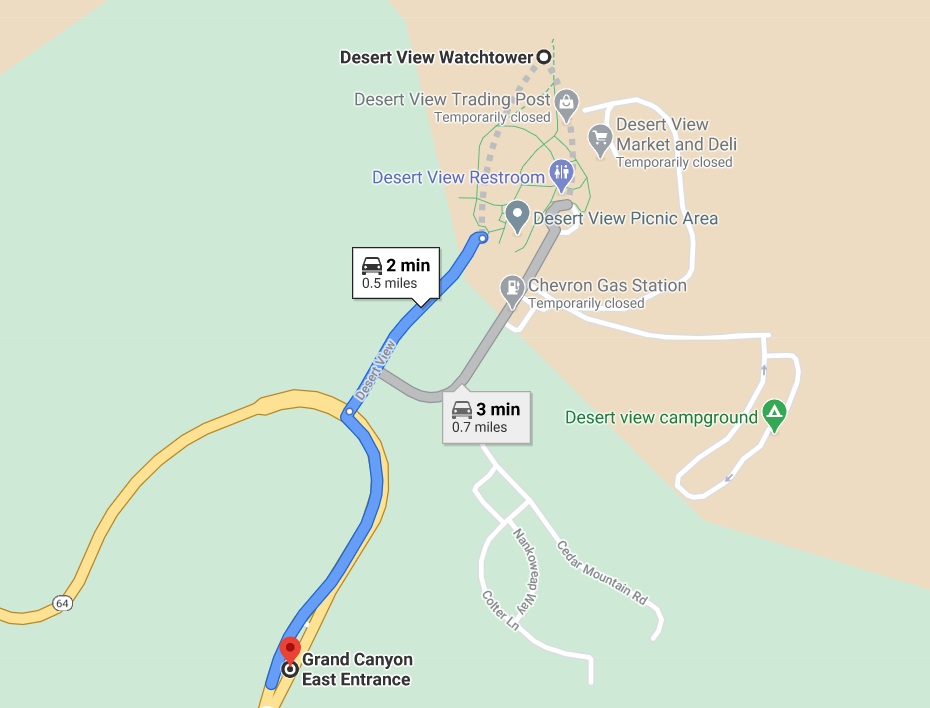
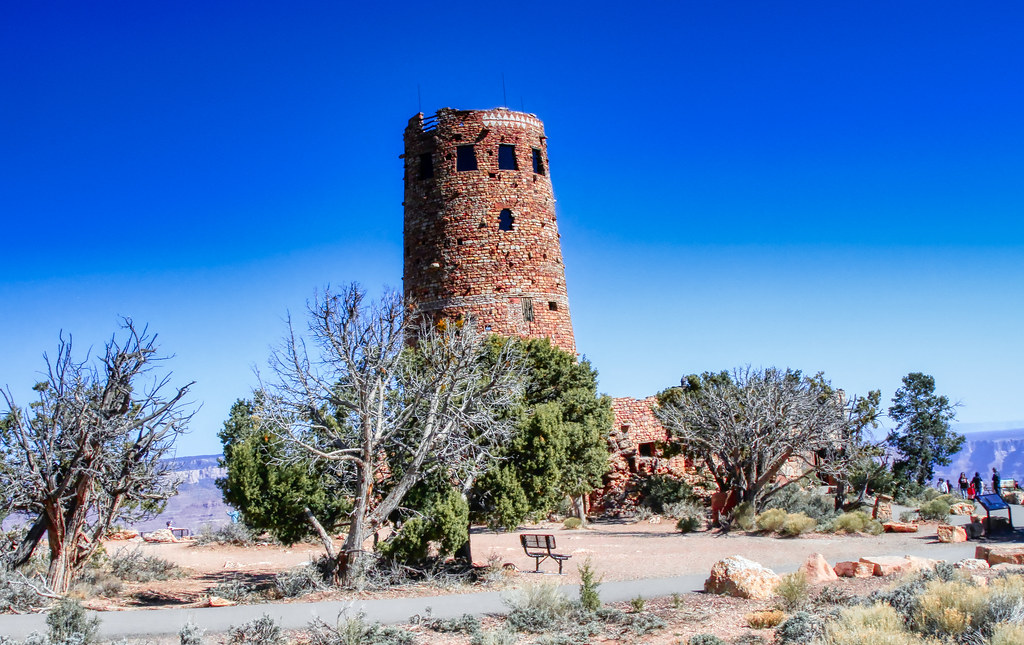
Stop #1: Desert View Watchtower

( 0.5 miles from East Entrance )

Time Needed:  Count 20-30 minutes for a visit.

From the East Entrance, drive on Highway 64, turning right towards Desert View. After parking in the Desert View parking lot, walk down a short paved to the Watchtower.

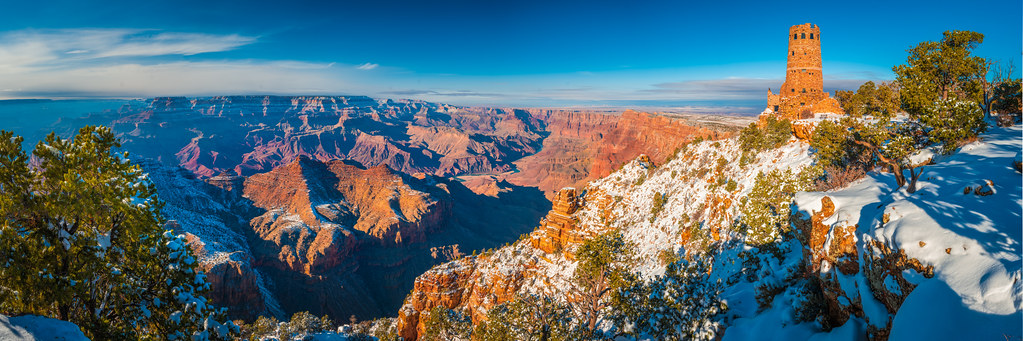
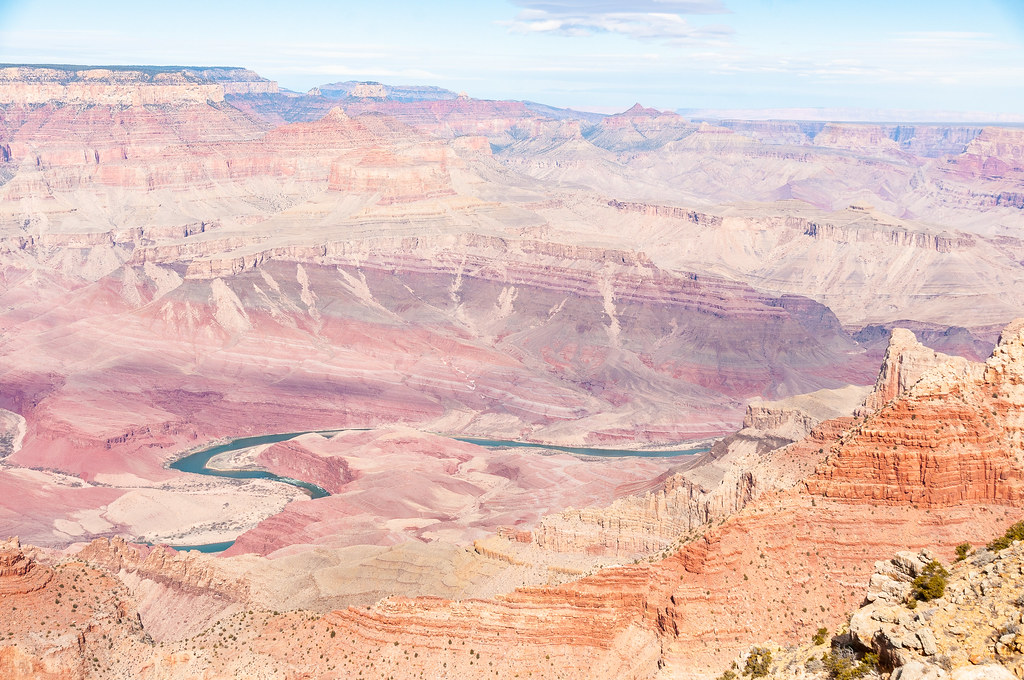
A short ¼-mile (½-km) walk will lead you to this historic buildings, to the rim. From Desert View Point you will be able to enjoy the Colorado River make a big bend to the west. You can climb the stairs to the top of the watchtower for outstanding views of the canyon. A great photo opportunity for photographers.

At this location will find a bookstore, snack bar, general store, service station, restrooms and seasonal campground. 

Desert View offers an all-ages experience that combines history, art, architecture and Native American culture.

Anchoring Desert View is the watchtower, built in 1932 and designed by renowned architect Mary E. J. Colter. This iconic building was inspired by ancient Native American watchtowers and is decorated with murals by a Hopi artist. If you’re interested in native culture, the nearby Tusayan Museum and Ruins also provides a window into the lives of the Pueblo Indians, who inhabited the area over 800 years ago.

The Colorado River winding through the Grand Canyon from the Desert View Watchtower

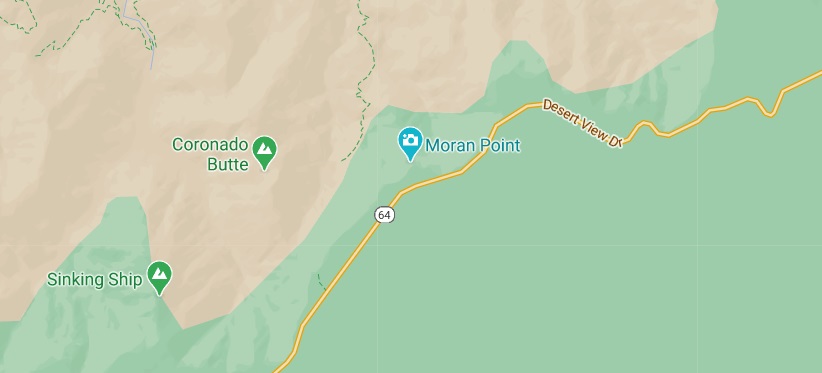
Stop #2: Moran Point

( 7.2 miles from Desert View Watchtower – 7.7 miles from East Entrance )

Time Needed:  Count 15-25 minutes for a visit.

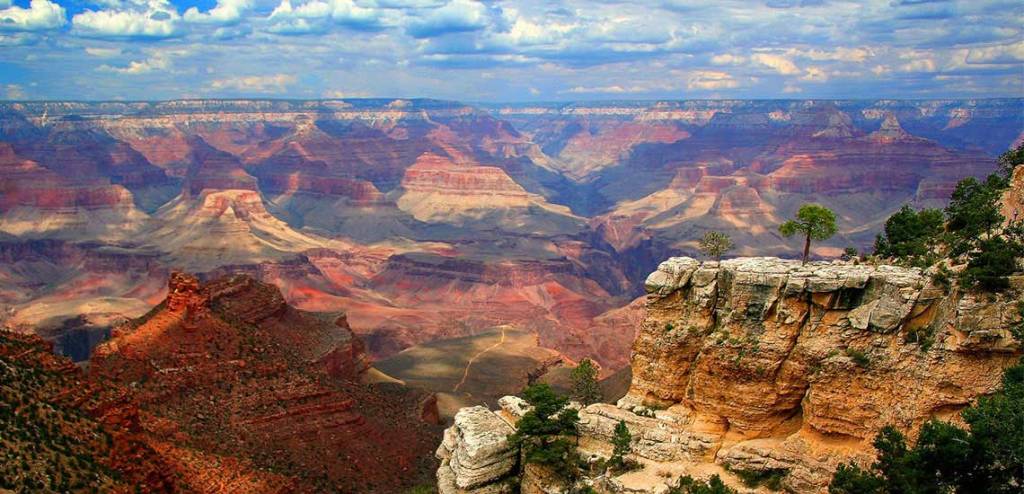
This is one of the most colorful spots in Desert View Drive, you must stop here and enjoy the scenic view of the rocks, the sediment colors are varied and the lights reflect off the rocks to provide beautiful views.

Grand Canyon South Rim from Moran Point

Moran Point is located at the end of a short spur road just north of Desert Scenic Drive at the Grand Canyon South Rim. It is about 17 miles east of Grand Canyon Village and about 7 miles from the Desert View East Entrance to the South Rim.

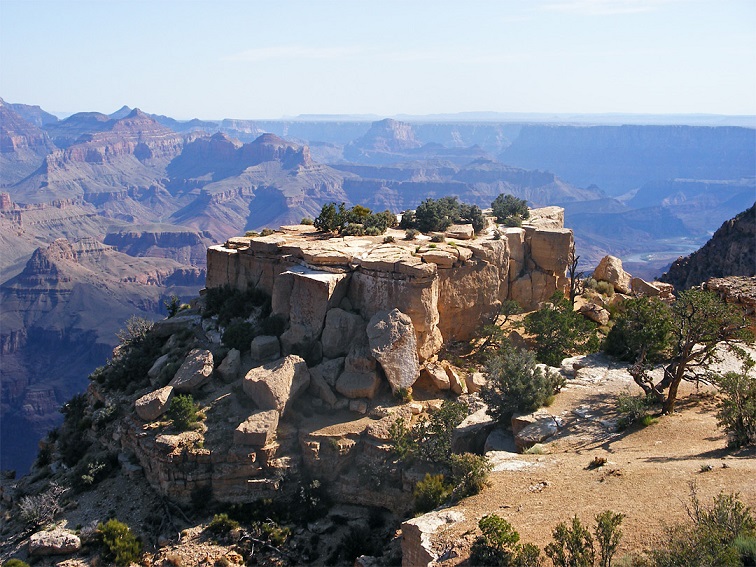
Isolated block of Kaibab limestone at the very edge of Moran Point

This point is named for landscape painter Thomas Moran, whose sketches and oil paintings introduced America to the beauty of the canyon in the years before photography. After accompanying John Wesley Powell on a surveying expedition in 1873, Moran illustrated Powell’s book, The Exploration of the Colorado River and its Canyons. The federal government bought one of Moran’s paintings, The Chasm of the Colorado, and sent it to Congress. It and other works helped lure the first tourists to the canyon in the 19th century.

Sinking Ship

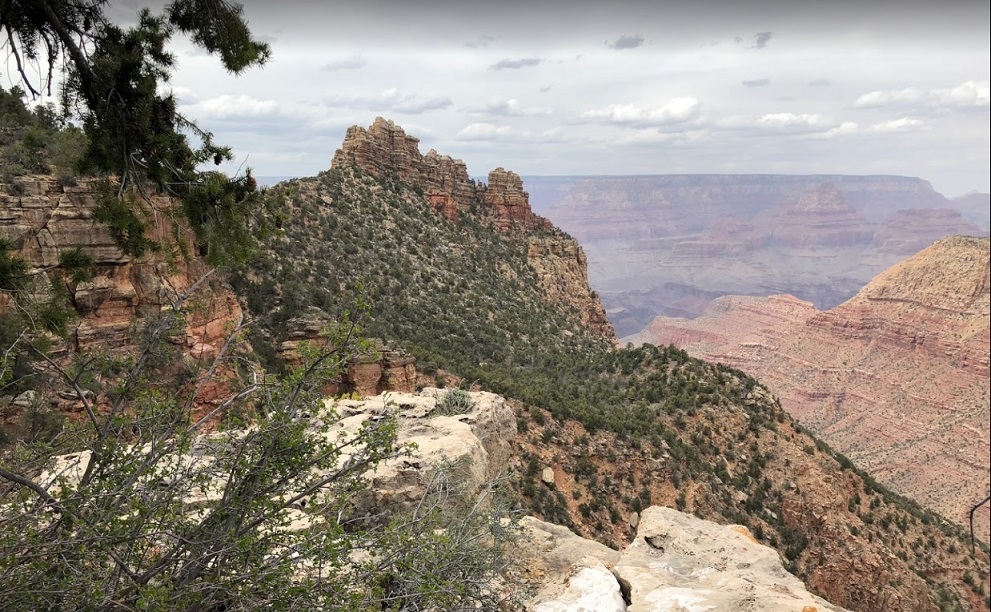
Moran Point is the best place from which to view the tilting block of rock known as the Sinking Ship. Standing at the end of the point, look southwest at the rocks level with the rim. You’ll see the Sinking Ship beyond the horizontal layers of Coronado Butte (in the foreground). It’s part of the Grandview monocline, a zone where rocks are bent in a single fold around a fault line.

Coronado Butte.

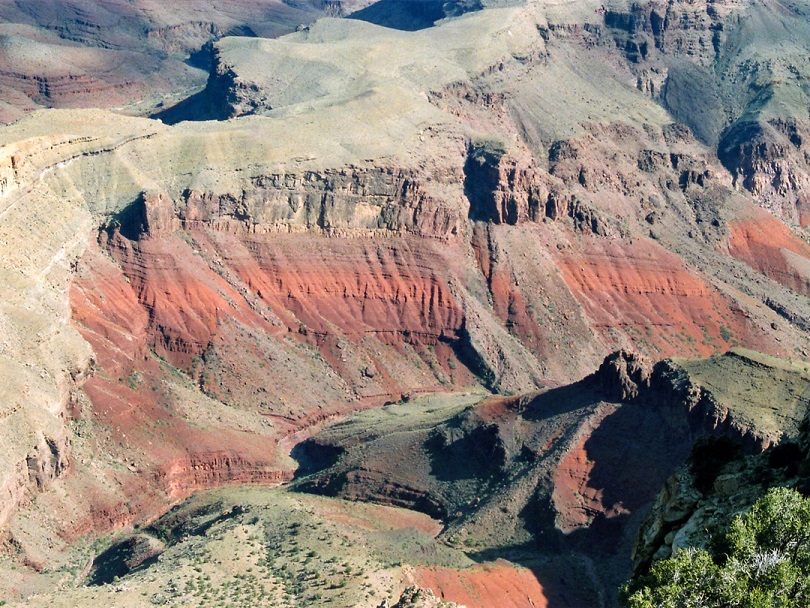
Directly below Moran Point is Red Canyon, a very colorful tributary and especially so at the lower end where deep red/orange layered rocks are exposed, formed of Hakatai Shale.

Lower end of Red Canyon, due north of Moran Point

Moran Point. It’s one of the areas where you can clearly see the three main rock groups in the Grand Canyon.

The first group is the Layered Paleozoic Rocks, sedimentary rocks that make most of the canyon’s depth. The second one is the Grand Canyon Supergroup, the most significant geologic record, visible only in a few spots along the rim. This group of rocks is like an history book on the Grand Canyon: the scientists gathered so much information by studying it! The third group is the Vishnu Basement Rocks, the oldest rock formations in the canyon.

Stop #3: Grandview Point 

( 7 miles from Moran Point – 14.5 miles from East Entrance )

Time Needed:  Count 15-25 minutes for a visit.

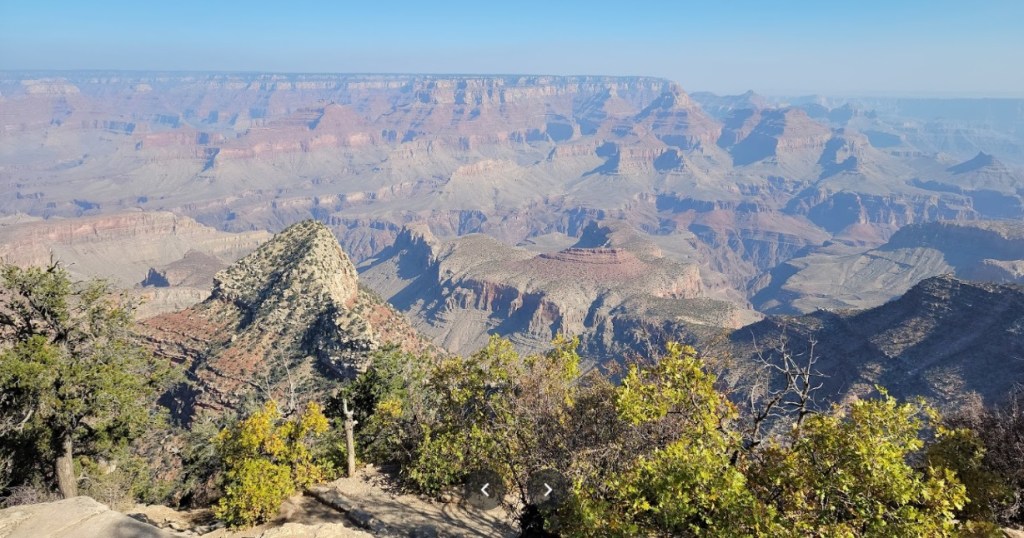
Located roughly halfway between the major landmarks of Desert View Watchtower and the Grand Canyon Visitor Center. Grandview Point is the southernmost lookout point at the South Rim of the Grand Canyon. At an elevation of about 7,400 feet, Grandview gets a bit more rainfall than other overlook points which is why it has a more dense forest of pine and oak trees. Although the trees do obstruct the views somewhat, it also creates a more tranquil environment.

Grandview Point overlook

This is also the point furthest from the river and so with the largest area of intervening buttes and ravines.

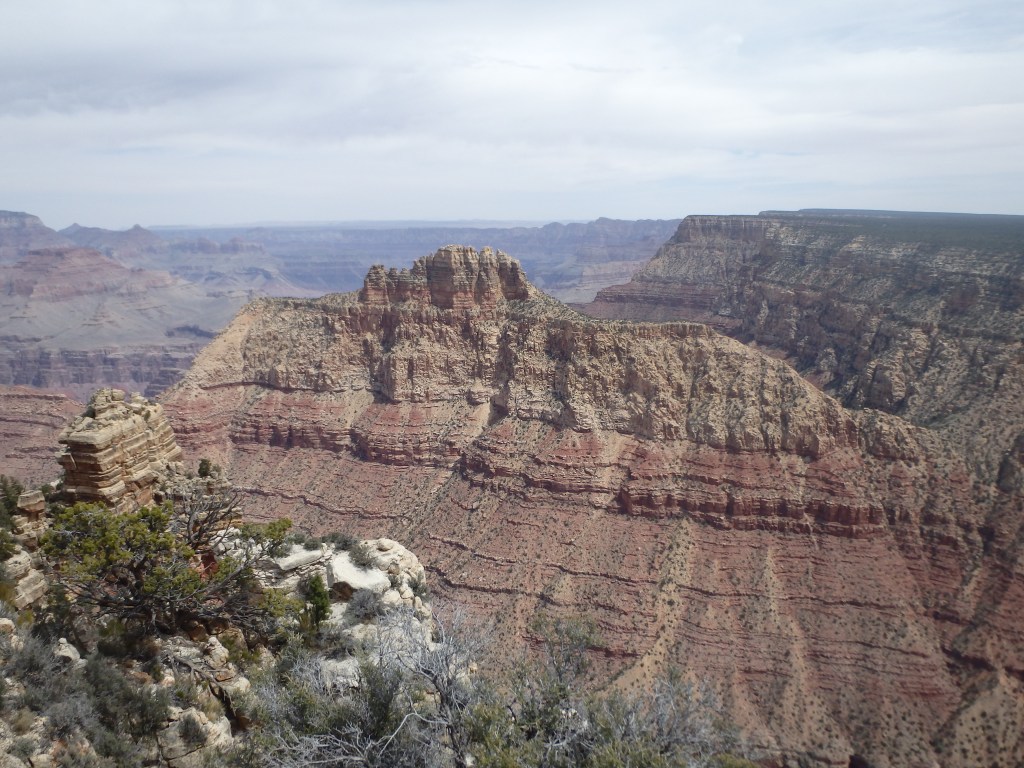
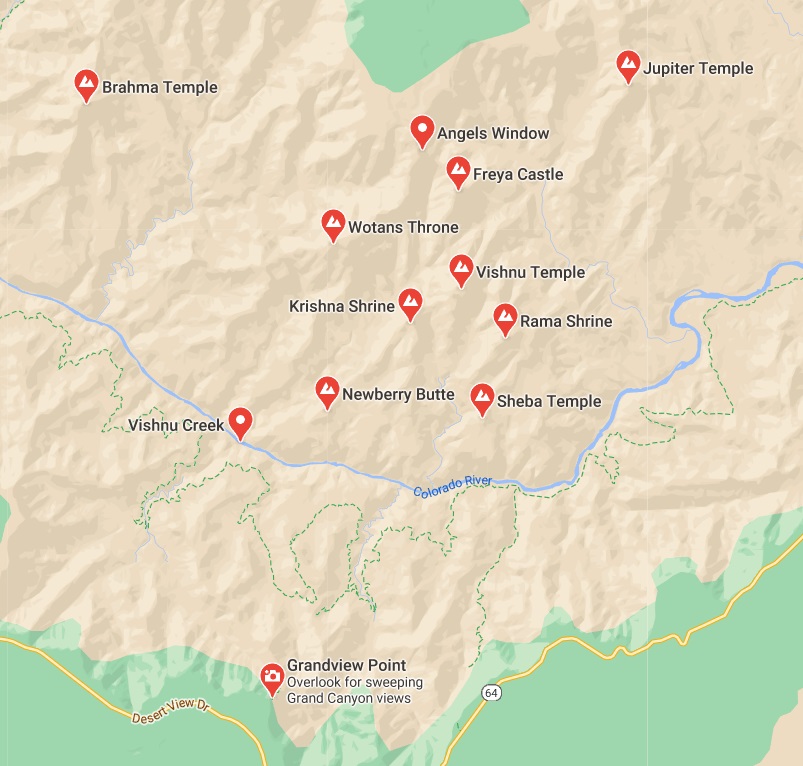
 You’ll see prominent buttes including Rama Shrine, Krishna Shine, Vishnu and Shiva Temple, and you’ll glimpse a tiny stretch of the Colorado River far below as well.

Grandview Point on the South Rim of the Grand Canyon, just before dawn on a cold spring morning. In the upper left is the Temple of Vishnu, almost 7 miles (11 kilometers) distant. In the upper right we can see the Colorado River at the bottom of the canyon, flowing toward us from the east.

The course of the Grandview Trail is quite evident from the rim, as it descends along the side of a narrow ridge towards Horseshoe Mesa, a U-shaped formation between Cottonwood Creek to the west and Hance Creek to the east, and once the site of a copper mine.

View of the Grand Caynon from the top of Grandview Trail

Before the construction of El Tovar Lodge near Garden Canyon, Grandview was the first place along the rim to be developed for tourists, with facilities including a hotel built in 1895, but this became disused after only a few years of operation, and little trace remains today.

Stop #4: Mather Point

Time Needed:  Count 15-25 minutes for a visit.

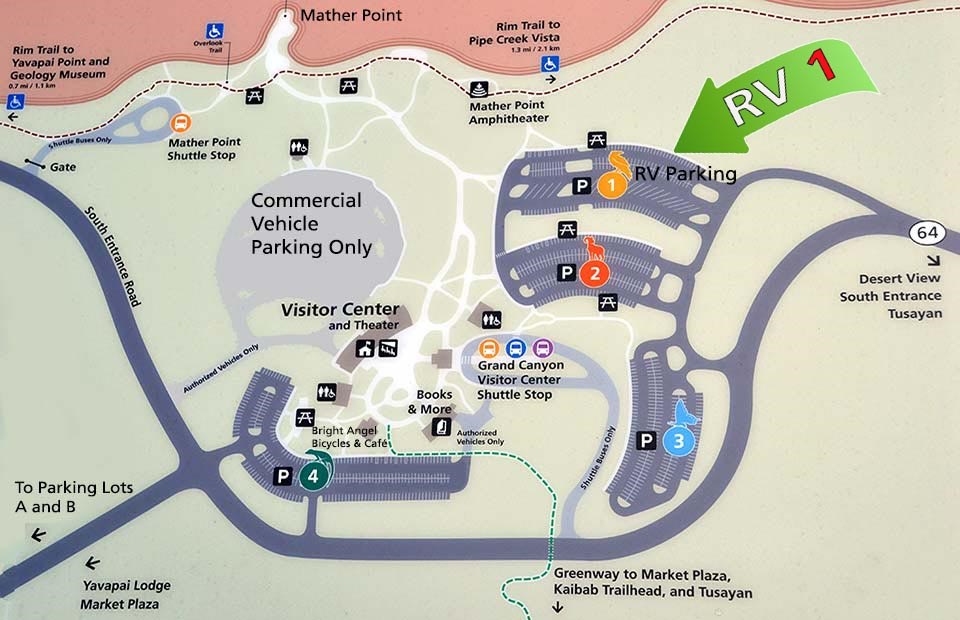
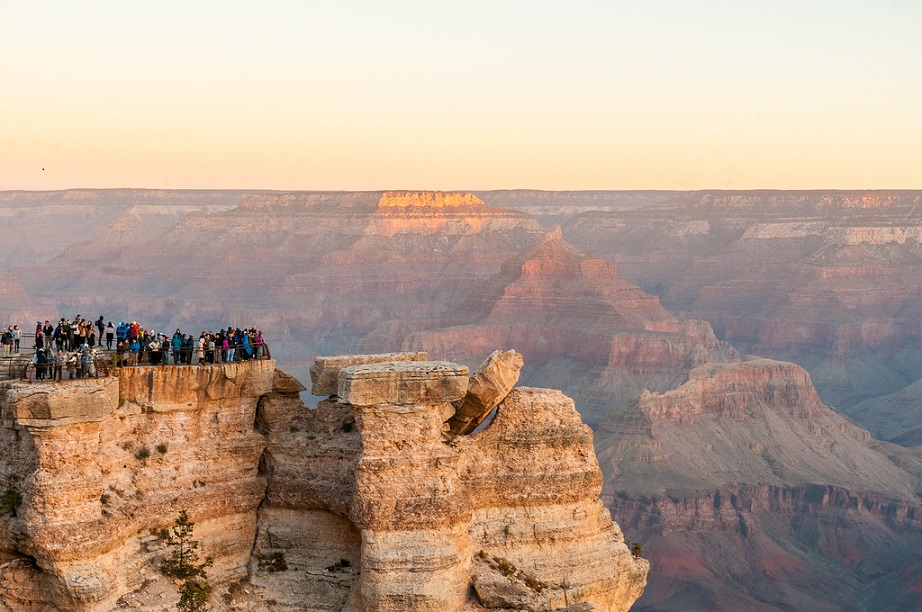
Grand Canyon Mather Point is one of the busiest and most sought-after lookout points among visitors, and is often referred to as the “True Grand Canyon” when it comes to providing majestic, sweeping views of the magnificent landscape.

Visitors can gape at the 10-mile distance from where they are, to the Grand Canyon North Rim, or peer into the depths of the abyss below them. They can also take pictures of the stunning landscape presented before them – the canyon rocks showing off vibrant colors in perfect harmony with the painted skies above.

Visitors get to experience an unprecedented view of the heart of Grand Canyon- the Colorado River, and a firsthand look at the many-layered rocks (Vishnu Schist, Coconino Sandstone and Kaibab Limestone) that make up the canyon. Mather Point has two distinct outcroppings that feature railed overlook points over from Bright Angel Trail in the west, to South Kaibab Trail and Yaki Point in the East. Walking on the Rim Trail will lead you to the Grand Canyon Historic District and to Yavapai Point.

Four thousand feet below Mather Point rests the Phantom Ranch. This historic place dates back since 1050 A.D., accessible only by river, helicopter or by trail. Phantom Ranch is located just beside trail bridges that cross the long expanse of the Colorado River within Grand Canyon.

The Grand Canyon’s guardians stand towering over the horizon. Standing from Mather Point, look to the East for Wotan’s Throne, Brahman and Zoroaster Temples- they are pretty hard to miss, considering their 8,000 feet elevation. You can stay on Mather’s Point and observe how these formations take on different hues, depending on the hour of the day. The rock formations can appear to be grayish or tan at noon, and take on a burnt orange, red or purple (sometimes altogether) hue come dusk.

The beautiful SW Face of Zoroaster Temple as viewed from The S. Rim of Grand Canyon. Phantom Ranch is visible at the bottom of Bright Angel Canyon,

If you gaze west from the south of Colorado River you can see the wide swathe of Pipe Creek and the beautiful Bright Angel Trail. Scan the east coast and you can see the South Kaibab Trail along Cedar Ridge and a view of the O’Neill Butte. Turn your attention to the North Rim and you will be rewarded with a view of Bright Angel Creek, completely filled with carved formations such as rough buttes and deep ravines, further accentuating the majestic splendor of the Grand Canyon.

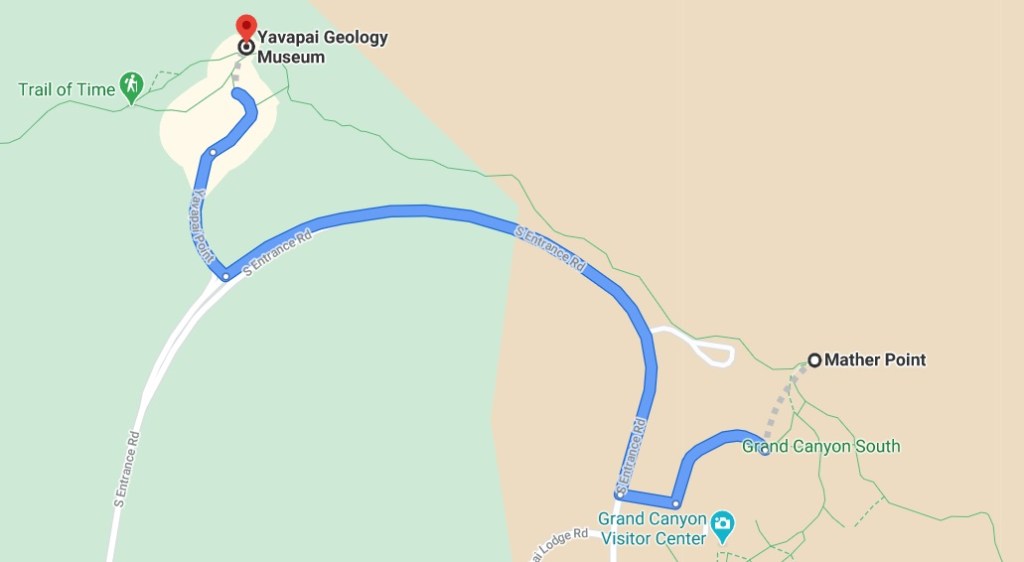
If you can’t find a parking spot. As an alternative, head to Yavapai Point which is about a half mile away or Park Headquarters which is about one mile away. The advantage of these two viewpoints is that in addition to the view, you also get access to free shuttle buses and rest rooms.

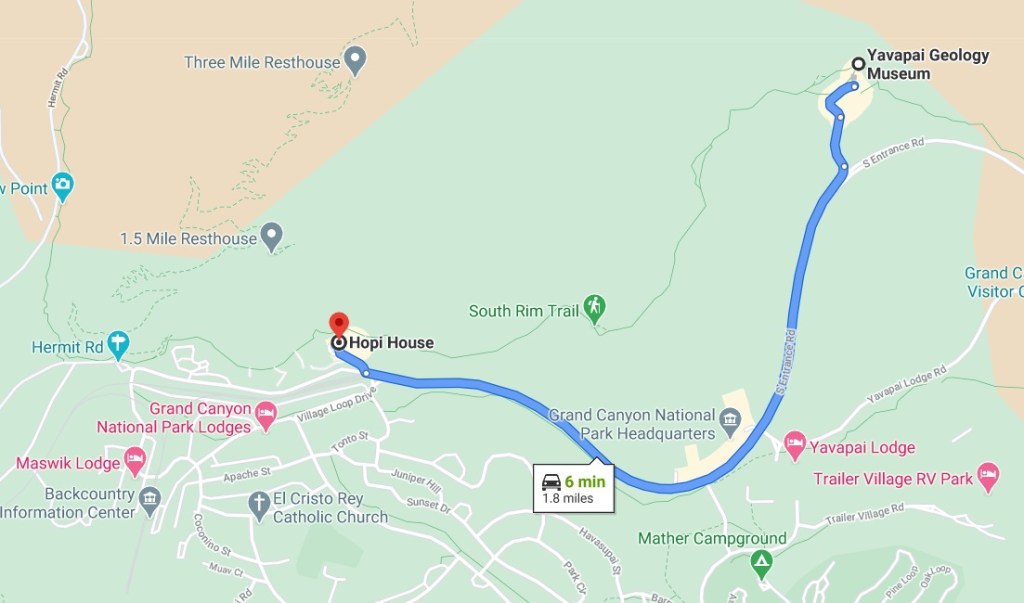
Stop #5: Yavapai Geology Museum and Yavapai Point

Time Needed:  Count 20-30 minutes for a visit.

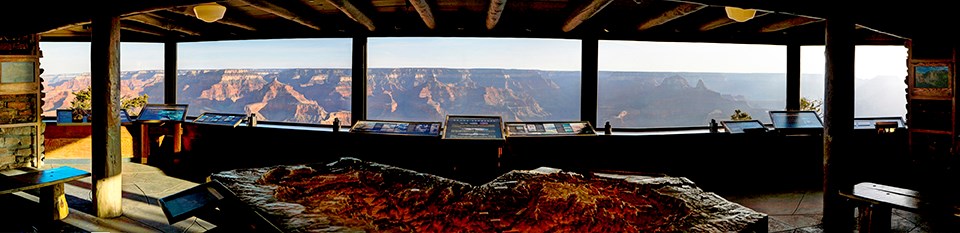
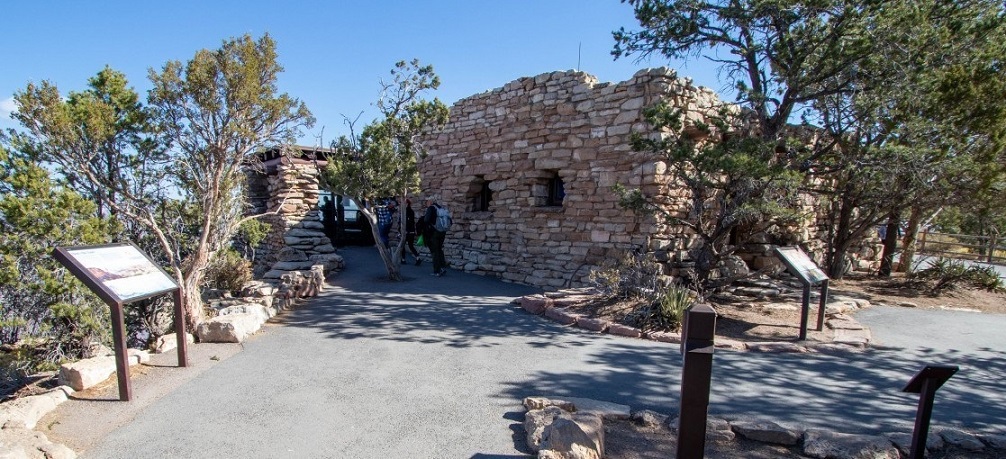
Perched right on the very edge of the canyon rim at Yavapai Point, Yavapai Geology Museum offers one of the best vantage points for an overview of Grand Canyon geology. Annotated displays at the base of the panoramic windows show you where to look to see each group of rocks. You can walk between rock column models of the North and South Rims, learn the names of the various rock layers, discover information about the geologic history recorded in the rocks, and visualize the carving of the modern landscape.

View north from inside Yavapai Museum of Geology, looking out across Grand Canyon. 

Yavapai Point features some of the most expansive views both up and down the canyon. The historic observation station here features huge plate-glass windows overlooking the central canyon, and interpretive panels identifying virtually all the major landmarks. There are also exhibits that explain the canyon’s formation and geology. The museum is open daily in summer from 8am to 8pm, and 8am to 6pm the rest of the year.

From here, you can spot at least five hiking trails. To the west, Bright Angel Trail can be seen descending to the lush Indian Garden area. The straight white line leaving from this general area and eventually dead-ending is Plateau Point Trail. Directly below the overlook and to the north, Tonto Trail wends its way across the blue-green Tonto Platform. Across the river, find the verdant area at the mouth of Bright Angel Canyon. The North Kaibab Trail passes through this area yards before ending at the river, just below Phantom Ranch. After turning to face east, find the saddle just south of O’Neill Butte; the South Kaibab Trail crosses this saddle.

Grand Canyon National Park Yavapai Geology Museum


Stop #6: Visit the Hopi House

Time Needed:  Count 15-30 minutes for a visit.

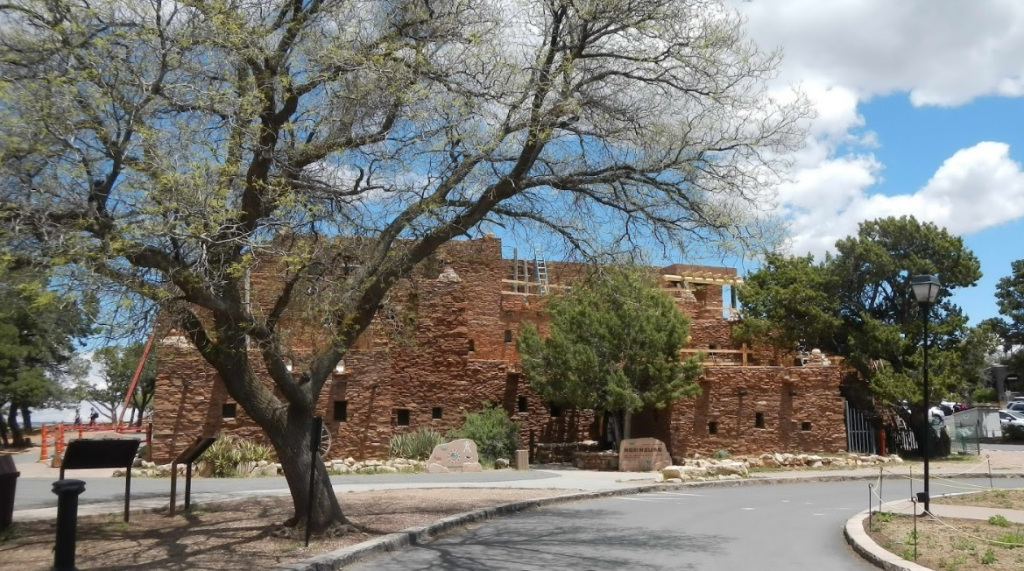
Hopi House is another landmark located on the South Rim that you probably should include in your one-day Grand Canyon itinerary. It’s located just near the Verkamps Visitor Center, and so it doesn’t take much effort to get there.

Constructed in 1904, the Hopi House was built to serve as a market for Native American crafts made by on-site artisans. The Hopi tribe, as the original inhabitants of this area, were chosen as the featured artisans. Hopi House was crafted out of adobe bricks to closely resemble a traditional Hopi pueblo.

A National Historic Landmark, Hopi House combines retail shopping with museum quality artifact viewing.  Here you will find a wide range of native arts and crafts available for purchase, such as hand-crafted kachina dolls, Native American jewelry and pottery, and hand-woven Navajo rugs.

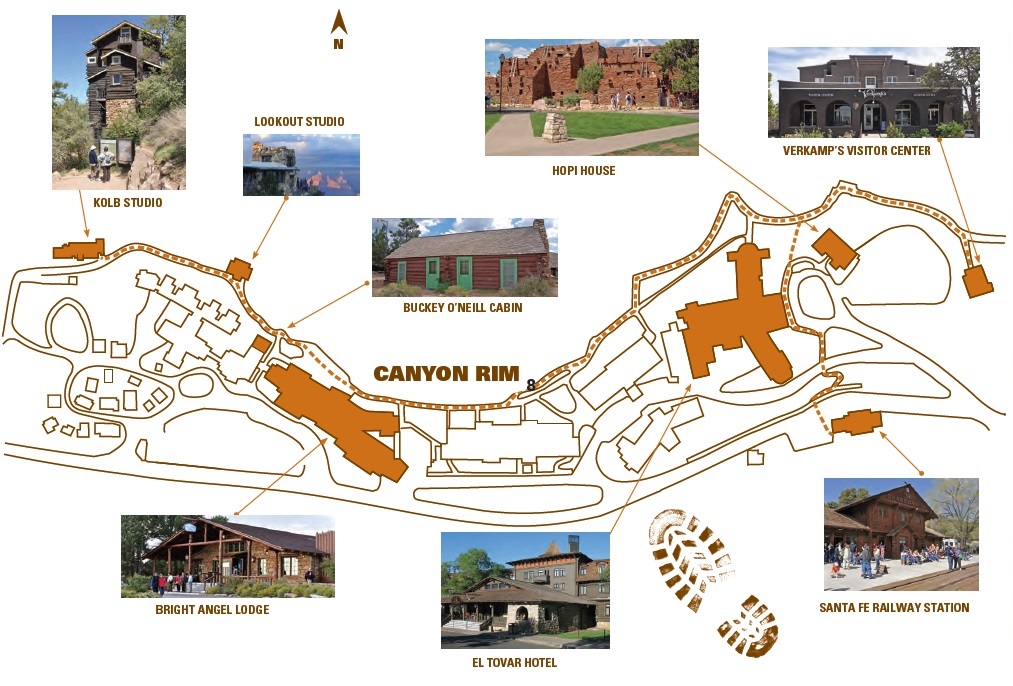
Stop #7: Grand Canyon Historic Village

Time Needed:  Count 25-35 minutes.

El Tovar (1905)

Begin your walking tour at the centerpiece of the Historic Village —the historic El Tovar. Step inside the hotel to marvel at the dark-stained timbers and walls adorned with moose, deer and buffalo heads, as well as large paintings of Grand Canyon. Designed by architect Charles Whittlesey and completed on January 14, 1905 at a cost of $250,000, it borrows styles from Swiss chalets and Norwegian villas. A must see and a true Historic Village gem.

Bright Angel Lodge (1935)

The five minute walk along the paved Rim Trail from El Tovar Hotel to Bright Angel Lodge offers a chance to take in views of Grand Canyon. Built in 1935 by the Fred Harvey Company to provide moderately priced accommodations, Bright Angel Lodge stands as another Mary Colter masterpiece. Walk in and spend time in the lobby to examine the craggy fireplace and notice the American Indian iconography adorning the doors and panels. A second fireplace, in the History Room, features Colter’s ten-foot high geologic representation of the Grand Canyon rock layers. This room once served as a lounge for long-ago visitors; today it houses the Fred Harvey Museum. The Buckey O’Neill Cabin is significant for its first occupant and for being the oldest continuously standing structure on the South Rim. The cabin today is part of Bright Angel Lodge, functioning as a two-room suite for guests. It stands as a reminder of an important figure in Grand Canyon history.

Buckey O’Neill Cabin

The Buckey O’Neill Cabin is significant for its first occupant and for being the oldest continuously standing structure on the South Rim. The cabin today is part of Bright Angel Lodge, functioning as a two-room suite for guests. It stands as a reminder of an important figure in Grand Canyon history.

Lookout Studio (1914) :

Just west of the Buckey O’Neill Cabin is Lookout Studio, also designed by Mary Colter. Built of Kaibab Formation limestone, it blends with its environment on the edge of Grand Canyon. The uneven roof line adds to the effect of the studio appearing as if it rose from the Earth. Like Hopi House, Lookout Studio was designed to imitate the stone dwellings of the ancestral Puebloan tribes of the Southwest. The canyon side of lookout Studio features multi-level platforms from which visitors can look out at the canyon, watch mule riders and hikers laboring on the trails, and spot endangered California condors soaring on thermals or perched on the rocky ledges below. Inside, a rocky fireplace contributes to an inviting atmosphere. A must see Grand Canyon experience.

Kolb Studio

Few buildings demonstrate the quirky personality traits of their original residents like Kolb Studio. Follow the Rim Trail another few hundred feet (about 75 meters) to reach the multi-roomed, multistoried building. Brothers Ellsworth and Emory Kolb arrived at Grand Canyon in 1902. In 1904, they went to work building their home and studio near the head of the Bright Angel Trail. The brothers became famous for their photographs of Grand Canyon visitors on mule rides, as well as for their explorations of Grand Canyon and the Colorado River.

Stop #8: Hermits Rest

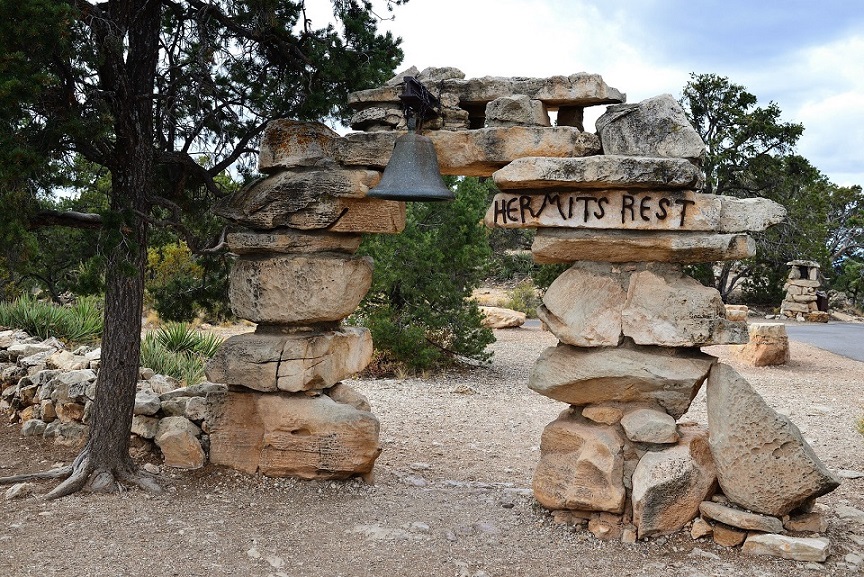
Hermits Rest is located at the end of Hermit Road and was built by architect Mary Jane Colter in 1914. The building was inspired by tales of the Grand Canyon “Hermit,” Louis Boucher, an early explorer who lived by himself for years inside the canyon. Colter’s building captures the rustic essence of what she imagined a miner’s cabin would look like and the size of the fireplace inside has to been seen to be believed. Today, the building houses a small gift shop and snack bar which are the only services available anywhere along Hermit Road.

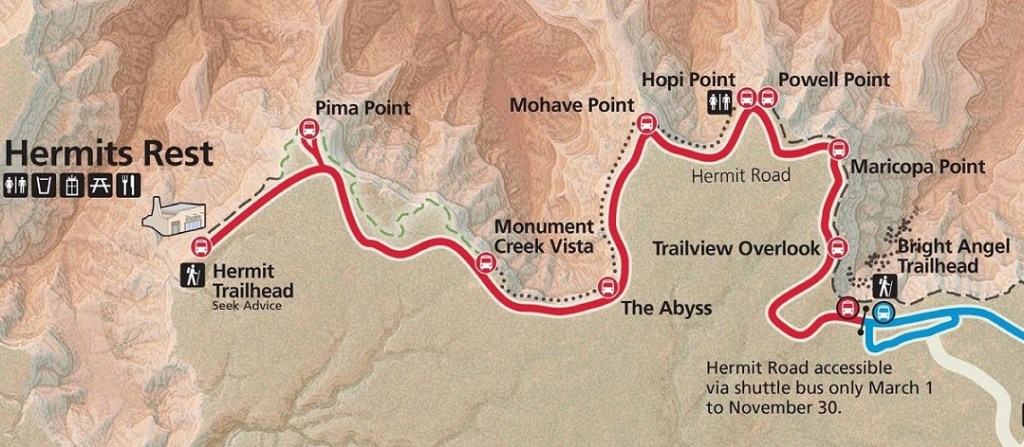
 Ride the shuttle along the rim – Hermit Road

One of the best ways to get the most out of your day in Grand Canyon is to combine walking with a shuttle bus. The extensive Grand Canyon shuttle service is free of charge and operates on four organized routes.

When visiting the Grand Canyon for just a day, I recommend boarding the Hermit Road shuttle bus (Red Route). This road is closed to private vehicles from March 1st through November 30th and is really too long to walk in the summer heat. So taking the shuttle is the best way to see the highlights along this 7-mile (11 km) stretch between the Village Route station and Hermits Rest. It stops at nine canyon overlooks along the way.  

With some of the best Grand Canyon views that you can see anywhere, the Hermit Road Red Route gives you the chance to experience breathtaking scenery while someone else does the driving.

  • From Trail View Point you can often see mules and hikers below.
  • Some of the most scenic viewpoints are Hopi Point and Powell Point, which are located right next to each other. The sweeping views are very similar, but because it is less famous than Hopi Point, Powell Point has fewer crowds.
  • Mohave Point is also a great one that offers slightly different views and various photo spots. It looks as if it’s floating over the canyon.

Hermits Rest Route (lộ trình sơn màu đỏ) dài 7 miles khởi hành từ Hermits Route Transfer, địa điểm xe khởi hành nằm trên con đường đi bộ cạnh bờ vực phía Tây lữ quán Bright Angel Lodge và cuối lộ trình là Hermits Rest. Lộ trình này chạy dọc theo bờ vực đi về hướng Tây trên con đường dành riêng cho xe buýt, không cho xe tư nhân lưu thông. Trên đường này xe dừng lại ở 8 điểm ngắm cảnh dọc theo bờ vực nhưng khi chuyến xe trở về chỉ ngừng lại tại 2 địa điểm Mohave và Hopi Point mà thôi.

Stop #9: Hopi Point

Trong hồi ký Living History, Hillary kể gia đình bà có lần đến Grand Canyon cắm trại. Tại đây, ông Bill Clinton nhận xét “Grand Canyon là nơi ngắm hoàng hôn đẹp nhất thế giới”.

Người ta nói Hopi Point là nơi tổng thống Bill Clinton đã ngắm hoàng hôn để rồi phán một câu vang lừng. Tôi nhủ thầm, với vợ và đám cận vệ kè kè bên cạnh mà còn thấy hoàng hôn Grand Canyon đẹp nhất thế giới, để xem thong dong tự tại như ta hoàng hôn Grand Canyon còn đẹp đến chừng nào. Khi chúng tôi đến, Hopi point đã đông đặc người. Đó là một mõm đá nhô ra phía bờ vực. Từ đây có thể nhìn toàn cảnh Grand Canyon. Dọc theo bờ vực hàng vạn du khách cùng náo nức chờ ngắm hoàng hôn.

Hopi Point is usually quiet at sunset

Về phía bên trái Hopi point, ông mặt trời đỏng đảnh núp sau tầng mây, từ từ bước ra khỏi tấm “bạch y”, rót xuống trần gian từng mảng vàng chói lọi. Sông Colorado uốn lượn qua các hẻm núi thường ngày không cách chi nhận ra, nay bỗng dậy lên, nơi này sáng láng như một thanh kiếm tuốt trần, nơi kia cong cong như nữa vầng trăng khuyết. Các vách đá, chỏm núi thi nhau phô hết vẻ kiều diễm độc đáo của mình, trong lúc các vực sâu lặng lẽ tối sầm lại. Bức tranh Grand Canyon nên sắc nét, sinh động, thăm thẳm khôn cùng. Và rồi, như bất cứ cái đẹp đích thực nào trong đời, giây phút chất ngất ấy chỉ tồn tại trong chốc lát rồi đột ngột tan biến, nhưng tôi thừa nhận rằng đó là hoàng hôn tuyệt trần, đẹp đến ngẩn ngơ.

Chẳng biết ngày ấy ngài tổng thống Bill Clinton có thức dậy sớm đón bình minh hay không, sao không nghe ông tuyên bố Grand Canyon cũng là điểm ngắm bình minh đẹp nhất thế giới.

Yellowstone Upper Loop

Yellowstone Upper Loop Tour from West Yellowstone

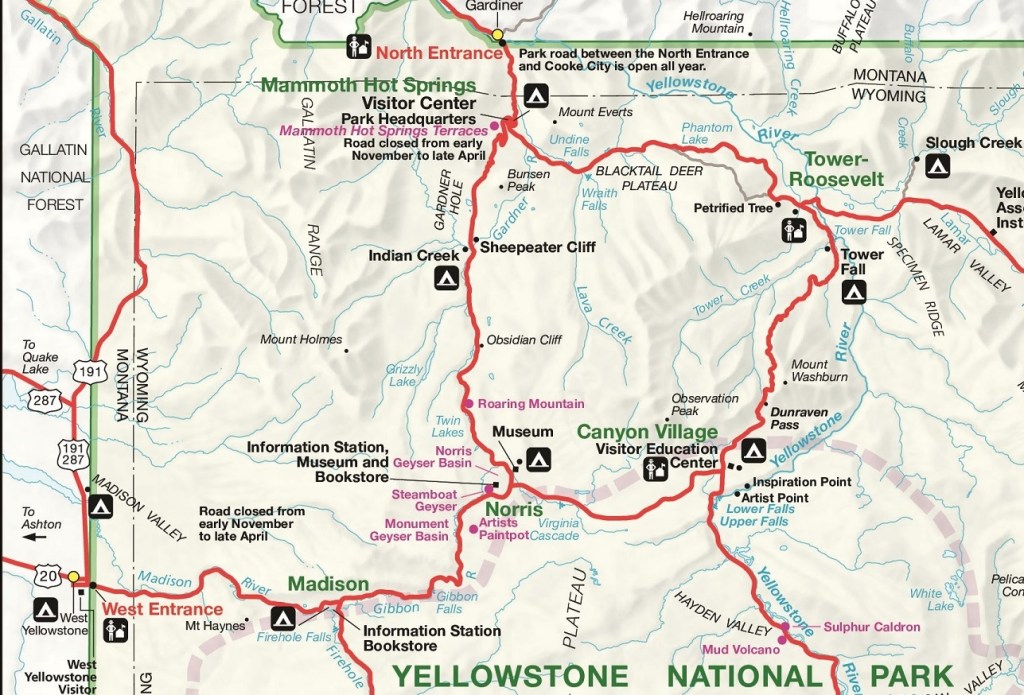
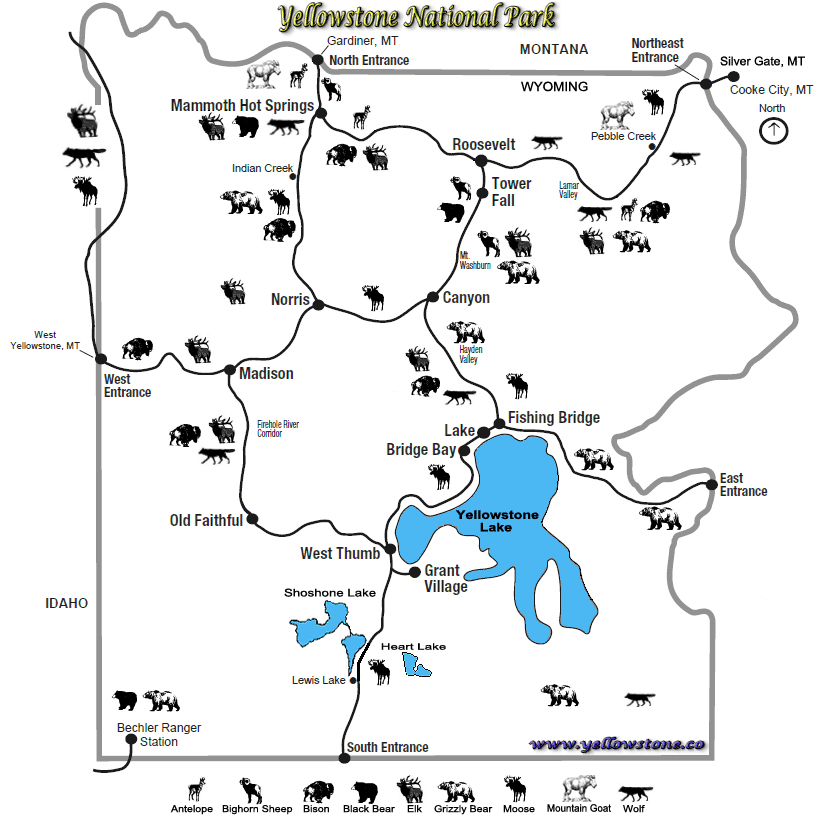
With a second day, you can tack on the sights of the upper loop to your plan (the loop itself is 70 miles long, although visiting the Lamar Valley will add 15–20 more miles out and back). Make your way north to Norris. From there, continue north to Mammoth Hot Springs. Get out and walk the upper and lower terraces to watch travertine formations being built before your eyes. Stop by Albright Visitor Center for background on park history and wildlife, then take the self-guided tour of Fort Yellowstone. 

Next, the road swings east. Take the one-way Blacktail Plateau Drive for even better wildlife-spotting chances than you already have on the road, then press on into the Lamar Valley. This wide, rich expanse is home to most of the park’s major wildlife species; dawn and dusk are the best times to look for them, especially wolves. 

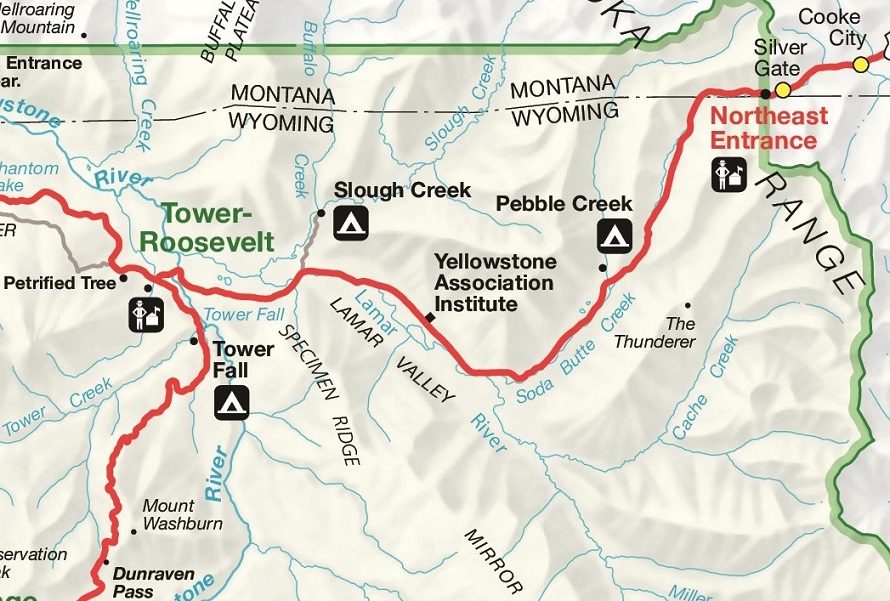
Backtrack to Tower-Roosevelt and make a quick stop to see Tower Fall from the overlook. The next stretch is one of the park’s most scenic: a winding road that climbs to 8,859-foot Dunraven Pass, delivering sweeping views the whole way up and down. You’ll end up back at Canyon Village. 

Get your cameras out and ready to capture some of Yellowstone National Park’s most remarkable features.

Tour are 12 hours long.  You may see the following places:

Gibbon Falls, Artists Paintpots, Norris Geyser Basin, Obsidian Cliff, Mammoth Hot Springs, Gardiner, Lamar Valley, Soda Butte, Calcite Springs, Tower Falls, drive through Mount Washburn.

https://goo.gl/maps/UGK9CZsCQiH2K5d96

Stop #1: Gibbons Falls

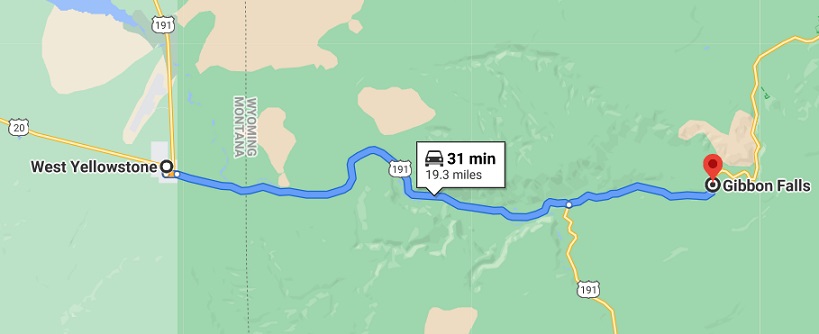
(19 miles from West Entrance)

Time Needed: 20 minutes

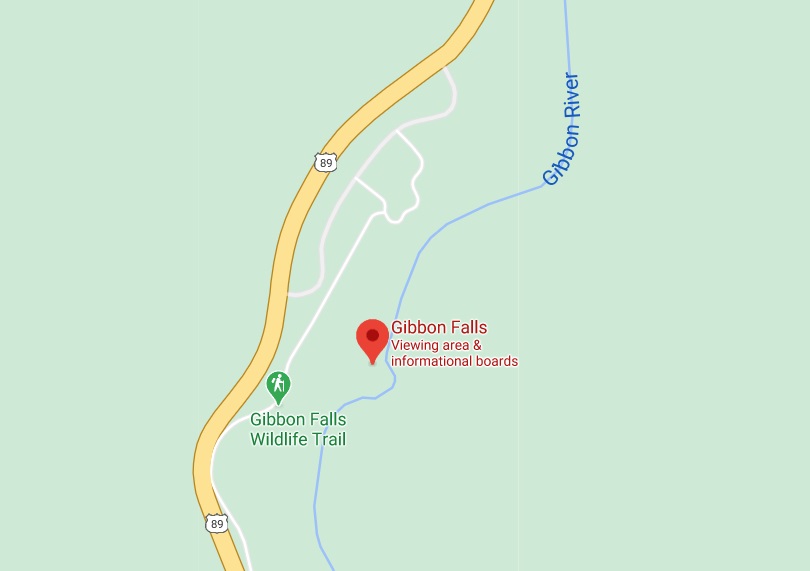
If you’re driving between and Madison Junction and Norris Geyser Basin, take a quick stop to spot Gibbon Falls, is located in the west central area of Yellowstone, about 4.7 miles northeast of the Madison Junction on the main loop road.

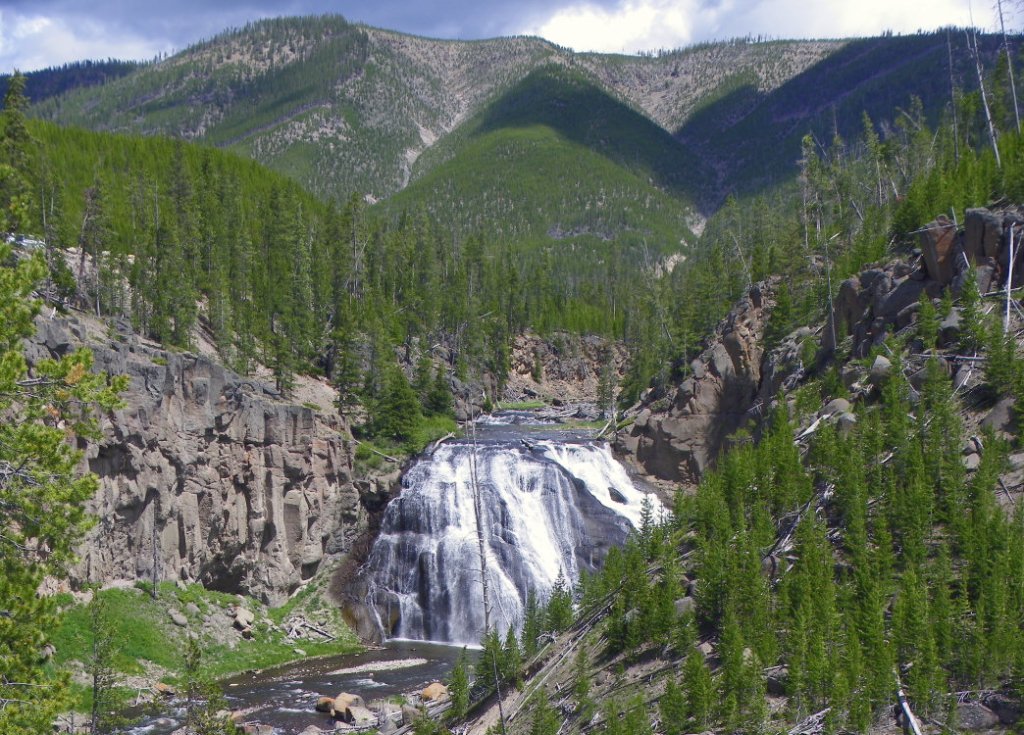
As one of Yellowstone’s spectacular waterfalls that can be seen from the road, Gibbon Falls is the spot where the Gibbon River flows 84 feet over the erosion-resistant rock of the giant caldera rim. There is a newly built parking lot available where you can escape the car and stretch your legs. A paved trail guides you high above the banks of the Gibbon River giving you great views of the falls.
Gibbon Falls

https://goo.gl/maps/whBem3RHU2vmn68v7

Stop # 2: Artists Paintpots

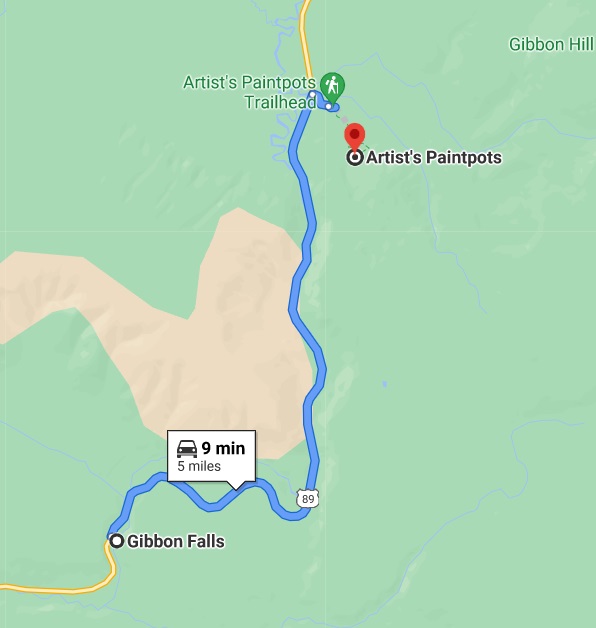
( 5 miles from Gibbons Falls 24 miles from the West Entrance)
Time Needed: 30 minutes

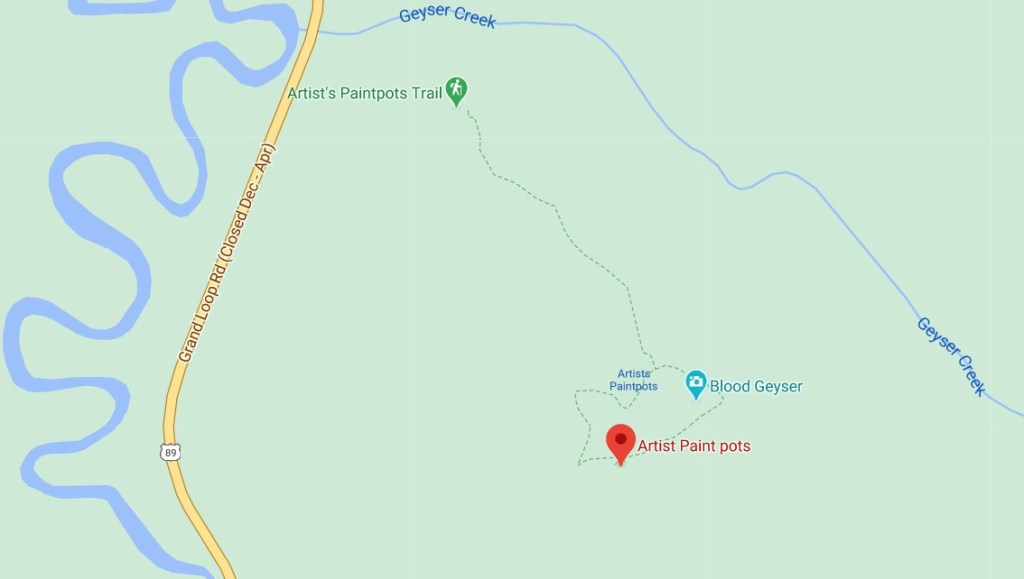
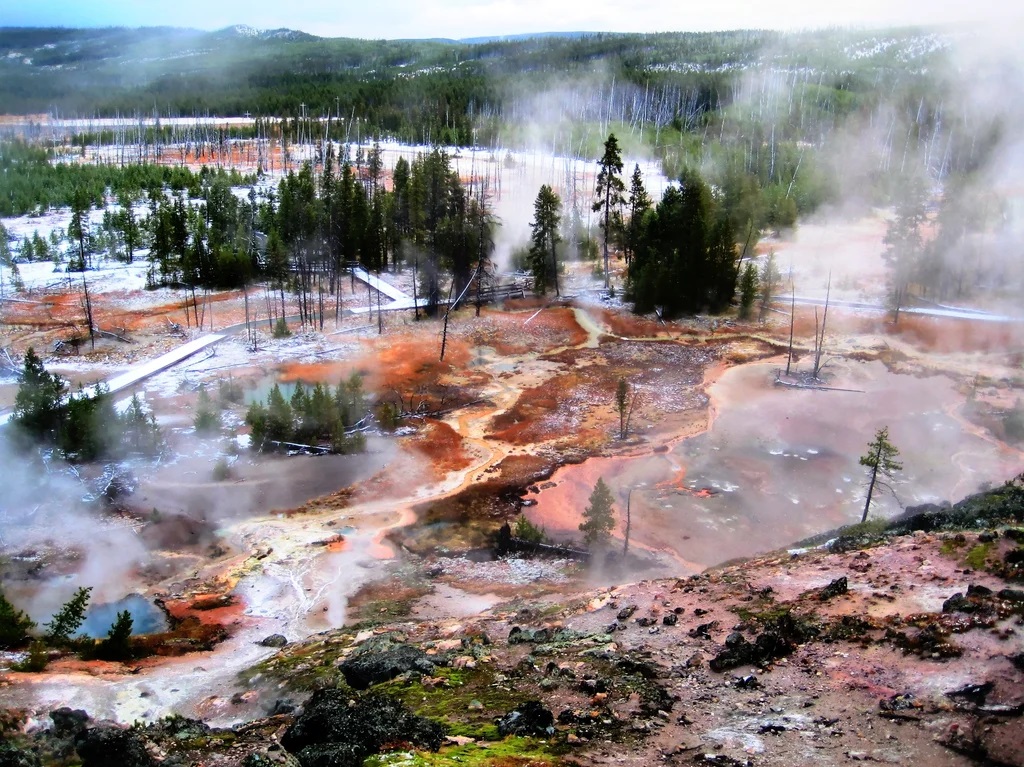
The Artist’s Paint Pots trail is so full of vibrant colors, comparable only to an artist’s palette, it will be easy to see how they got their name. The short 1/3 mile trail begins at the parking lot just off the main road across from a wide open meadow. When the trail gets back to the paint pots, it climbs up a small hill to give you a birdseye view of the area and a close look at the mud pots. In the early spring after the snow has melted, the bright reds and blues of the thermal features alongside the deep green mosses and grass, make you feel like you could be in another world. As Yellowstone warms up in the summer, the mud in the paint pots becomes drier, and thick bubbles of mud dance around along the boardwalk. To see them at their most active state, come in late May or June when the snow melt has given the mud pots plenty of water.

Heading left, you first cross some runoff from Blood Geyser and a few other thermal features, better visible as the trail starts to rise slightly. Blood Geyser gets its name from the iron oxide found within the water. This results in the rocks becoming stained with the red color. Eruptions can get as high as six feet, so keep an eye on it.

The trail begins to climb a bit and ultimately brings you to a fantastic lookout over some of the thermal features below you. Dome Mountain rises out of the otherwise flat lands in the distance. Interspersed below the greenery of the trees are various shades of oranges, reds, and purples mixing in with the white sinter and mud around them.

Artists Paintpots

https://goo.gl/maps/f6RAA2jSQy1N6sJ68

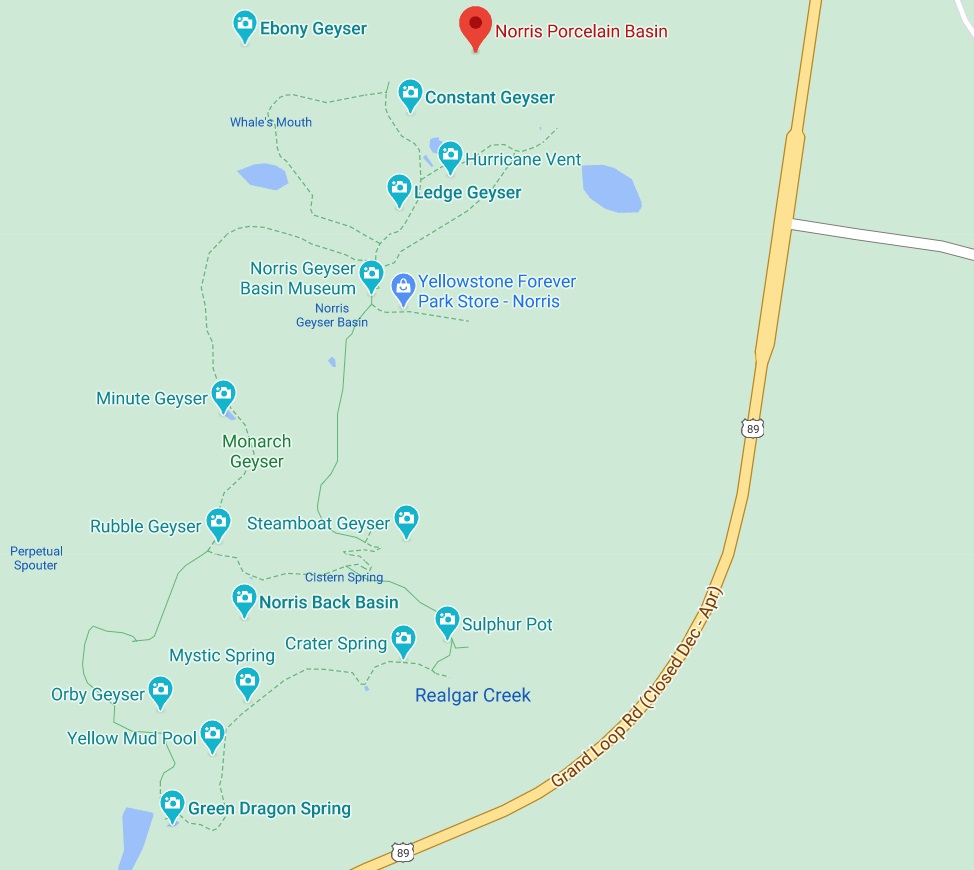
Stop # 3: Norris Geyser Basin

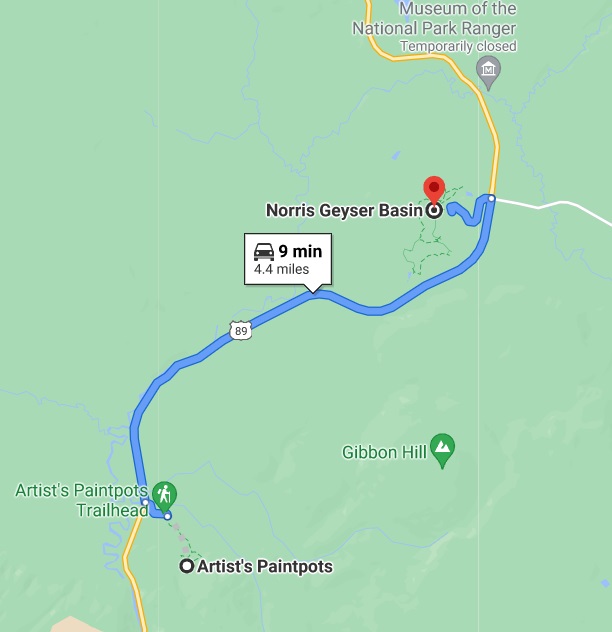
( 4 miles from Artists Paintpotss – 28 miles from the West Entrance)

Time needed: 30 to 45 minutes

From the Artist’s Paint Pots , head north on the main highway for 4.4 miles until you reach the Norris Junction. Make a left turn and follow the road into the parking area. Look for the walkway on the west end of the parking lot leading you to the Norris Geyser Basin.

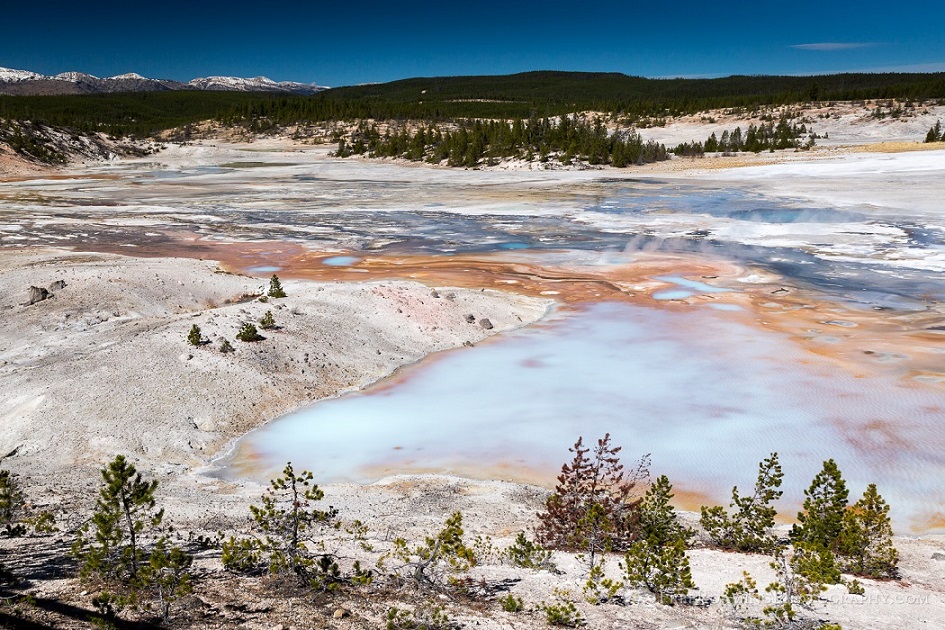
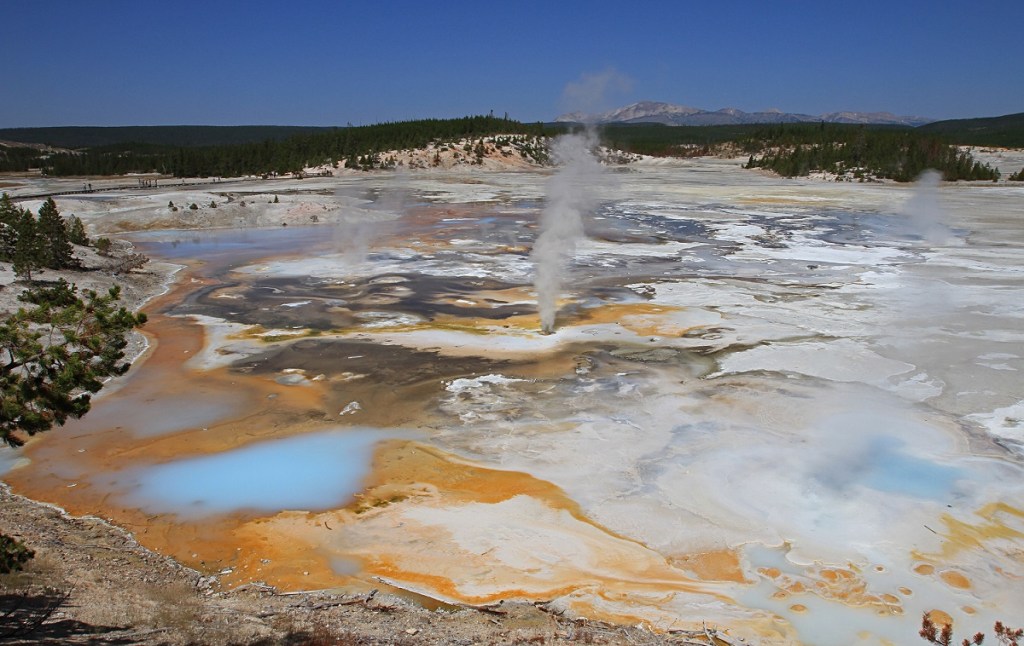
Walk the boardwalks through both larger, geyser-packed Back Basin and the smaller, bleached-white Porcelain Basin.

 Back Basin: Emerald Spring -> Steamboat Geyser -> Cistern Spring -> Echinus Geyser -> Puff ‘n’ Stuff Geyser -> Green Dragon Spring ->  Porkchop Geyser -> Vixen Geyser -> Minute Geyser -> Vixen Geyser .

Porcelain Basin: Black Growler Steam Vent ->  Ledge Geyser -> Hurricane Vent -> Porcelain Springs

Norris Geyser Basin is one of the most thermaly active and diverse geyser basins in Yellowstone. Norris is comprised of two sections, the Back Basin and Porcelain Basin. These two boardwalks lead you across eeire landscapes of hot water and steam. Hundreds of tremors, most of which are too small to be felt by people, happen here every year, constantly changing the characteristics of the geyser basin. New springs and geysers form while others become less active or become dormant altogether. Steamboat, the largest active geyser in the world resides here in the Back Basin of the Norris area. When Steamboat erupts it can shoot water over 300 ft. into the air (that’s as tall as the Lower Falls of the Yellowstone River). Although very impressive when it does erupt, Steamboat is far from predictable, with intervals between eruptions lasting up to 50 years. There is also an easy one mile trail that will get you back and forth from Norris Geyser Basin to Norris Campground and the Ranger Museum. With hundreds of hotsprings, geysers and mudpots of all colors, shapes and sizes, you will definitely enjoy a stroll through the Norris Geyser Basin on your trip to Yellowstone.

https://goo.gl/maps/x6Sv1qQSakAxJjNR6

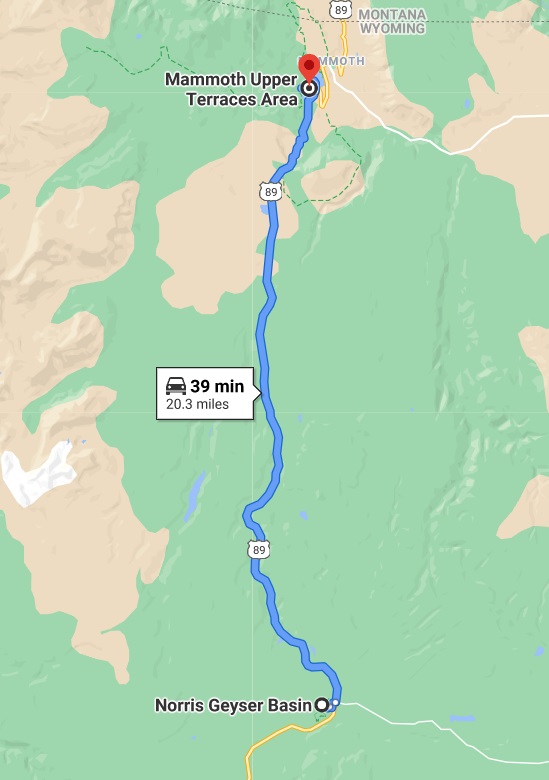
Stop #4: Mammoth Hot Springs

( 21 miles from Norris Geyser Basin – 49 miles from the West Entrance)

Time needed: 2 hours, maybe more!

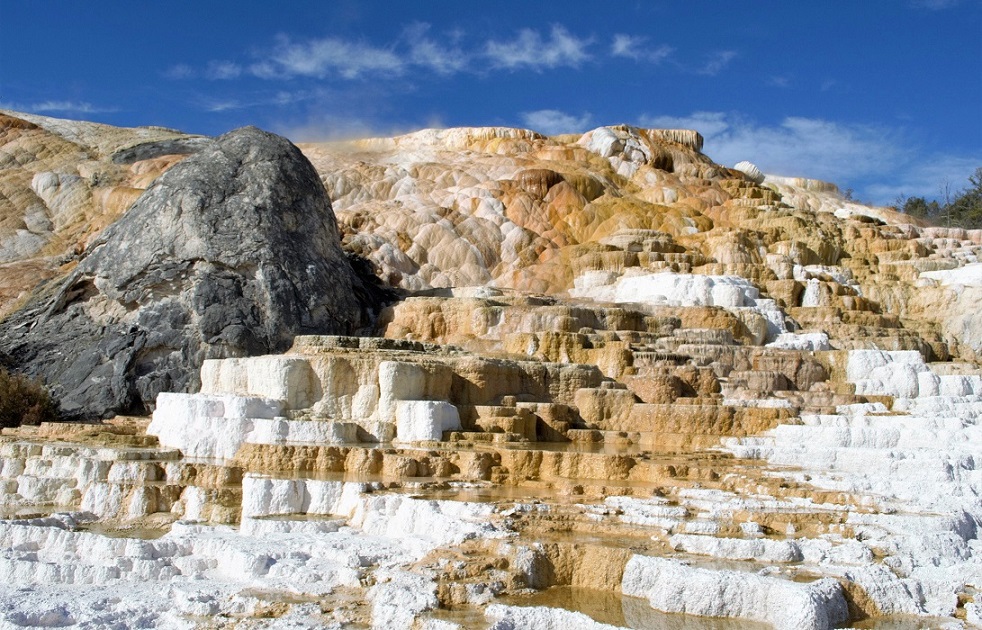
One of the park’s most photographed areas because of its sloping travertine terraces formed by the region’s geothermal springs.

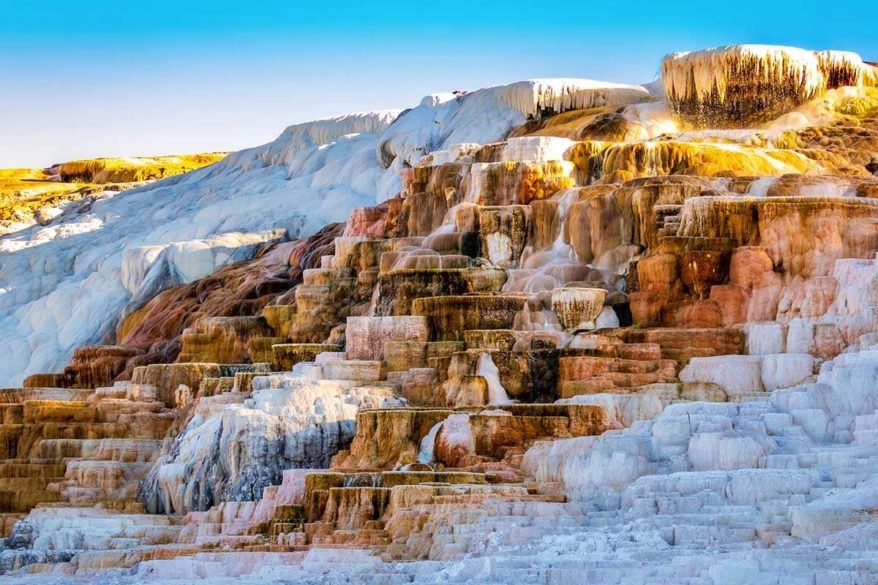
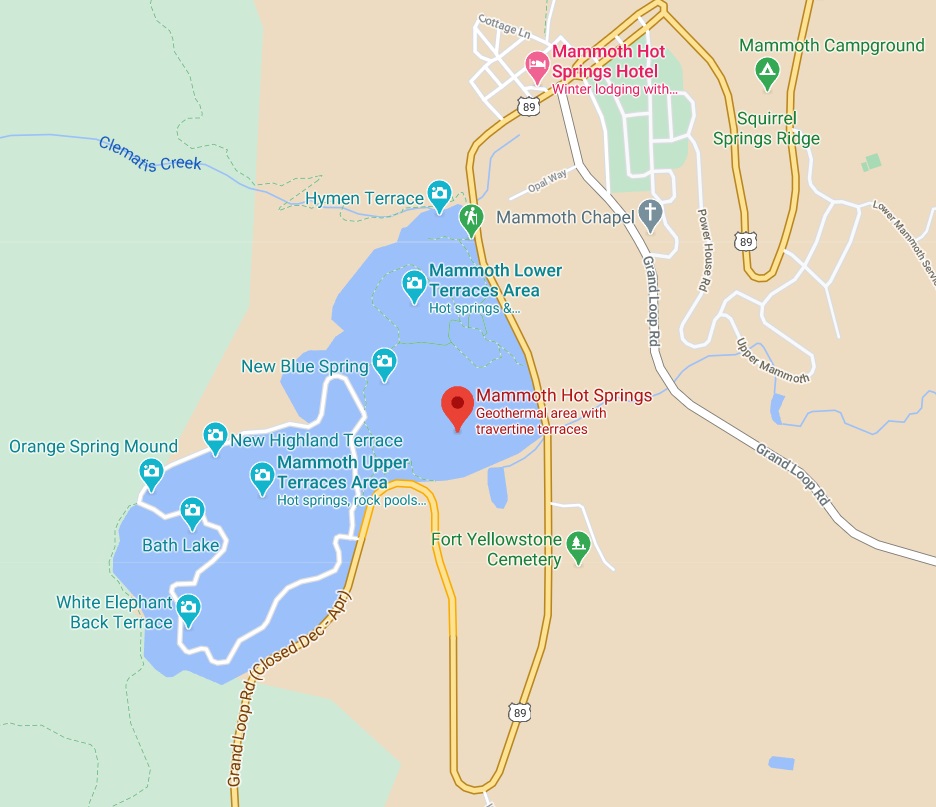
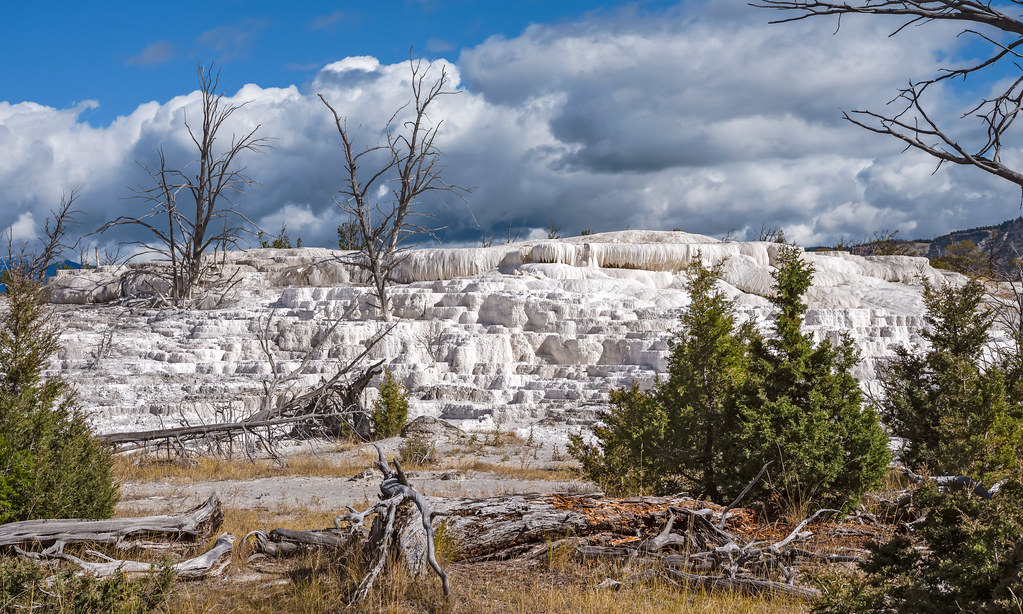
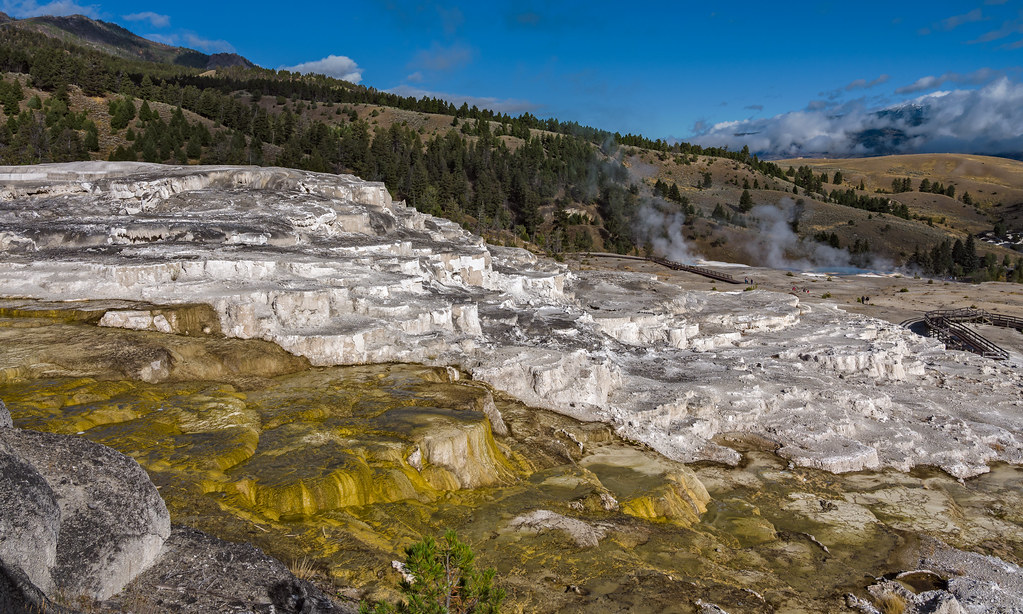
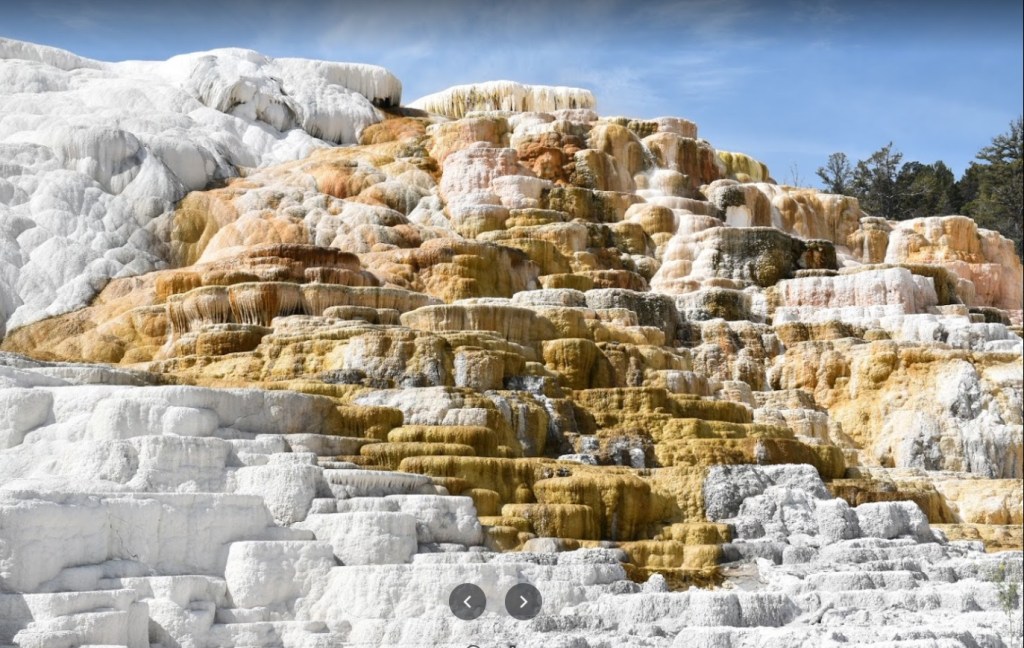
At Mammoth Hot Springs, you’ll find a different kind of thermal feature than you’ve seen elsewhere in the park. The hot springs at Mammoth don’t erupt. They build spectacular travertine terrace formations which have been described as a cave turned inside out. The area consists of terrace boardwalks and numerous hot springs.

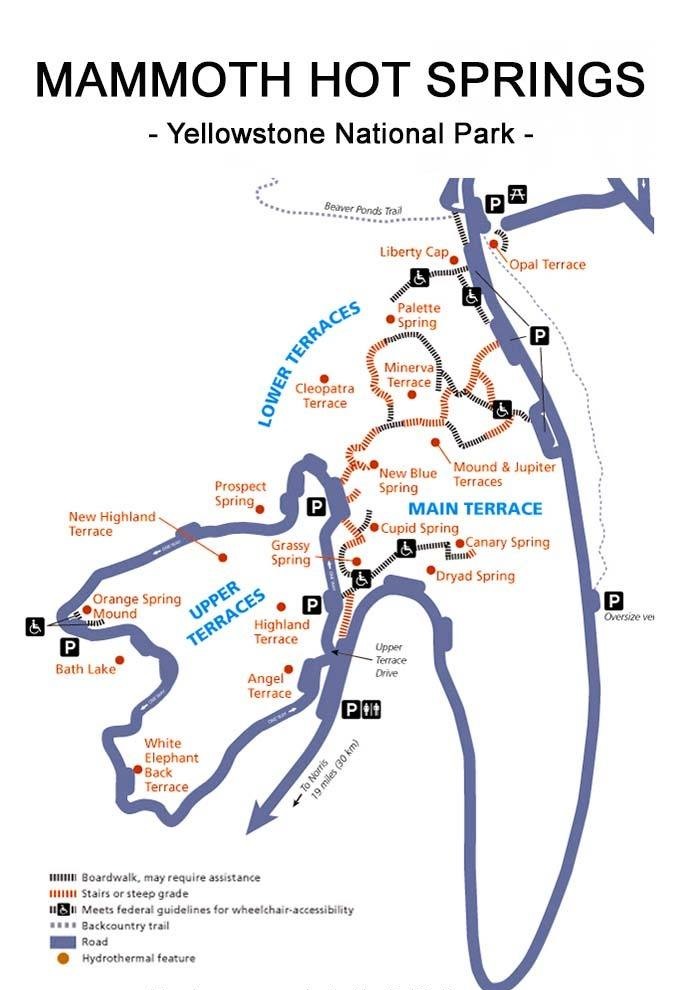
Mammoth Hot Springs features two main areas – Upper Terrace and Lower Terrace. There are boardwalks in both areas and staircases connecting them. Furthermore, you can also explore the Upper Terrace by driving the Upper Terrace Loop Drive Road.

Upper Terrace Loop Drive

Upper Terrace Loop Drive is another must-do in the Mammoth Hot Springs area. This one-way road is for cars or foot traffic only – no RVs, trailers, or buses are allowed.

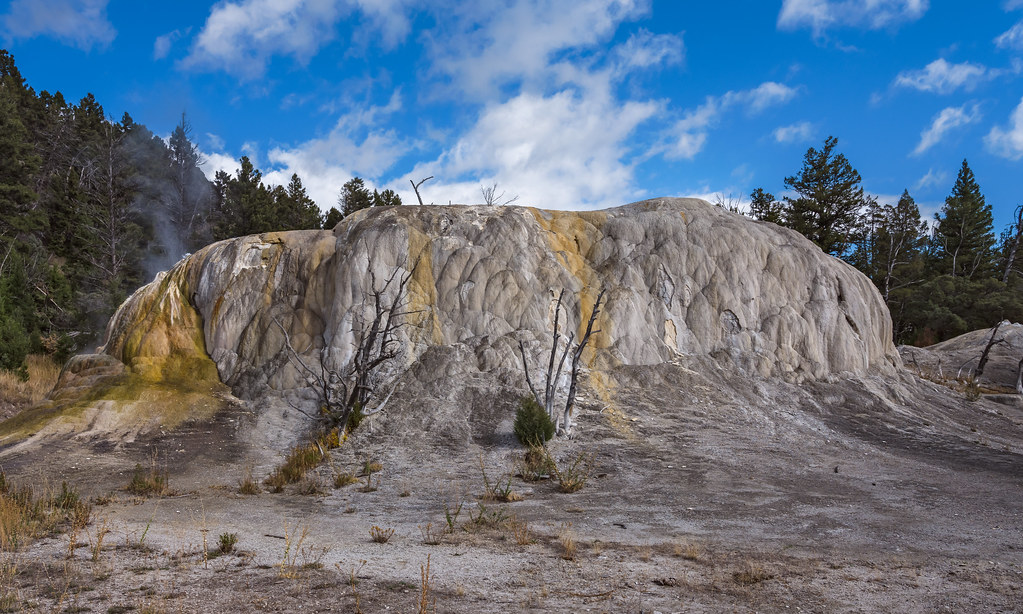
This road connects several springs for 1.5 miles, including New Highland Terrace, Prospect Terrace, Orange Spring Mound, Snow Pond, Bath Lake, White Elephant Back Terrace, and the unpredictable Angel Terrace, which is most popular for its perfectly white formations. The road then loops back for half a mile.

You can slowly drive this road and see most of the geothermal features from the car. If you have the time and don’t mind some more walking, you can also choose to explore this area on foot.

Orange Spring Mound

Lower Terrace

The Lower Terrace boardwalk is where you’ll find one of the best-known features, Liberty Cap, rising 37 feet in the air, and Minerva Spring, favored for its wide range of colors and intricate travertine formations. Once you’ve had your fill of the Lower Terrace, make your way to the Upper Terrace. The Mammoth boardwalks cover an easy 1.75 miles that take about an hour.

The stroller-friendly Lower Terrace boardwalk is accessed from either the Grand Loop Road or the lower parking lot. If you visit just one area of the Mammoth Hot Springs, make it this one as it provides the best views.

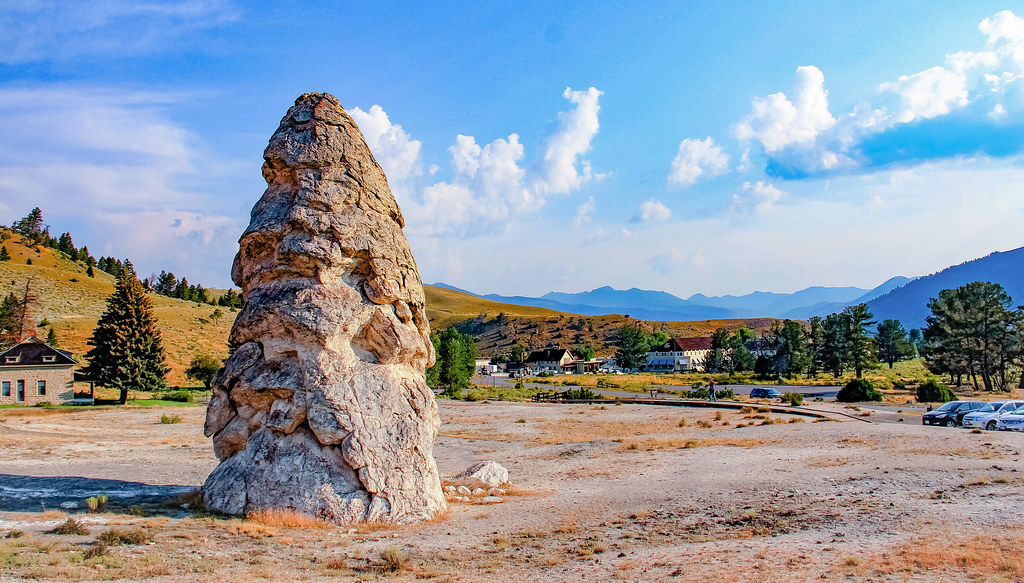
The 37 foot high Liberty Cap, near the start of the trail, is one of Mammoth’s most well-known features. This hot spring cone was got its name in 1871 inspired by the peaked caps that were worn during the French Revolution.

Its distinctive shape was formed by a continuous flow through the hot spring, maybe over hundreds of years. The spring’s internal pressure caused the water to shoot high up into the air, allowing the deposits to build up.

The dormant hot spring cone Liberty Cap at Minerva Terrace 

From there, continue to the viewing platform for Palette Spring, possibly the most striking feature in this area! Criss-crossing flows of water from the spring have created smooth bumps of orange and white, plus pink, orange and white terraces.

Devil’s Thumb and Palette Springs

Whenever you see photographs promoting the Mammoth Hot Springs region, chances are that the feature you are seeing is the beautiful Minerva Terrace, located just beyond Palette Spring. That’s because its intricate travertine formations are quite beautiful, giving it the appearance of a wedding cake.

Minerva Terrace

Beyond Minerva Terrace sits Cleopatra Terrace – an orange formation that stands alone. Further, you’ll find staircases up to the overlook, where you can connect to the Upper Terrace Drive and continue your walk through the Upper Terrace boardwalk.

Upper Terrace

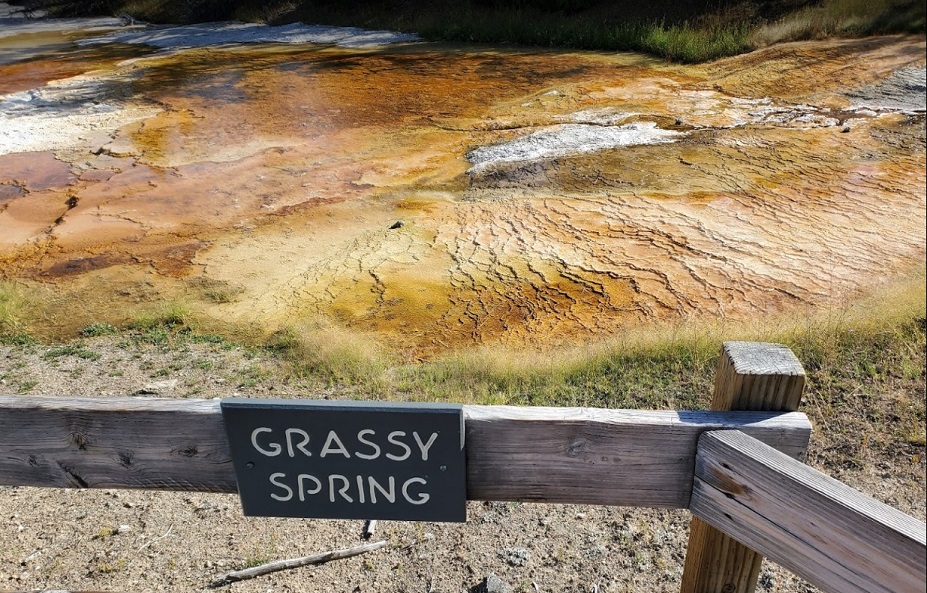
You can also reach the Upper Terrace boardwalk and Overlook from the parking lot next to the Main Terrace. Just head right from the parking lot and down a few steps to the Grassy Spring. You’ll immediately see hot water beneath the plank walkway – a great reminder that this is a very active, ever-changing area!

The boardwalk ends at the very edge of Canary Spring, with its jaw-dropping yellow and white terraces descending around 20 ft. This very active spring is overtaking the trees around it – plus several inches of the boardwalk – and the sight of the steaming water flowing down the terrace is awesome!

A short hike back to the parking lot in the opposite direction takes you to the overlook of New Blue Spring, which is just before the boardwalk that descends to the Lower Terraces.

https://goo.gl/maps/HiuMAzEi7Ck7t9ag9

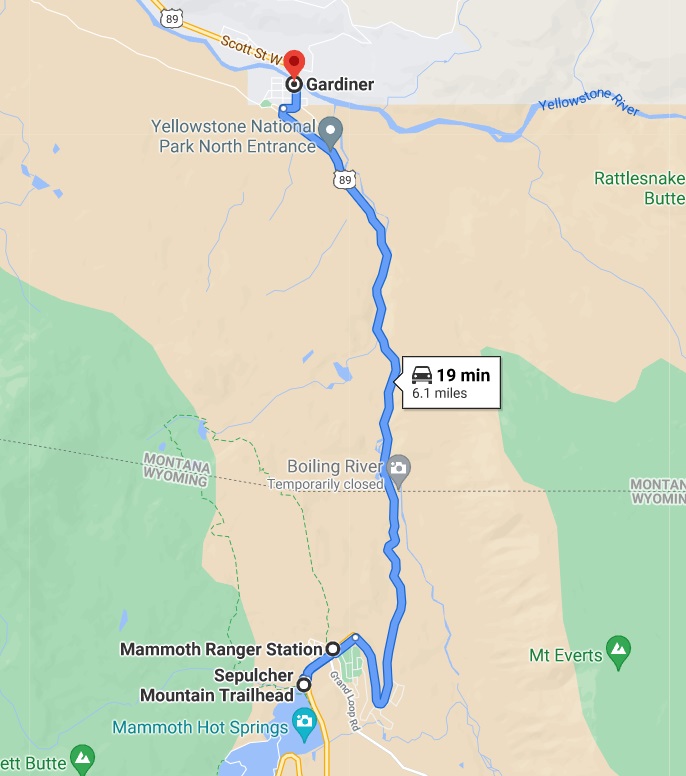
Stop #5: Gardiner

( 6 miles from Mammoth Hot Springs )

Time needed: 20 minutes

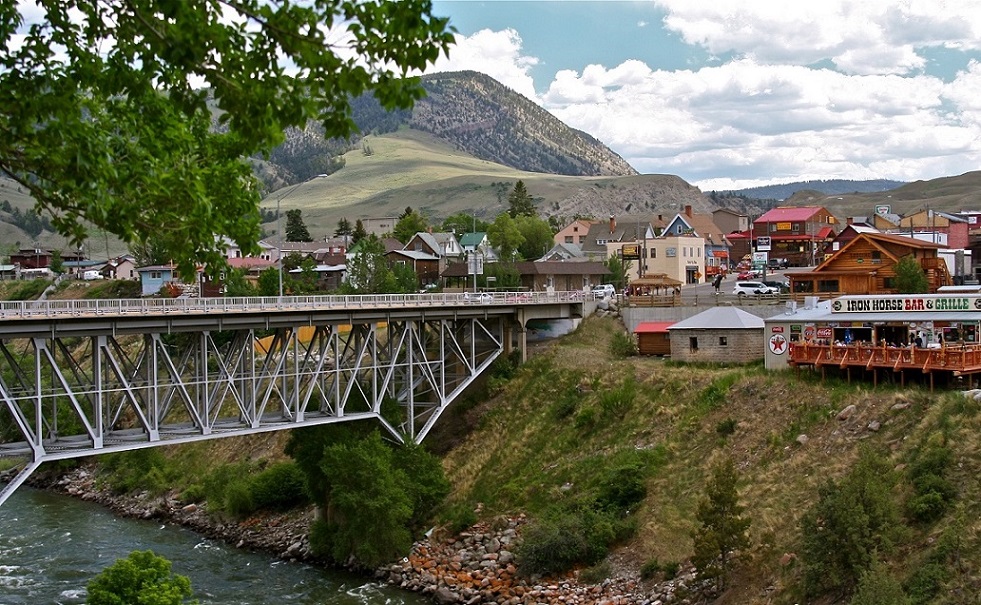
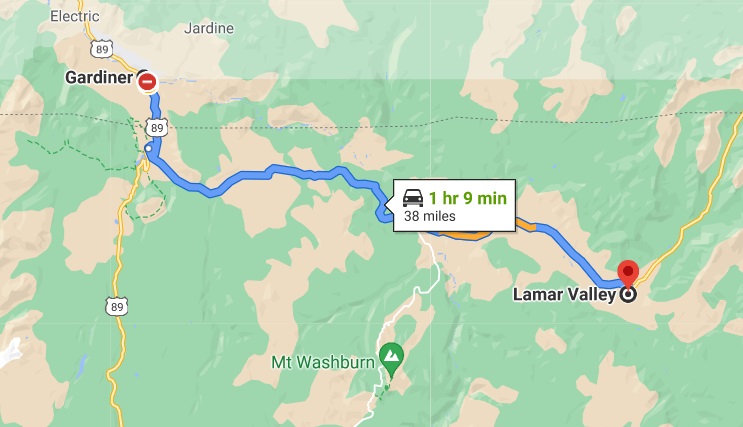
Chúng tôi chạy ra của Bắc YS thăm cho biết thị trấn Gardiner. Đoạn đường chỉ có 6 miles và thấy khô khan hẳn so với đoạn ở giữa YS, cũng như phía Nam.

Gardiner Bridge

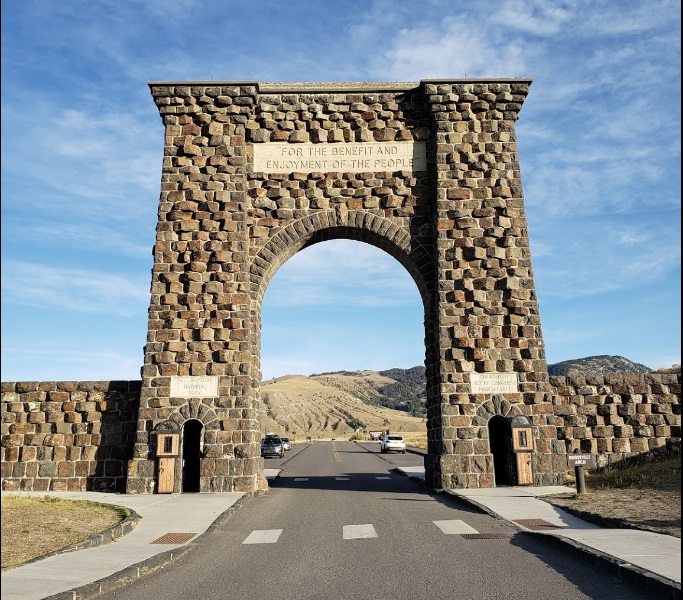
Chúng tôi tới chiếc cổng lịch sử Roosevelt vì do Tổng Thống Theodore Roosevelt đặt viên đá đầu tiên ngày 24-4-1903. Trước thời điểm đó mặc dù công viên đã được thành lập từ  1872 nhưng vì không có phương tiện lưu thông (mãi đến năm 1915 mới có xe hơi) nên không ai tới chơi công viên Yellowstone. Ðến năm 1903 hãng xe lửa Pacific Rail Road mới khánh thành con đường tới thị trấn Gardiner (Montana) nằm ngay Cổng Bắc (North Entrance) vào Yellowstone và từ dạo đó mới có đông du khách đến và Tổng Thống Roosevelt cũng đi bằng xe lửa đến dự lễ đặt viên đá đầu tiên xây dựng cỗng chào cũng vào năm đó.

Cái cổng phía Bắc này đẹp nhất trong năm cổng đi vào YS. Trên cổng có mang hàng chữ “FOR THE BENEFIT AND ENJOYMENT OF THE PEOPLE” mới hay chứ. Thị trấn West Yellowstone “đi dăm phút đã về chốn cũ”, nay gặp Gardiner thì chỉ cần đổi lại một chữ thành “đi hai phút đã về chốn cũ”. 🙂 Thành phố Gardiner nằm bên sườn núi và chỉ có một con đường chính chạy ngang rồi hết. Tôi nghĩ thành phố này được lập ra là để đáp ứng nhu cầu của du khách đi vào YS bằng cửa Bắc.

Stop #6: Lamar Valley

Time needed:  Allow approx. 2 hours for this activitys

Located between Tower Junction and the Northeast Entrance at Cooke City Montana, the wildlife viewing actually starts the instant you turn onto the highway at Tower Junction / Roosevelt. Within a mile, you’ll cross the Yellowstone River, and that’s when “the games begin!”

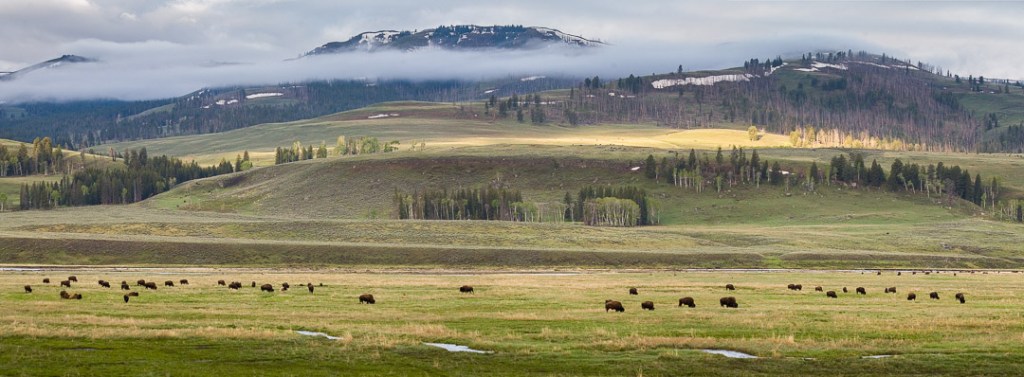
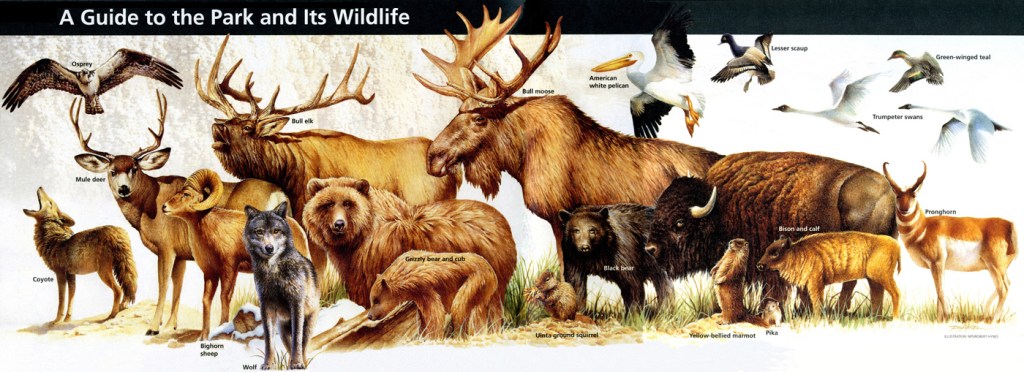
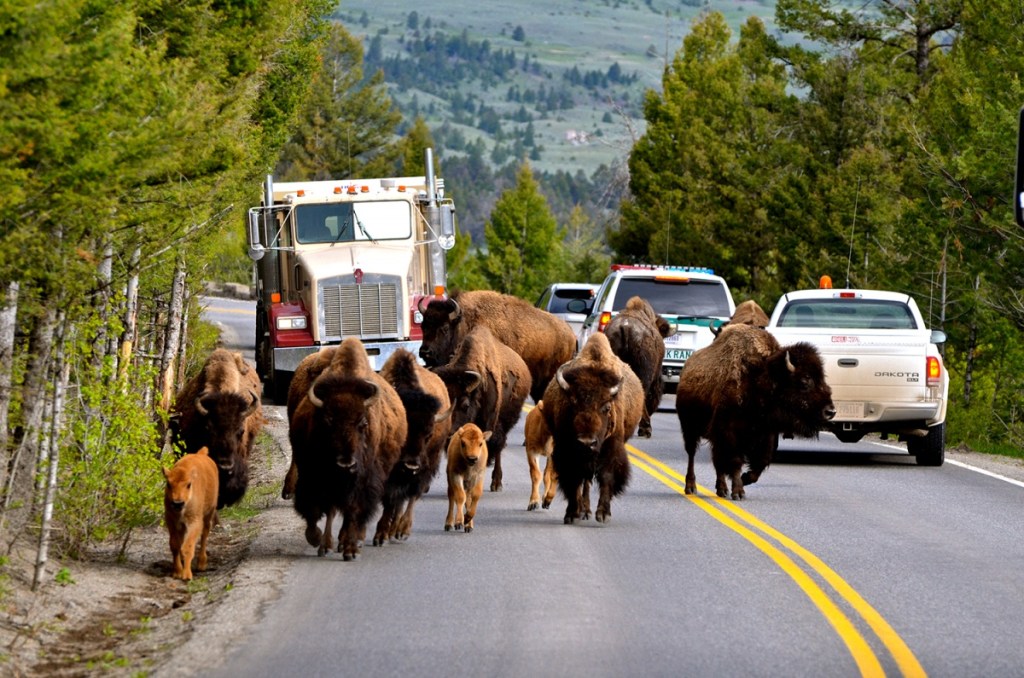
The perfect place to spot Yellowstone National Park’s most famous residents: bison, wolves, antelope, elk, and more. In addition to bison, Lamar Valley is also renown for its gray wolf population. These crafty creatures are harder to spot than the big bison, but you’ll have a better chance of spotting one around sunrise and sunset.

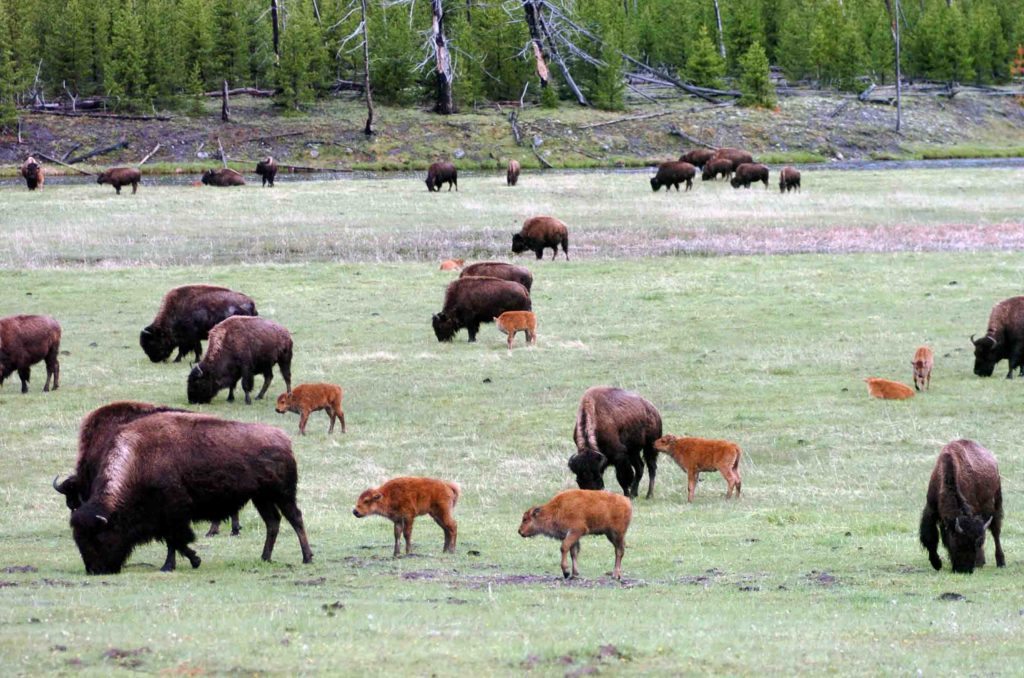
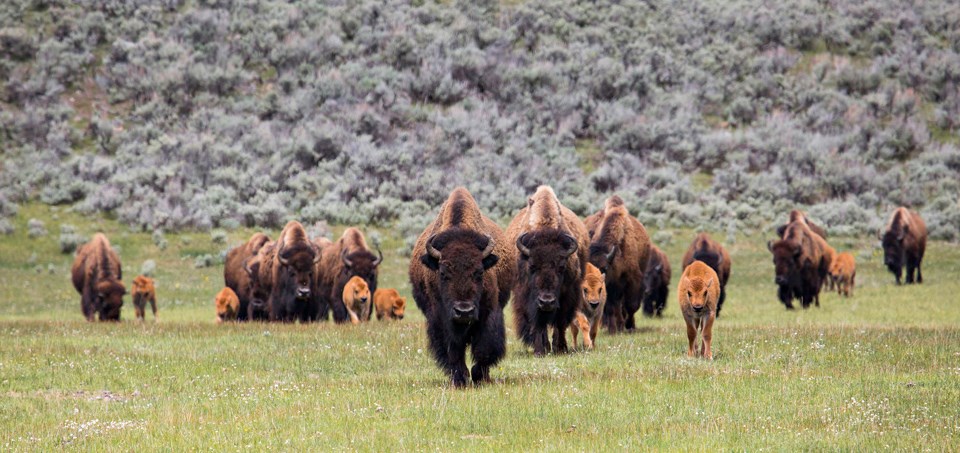
A bison herd grazing in the open flats of the Lamar Valley below fog lifting from distant mountains. Yellowstone National Park, Wyoming

Stop #7: Soda Butte

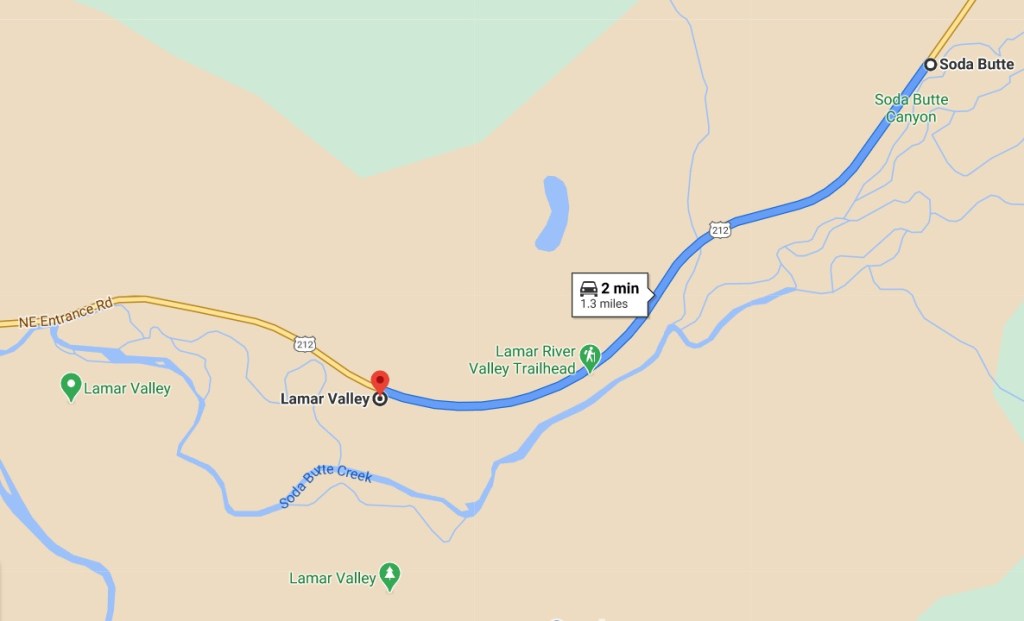
( 1.3 miles from Lamar Valley )

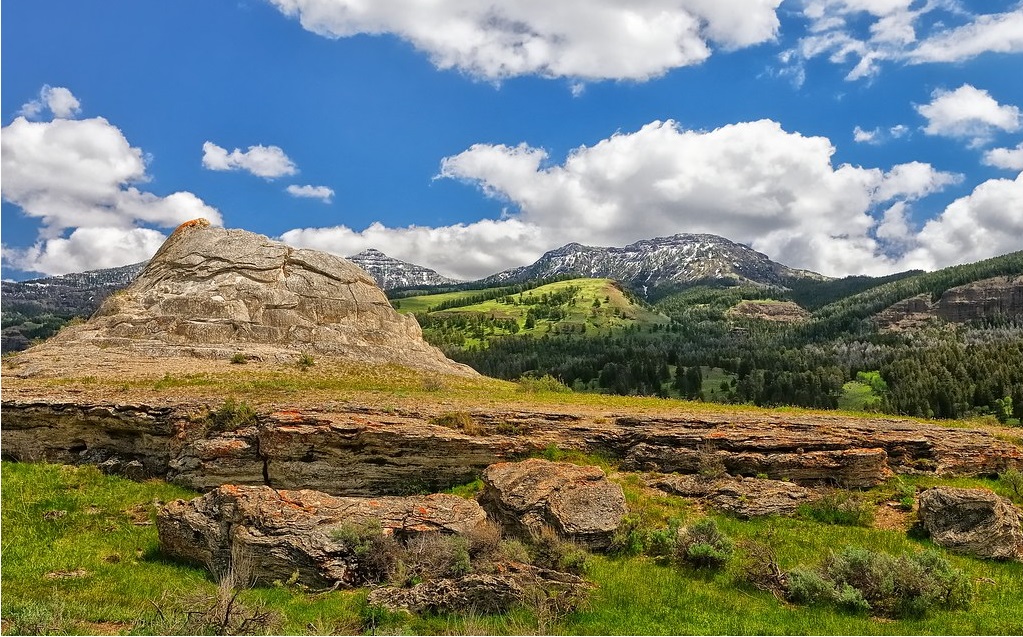
Lamar Valley is not known for its thermal activity. That is why this mostly extinct hot spring looks so out of place standing all by itself with vast valleys and rugged mountain peaks in the background, and sometimes surrounded by bison. The smell of thermal gas is a sign that there is still some thermal activity around Soda Butte. However, the activity is minimal compared to the activity that must have created this massive travertine cone many years ago. There is a pullout on the Northeast Entrance Road right next to Soda Butte.

Soda Butte is an extinct geyser cone in the Lamar Valley of Yellowstone

Stop #8: Calcite Springs Overlook

( 1.5 miles from Tower-Roosevelt Junction )

Time needed:  Allow approx. 10-15 minutes for this activity

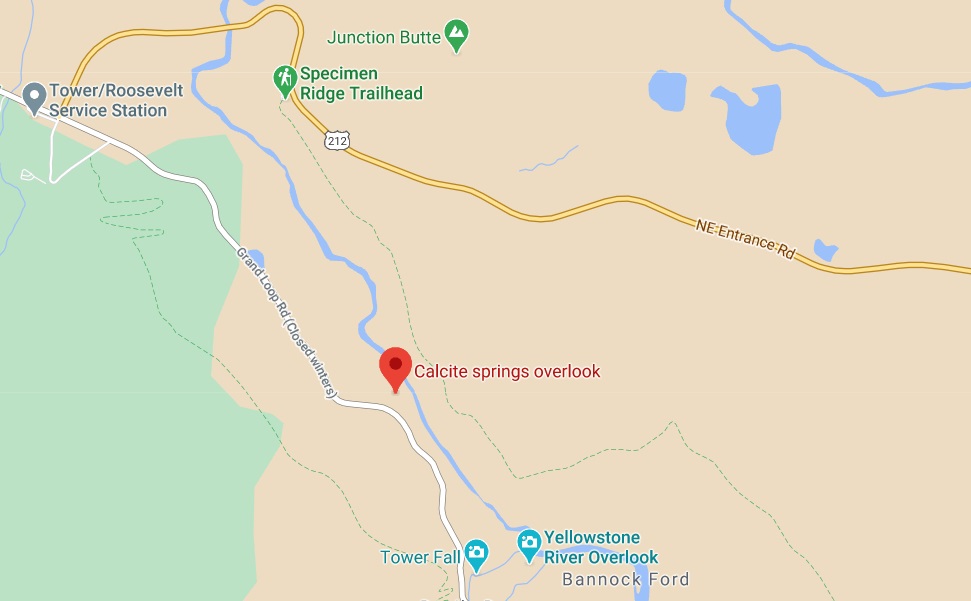
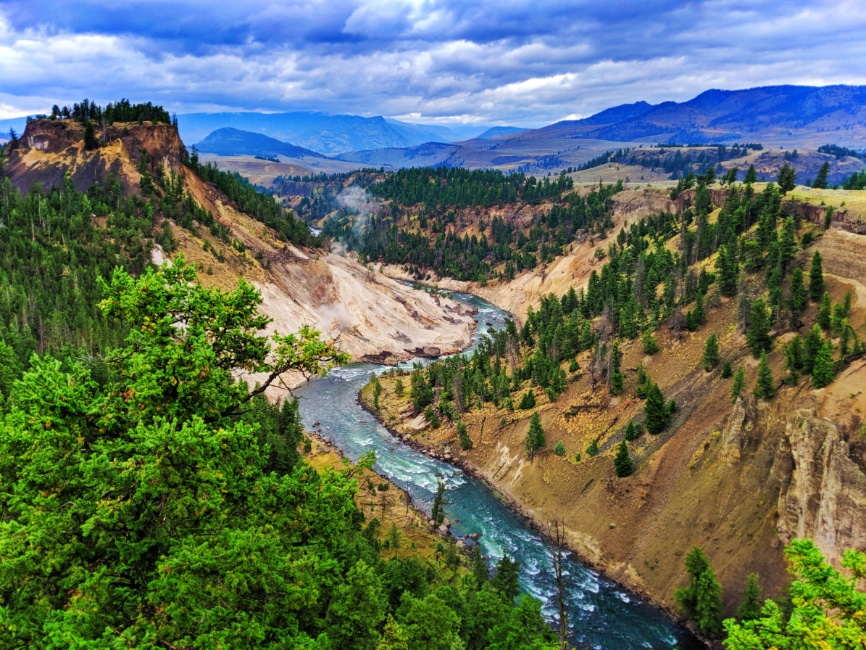
One of the most fabulous overlooks, just 1.5 miles south of Tower-Roosevelt Junction offers fantastic views of the famous area in Yellowstone – the Narrows, the narrowest section of the Grand Canyon.

Yellowstone National Park is known for some of the amazing views that it offers. Calcite Springs Overlook is one of those views. An 800 ft. path will take you along the edge of a deep canyon where the Yellowstone River flows swiftly hundreds of feet below you. Mountain backdrops, unique cliff formations, and a thermal feature in the distance on the banks of the river is what you can expect at this must-see wonder. There are some stairs to go up and down but it is very easy. Keep an eye out for black bears on your way to or from this area. They are often spotted wandering in the grassy woods on the side of the road.

The Calcite Springs grouping of thermal springs show us the ending of the Grand Canyon of the Yellowstone National Park. But it doesn’t mean that the park ends here, this gorge and cliffs are home for numerous wildlife species, such as red-tailed hawks, osprey, bighorn sheep and more.

Calcite Springs Overlook

Calcite Spring Overlook will mesmerize hikers by the great views of the Yellowstone River, sulfuric walls and other hydrothermal features. This trail is an easy one, but provides unforgettable views. Just imagine, this is the place where history and present blend together. Be attentive and you will see steam that is rising from a pale slope. Mesmerizing views of the powerful nature!

Stop #9: Tower Falls

Time needed: Allow approx. 10-15 minutes for this activity

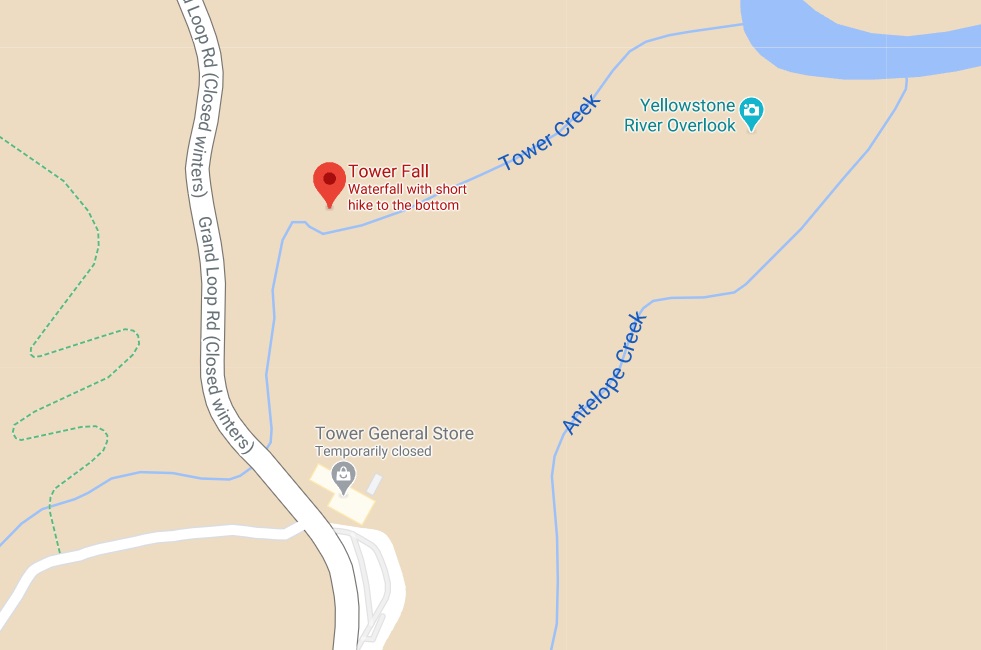
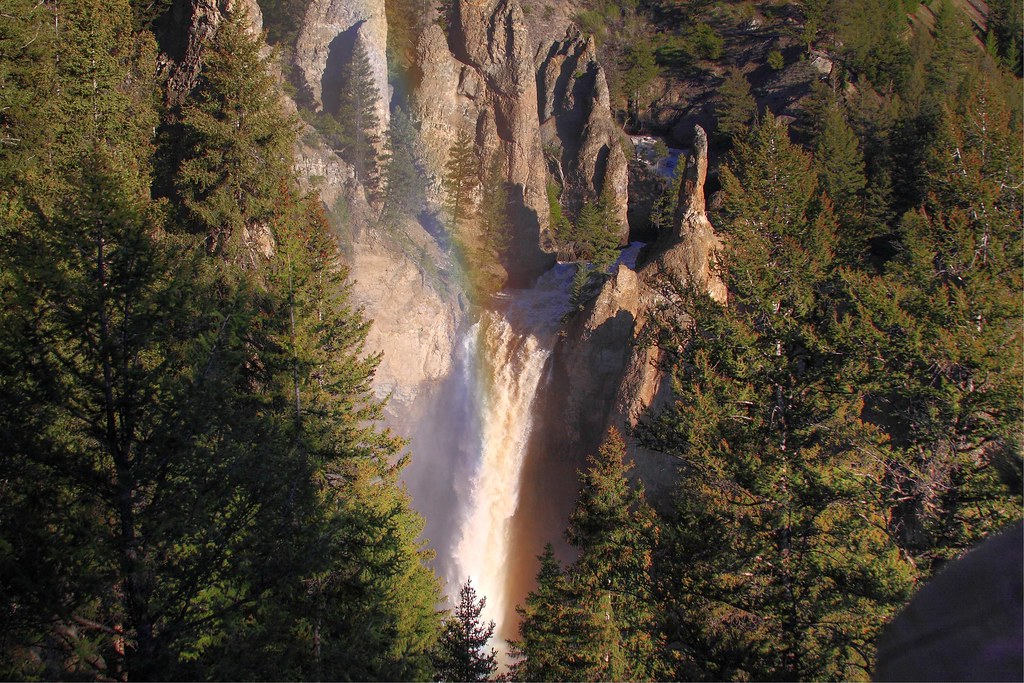
An easy 150 yard paved trail from the parking lot at the Tower General Store will get you to Tower Fall. Tower Fall is the point where Tower Creek drops 132 feet over a rocky ledge with some interesting and unique looking rock formations on the cliffs around it. Your adventure at Tower doesn’t have to stop at the viewpoint platform. A 3/4 mile trail goes down to the confluence where Tower Creek meets the Yellowstone River. The hike down can be steep in some places and may be a somewhat strenuous climb on the way back up.

Red Lotus Restaurant

19 Madison Ave, West Yellowstone, MT 59758

Yellowstone Lower Loop

Các văn phòng du lịch tại West Yellowstone thường chia YS ra làm hai khu vực Lower Loop, và  Upper Loop. Giá mỗi tour vào khoảng $125/người. Nếu gộp cả hai vào làm một Grand Loop thì họ tính $235.00/person for 8 to 10 people. Nhưng nếu chúng ta có thời giờ và có xe thì cứ đi thăm từ từ cho vui, cho khoẻ thay vì cứ chạy hộc tốc đến mỗi nơi chụp hình rồi qua nơi khác, không có thời giờ tự mình tìm hiểu, thưởng thức cái đẹp thiên nhiên với tâm hồn của mình.

Ăn sáng ở tiệm “Running Bear Pancake House”. Bạn bè tôi đã giới thiệu là nơi có thức ăn ngon, rẻ, trang hoàng đơn giản, sáng sủa, và hơn nữa là nhân viên lại tiếp đãi ân cần, lịch sự.

Gần cửa Tây con sông Madison có dòng nước trong vắt, các “anglers” (ngư ông)  đứng giữa sông câu cá. Một quang cảnh rất là an bình. Sông có cá “brown trout” và “rainbow trout” rất to và ngon.

Dọc đường đến Madison Junction, ngõ tẽ của 2 loops không khí bắt đầu có mùi trứng thối từ “hydrogen sulfide” (H2S) – đây là dấu hiệu của ôn tuyền (suối nước nóng).

Bên trong Yellowstone, cách thưởng thức thú vị nhất là tự lái xe đi khắp công viên và dừng lại ở mỗi nơi lâu mau tùy thích.

Công viên Yellowstone có hàng chục con sông lớn nhỏ, vô số thác và hồ, vực đá dài hàng trăm cây số, hàng chục ngàn hiện tượng nước nóng, và hơn năm trăm suối phun. Hai thung lũng Lamar và Hayden được giữ nguyên sự hoang vu nguyên thủy với núi rừng trùng điệp.

Yellowstone là nơi có nhiều tụ điểm nước nóng nhất thế giới. Nằm rải rác khắp công viên là những khu nước nóng (hydrothermal areas). Ở nơi đó, mặt đất chỉ là một lớp mỏng phía trên, dưới đất là những vết nứt từ những cơn động đất mấy triệu năm trước đan nhau thành một hệ thống chằng chịt. Nước mưa chảy xuống, tích tụ trong mạng lưới đó, trở thành cực kỳ nóng, rồi đi ngược lên, tạo thành những suối phun (geysers), hồ nóng (hot springs), hố bùn (mudpots), và lỗ phun hơi (fumaroles). Ở Yellowstone, đất, đá, cây cối, thú vật, nước, và lửa hòa quyện và tương tác với nhau trong một vòng kỳ diệu.

Đường xe chạy chia công viên thành hai khu chính: Upper Loop (Vòng Trên) và Lower Loop (Vòng Dưới). Rải rác trên hai vòng này có tám trung tâm hướng dẫn khách đến thăm (Visitor Centers), mỗi trung tâm đều có quầy hướng dẫn, phòng chiếu phim, viện bảo tàng, khách sạn, nhà hàng, và tiệm bán mọi thứ từ dụng cụ cắm trại, thức ăn, đồ lưu niệm cho tới thuốc xịt chống gấu.

Yellowstone Lower Loop Tour from West Yellowstone

Get an early start: This greatest-hits tour of the lower loop of Grand Loop Road covers 94 to 124 miles and encompasses five major attractions, leaving little time for dallying. Begin from the popular west entrance and cruise along the Madison River, where you can see the forest recovering from the 1988 fires. You’ll also spot ducks and trumpeter swans on the river, and grazing elk and bison.

https://goo.gl/maps/ASEjtmixzPMf6rHx6

Stop #1: Firehole Lake Drive

( 24 miles from the  West Entrance)

Time Needed: 20 minutes

Firehole Lake Drive is located about 25 miles of West Yellowstone. Take this one-way drive past many geysers and springs. If you’re lucky you will be able to witness the Great Fountain Geyser erupting near the start of the drive; it shoots one of the tallest sprays in the park!  There is also a boardwalk offering bird’s eye views of the various hot springs.

https://goo.gl/maps/N86P48h2SUTRgiVU7

Stop #2: Midway Geyser Basin

( 4 miles from Firehole Lake Drive – 25 miles from West Yellowstone)

Time Needed: 30 minutes

The Midway Geyser Basin is definitely one of the crown jewels of roadside attractions in Yellowstone National Park. It features two of the most spectacular features in the park: the Excelsior Geyser Crater and Grand Prismatic Spring, the latter being the third largest hot spring in the world and the largest in Yellowstone.

Walk the 1/2-mile boardwalk loop and consider the hike up the overlook for an even better, once in a lifetime look at this marvel of nature.

https://goo.gl/maps/WtyTxW4ihwE8VKvJ6

Stop #3: Biscuit Basin

( 4 miles from Midway Geyser Basin – 29 miles from West Yellowstone)

Time Needed: 20 minutes

A couple of the main spectacles are Sapphire Pool and Jewel Geyser, though there are several other geysers and hot springs that capture individuals’ attention. Jewel Geyser erupts fairly frequently, reaching heights of up to 30 feet. Most people will see it erupt at some point along the walk around the half-mile or so boardwalk.

Ghé vào Biscuit Basin. Không ngờ, ở đây, tôi “gặp” được một hồ nhỏ nhưng, theo tôi, là đẹp nhất ở Yellowstone.

Hồ tên là “Sapphire Pool” – Hồ Bích Ngọc. Cái tên thật xứng đáng với vẻ đẹp của hồ. Hồ có màu xanh ngăn ngắt khó diễn tả, nước trong vắt nhìn thấy từng vân đá trắng xếp bậc thang ở thành hồ. Hồ cắt một đường xéo vào lòng đất nên người ta không thể nhìn thấu, chỉ biết đáy hồ thu hẹp lại và sâu hun hút. Hồ nhỏ nhưng du khách đứng quanh thật đông. Người thì rướn người qua rào, cố nhìn xuống đáy như để tìm hiểu cái bí mật của “viên ngọc bích” giữa trời. Đám trẻ hơn thì xuýt xoa “đẹp kỳ cục!” (ridiculously cool). Tôi cố chụp hình, dù biết rằng máy ảnh chỉ ghi lại được một phần màu xanh mê hoặc của Hồ Bích Ngọc.

Sapphire Pool

https://goo.gl/maps/iRqsgCJtQTQcUfveA

Stop #4: Old Faithful Geyser Basin

( 3 miles from Biscuit Basin – 32 miles from West Yellowstone)

Time needed: About 2 hours

Guaranteed to be a highlight of your day in Yellowstone, be sure to set aside a large chunk of time to explore the Old Faithful Inn, catch one of the famous geyser’s on-time eruptions and take a ramble on the boardwalk past one of the park’s richer collections of hydrothermal wonders.

We recommend parking behind the Visitor Education Center for easy access to everything. Inside the center you’ll find posted signs predicting the next Old Faithful eruption as well as exhibits on Yellowstone’s hydrothermal features, life in these extreme environments, the volcano beneath Yellowstone and ongoing scientific research in one of the greatest living laboratories on Earth. Children of all ages will enjoy the Young Scientist exhibit room, which includes a full-size geyser model and hands-on exhibits.

The highlight of this stop is, of course, watching the wonder that is Old Faithful, so grab a seat and wait for the impressive sight of up to 8,400 gallons of scalding water reaching heights topping 184 feet. It is important to note that there is a 90-minute interval between eruptions.

Before or after Old Faithful puts on her show, be sure and visit the monumental, multi-gabled Old Faithful Inn. Completed in 1904, the inn is the largest log structure in the world. Its massive 65-foot ceiling, stone fireplace and gnarled railings made from local lodgepole pine ensure its stature as one of the most iconic buildings of the American frontier. The inn also features shops, restaurants and multiple rustic seating areas in the lobby—on two levels!—where you can plunk down in padded leather chairs, rockers and couches to watch the world go by and take in the magnificence of the inn.

Consider taking a free historical tour of the building that happens daily at 9:30 a.m., 11 a.m., 2 p.m. and 3:30 p.m. There is also an outdoor deck accessed through the second level with excellent views of Old Faithful and the other smaller geysers  that dot the landscape there.

But don’t just stick to the inn—the Old Faithful area opens up exploration of the Upper Geyser Basin, where famous beauties like the Morning Glory pool can be found.

Another spur trail will continue farther into the Upper Geyser Basin. This will bring you past more colorful springs and another spectacle of the Upper Geyser Basin, Grand Geyser. It can also reach up to 200 feet, but like Beehive Geyser, can have a larger window for its eruption, typically adding up to about two hours on either side of the predicted time. The path will continue past Chromatic and Beauty Pools before crossing back over the Firehole River, and past Giant Geyser before joining the larger, main path extending from Old Faithful. A small detour beyond will take you by Riverside Geyser, and just beyond that is the famous Morning Glory Pool.

Morning Glory Pool

https://goo.gl/maps/CUbxeM6ESfQSo58t9

Rời Old Faithful đường 287 chạy ngang một cái đèo cao đến 2518 mét gọi là “Craig Pass”. Đèo nầy nằm trên một đường phân chia đại lục (Continental Divide) của công viên. Cạnh bên đường có cái hồ rất nhỏ bé nhưng lại mang một sứ mạng lớn lao, lớn hơn cả Yellowstone – đó là hồ “Isa Lake”. Như một người mẹ hiền tuy ốm yếu, “Isa” gom nước trời cho rồi chia ra cho 2 người con – sông “Lewis River” phía Đông, sông “Firehole River” phía Tây. Từ hồ Shoshone qua hồ Lewis , sông trước chảy vào “Snake River”- một nhánh của đại hà Columbia và sẽ  đổ ra Thái Bình Dương. Sông sau chảy vào sông “Missouri”, sau đó sẽ tìm đường ra Đại Tây Dương qua đại hà Mississippi.

https://goo.gl/maps/irssLHCnKcY1WpqY8

Stop #5: West Thumb Geyser Basin

(20 miles from the Old Faithful – 52 miles from West Yellowstone )

Time needed: 30 minutes.

Take a restroom break and stretch your legs by touring the 1/4-mile inner boardwalk loop or the 1/2-mile outer loop on the shores of Yellowstone Lake, the largest lake above 8,000 feet elevation in North America. This will be your introduction to a variety of geothermal features: bubbling springs of finely milled mud, multi-colored pools and steaming lakeside cones.

The rustic cabin near the parking lot was the original West Thumb Ranger Station. Built in 1925, it now serves as a summer visitor information station.

The trail makes a loop and neither direction is any harder than the other. If you head right, you’re first brought past the Thumb Paint Pots, a small collection of mudpots, where the water is acidic enough to gradually eat away at the ground around it. This causes the pools to have a murky and muddy appearance to them.

From here you can fork to the left or right. Continuing to the right (from your initial direction), the trail descends past the colorful Bluebell Pool on its way down to the lake’s shore. Along the lake’s shore, you see the outline of the entire West Thumb of Yellowstone Lake.

The boardwalk follow the lake’s shore, bringing you past Lakeshore Geyser, Fishing Cone, and Big Cone. Fishing Cone in particular is famous for being the site where people would catch fish in the lake, then dunk it directly in boiling water of the geyser to cook.

Continuing around the loop, the boardwalk brings you past two impressively colorful hot springs: Black Pool and Abyss Pool. Each has its own spectacular qualities that could distract anyone for quite a while. Off in the distance from those two is also King Geyser. Eruption times can vary so if it’s not going off as you walk by, patience may not reward you here.

The moon above Black Pool in the West Thumb Geyser Basin, Yellowstone National Park, Wyoming

https://goo.gl/maps/AjFGrDJ9DryVRWkx5

Stop #6: Yellowstone Lake

(20 miles from West Thumb Geyser Basin – 72 miles from West Yellowstone )

Time needed: 20 minutes.

On the section of your loop from the West Thumb to Grand Canyon, you’ll cruise through the rolling landscape of Hayden Valley and then along the tree-lined shore of Yellowstone Lale. Bison graze in herds on the open grassland here and will often amble right up to the road. Follow the signs to Mud Volcano or Lake Village if you feel like another break, or simply enjoy the scenery from your window. Now is the time to relax after an action-packed day.

Từ giữa hồ người ta có thể thấy Lake Hotel, tòa nhà màu vàng tươi nổi bật trên nền xanh của rừng núi. Đây là khách sạn lâu đời nhất trong công viên, được xây từ 1891. Cho tới bây giờ, kiến trúc kiểu thuộc địa với những cột trắng cao vút vẫn còn vẻ xa hoa, kiêu hãnh của thời chỉ những người rất giàu mới có tiền đi du lịch tại Yellowstone. Năm 2014, khách sạn đã được tu bổ lại những nét xưa vẫn được giữ gìn. Lúc tôi ghé vào, dàn nhạc đang chơi tại sảnh đường làm quang cảnh càng giống như những buổi tiệc quý tộc xa xưa. Dù cảnh trí không độc đáo như Old Faithful Inn, Lake Hotel cũng là một nơi đáng dừng chân.

Bờ phiá Bắc hồ có làng Lake Village và cận đó là Fishing Bridge người ta có thể chơi thuyền, câu cá và cắm trại ngủ qua đêm với những phương tiện như điện nước, nhà vệ sinh.

https://goo.gl/maps/BmEPi8Yr9BhALezh6

Stop #7: Hayden Valley

( 12 miles from Lake Yellowstone Hotel )

Time Needed: 20 minutes

This valley, centrally located in Yellowstone National Park, is the first place to go to see wildlife in Yellowstone. As you drive along this beautiful, broad valley you are likely to see herds of bison, scattered elk (and the occasional herd), and the occasional grizzly bear. You are also likely to see waterfowl, including ducks, Canada geese and pelicans, swimming in or lounging near the Yellowstone River.
There are a number or roadside turnouts along the Hayden Valley, offering views on both sides of the road. The Yellowstone river is positioned on the east side of the roadway. Several turnouts are scenic overlooks that allow panoramic views of the Valley floor below.

Clouds passing over the Yellowstone River and the Hayden Valley. Yellowstone National Park, Wyoming

https://goo.gl/maps/y5Pzv2CLKL4BAE8aA

Stop #8: Grand Canyon of the Yellowstone

( 7 miles from Hayden Valley )

Time needed: 2 hours, maybe more!

The Grand Canyon of Yellowstone is only 2 miles away from the village. Carved into soft rhyolite stone by the Yellowstone River, the canyon is where visitors can truly see how Yellowstone garnered its name, with a rainbow of colors (including yellow) in the exposed rock descending to the canyon floor. The tumbling waters of Lower Falls spiral from a height twice that of Niagara Falls. This thundering vista can be enjoyed from Lookout Point, Red Rock Point and Artist Point.

Park at Artist Point for inspiring views of the Lower Falls, the tallest waterfall in Yellowstone (308 feet, more than twice the height of Niagara Falls), and its 109-foot counterpart, Upper Falls. If you have more time and are up for a bit of an adventure, head 328 steps down the side of the canyon on Uncle Tom’s Trail. Of course, you’ll have to climb 328 steps back up the side of the canyon, but the close-up view of the falls is worth it. You can also get up close on the platform at the Brink of the Upper Falls or the platform at the Brink of the Lower Falls. Other picture-perfect vacation photo backdrops include Artist Point, Lookout Point, and Red Rock Point. There is no shortage of inspiring views.

Lower Falls as seen from the South Rim of the Yellowstone Canyon

Yellowstone

Thành phố West Yellowstone nằm ở phía Tây YS, ngay chính giữa của YS nên là một địa điểm lý tưởng để làm căn cứ phát xuất đi thăm các nơi trong YS. Đoạn đường đi lên miền bắc YS phải vượt đèo và đi ngang qua khu lòng chảo Norris Geyser. Lái xe chạy trên đèo chật hẹp, nhìn lòng chảo Norris chạy dài, và rộng hơn mình tưởng; và nếu trên đoạn đường này mà gặp trời tuyết, lở trợt bánh và bay xuống khu lòng chảo bên dưới thì đúng là hết ý kiến. Cảnh trên đường đẹp quá, hết thác rồi núi đá, rồi hồ, thời giờ di đến các nơi của chúng tôi thường là gắp đôi người khác, một phần là tôi lái rất chậm để ngắm cảnh, và chụp hình.

Yellowstone N.P. (sẽ gọi tắc là “YNP”, “Park” hay “c.v.” ) được thành lập năm 1872 – là vườn quốc gia đầu tiên trên thế giới. Mỗi năm có hơn 3  triệu người đến viếng. Vườn có một diện tích đến 8,983 km, chạy từ t.b. Idaho phía Tây sang Montana phía Bắc, phần chính là trong t.b. Wyoming. Người ta đến đây để xem cảnh đẹp 4 mùa và dã thú. Phong cảnh nơi đây có những cái khó tìm ở nơi khác. YNP nằm trên một “Supervolcano”!

Yellostone có 5 lối vào: Đông, Tây, Nam, Bắc và Đông Bắc. Từ đường US-20 chúng tôi ghé West Yellowstone Visitor Center để lấy tin tức và bản đồ. Sau đó vào cửa Tây của park, rồi vừa ngoạn cảnh vừa chạy về hướng Hotel (82 miles). 

Đại khái trong vườn quốc gia Yellowstone có 2 vòng “loop” gọi là “grand loop” như con số 8 và dài 228 km để đi lại. Với một diện tích lớn hơn 3 tỉnh miền Nam của  VN ta, muốn xem cho hết chắc cần nhiều ngày giờ. Trong vườn không có “Shuttle” như Yosemite hay Zion NP.

 Muốn thăm viếng các nơi ở Yellowstone cho tạm đủ thì cần một tuần. Nếu chỉ hai ba ngày, các bạn chỉ có thể ghé các điểm chính mà thôi như Mammoth Hot Springs, Old Faithful Area, Norris Geyser Basin, Grand Canyon, Yellowstone Lake Area.

Yellowstone Park, từ nay tôi viết tắt là YS, là một lâm viên đầu tiên và lớn nhất của Hoa Kỳ, được thành lập từ những năm đầu thế kỷ 20. YS thật là quá rộng, diện tích vào khoảng 2.3 triệu acres, tức vào khoảng 8.900km vuông. Bạn cứ tạm tưởng tượng một hình vuông mỗi bề 60miles thì đó chính là hình ảnh của YS. Chạy từ đông sang tây, từ bắc xuống nam với tốc độ giới hạn trong lâm viên từ 25-45 miles/giờ, bạn sẽ mất khoảng 2 tiếng. Đó là chưa kể chuyện kẹt xe nếu đi vào mùa hè vì quá đông du khách, hay các anh chị bò rừng (bisons), hươu, nai (deers, mooses), gấu đen, gấu nâu lang thang đi trên đường lộ, khiến thiên hạ đều ngưng lại chờ, hay chụp hình.

Qua khỏi Madison Junction đường xe chạy song song con sông nhỏ “Gibbon”. Hai bên sông có rừng cây xen lẫn với đồng cỏ xanh rất tươi mát. Đây là một lạc viên của động vật dã sinh. Nhìn xa xa sẽ thấy mấy con “elk”(nai sừng sám) ,  gấu và “bison” đang ăn cỏ. “Bison” còn được gọi là “Buffalo”. Xưa kia lúc người da trắng mới đến Tân Lục Địa họ thấy con thú quá to gíống như con bò hay trâu rồi gọi là “buffalo”(trâu). Thực ra “bison” không phải là trâu hay bò – tự nó chỉ là con “bison” mà thôi…

Dọc đường đến ngõ tẽ của 2 loops không khí bắt đầu có mùi trứng thối từ “hydrogen sulfide” (H2S) – đây là dấu hiệu của ôn tuyền (suối nước nóng) tương tợ như vùng Oku Nikko – NB. 

Chúng tôi lấy nhánh Nam của loop chạy đến “Heyden valley” – đây là một thung lũng với một thảo nguyên bao la. Dân ái mộ thú dã sinh tụ tập nơi đây khá đông. Họ trang bị với những ống nhồm và “spotting scope” loại “high power” để tìm đàn “elk” đang ăn cỏ ở gần hàng cây. Nơi đó chắc chắn là đàn sói – “wolfpack” sẽ chờ để săn bắt họ hầu có cơm chiều cho đêm nay. Không như con người sói chỉ đi săn khi đói mà thôi… 

Sau “Heyden valley” chúng tôi chạy ngang cây cầu “Fishing Bridge” hướng về cửa Đông qua một cạnh của hồ Yellowstone. Cầu nầy có dáng giống “Độ Nguyệt” kiều (渡月橋) của Kyoto trên con sông “Ôi” (大堰川) – vùng Arashiyama (嵐山). Đường về nhà trọ bắt đầu leo dốc, băng qua cánh rừng chết vì bị sâu bọ ăn rồi đổ ngã bởi gió lớn. Giao thông trên đường đột nhiên ngưng lại. Khi đến gần tôi mới biết là có gia đình con gấu “grizzly” đang ăn cỏ bên cạnh đường – Đây là dịp hiếm có cho phó nhồm như tôi để  bấm máy ảnh. Gấu “grizzly” là loài gấu to nhất Bắc Mỹ. Vùng Alaska gấu có thể nặng đến 540 kg (1,200 lb)  vì ăn nhiều cá “salmon”.

Xa lộ buổi chiều bắt đầu vắng xe. Nắng chiều hắt hiu khiến tôi chợt nhớ nhà và nhớ má nó. Chúng tôi đến hotel vừa kịp giờ cơm tối. Nơi hẻo lánh nầy không có phố xá hay tiệm ăn nào khác ngoài cái của nhà ngủ, nếu về đến trể thì phải nhịn đói thôi. Làm gì có cơm nguội của má mấy đứa nhỏ. Restaurant của hotel có “serve” thịt “bison” và cá “rainbow trout” – cả hai đều ngon miệng cả nên tôi đành nhắm mắt chọn một thứ trước, ngày sau sẽ ăn món còn lại.

Day 1

 West Yellowstone :

Sau khi nhận phòng tại khách sạn, chúng tôi đồng ý lái xe một vòng thăm dân cho biết. Thành phố West Yellowstone nằm ngay bên ngoài cửa Tây YS, chỉ cách khách sạn chúng tôi 500 thước. Thành phố chỉ có vài dảy phố chính bao bọc với núi đồi nằm xa xa. Thật đúng với câu “…đi dăm phút đã về chốn cũ…”. Điểm xa nhất của thành phố đến cổng tây YS chỉ chừng 1 mile. Thành phố dù nhỏ nhưng có đến hai supermarket (nhỏ thôi), chừng hơn chục nhà hàng, 4 nhà hàng Tàu, một tiệm bánh ngọt (bakery), thư viện, ngân hàng, khá nhiều cửa hàng bán đồ kỷ niệm, khách sạn chia nhau nằm khắp nơi nhưng chưa có khách sạn lớn như Marriot, Hilton. Có nhiều căn nhà cũ kỷ gần cả 100 năm.

đảo một vòng các nhà hàng xem nơi nào có “salad bar” ngon nhất. Cuối cùng chẳng thấy tiệm nào có quày salad nhiều như mong muốn nên chúng tôi kéo vào The Gusher Pizza & Sandwich Shoppe, nằm ở góc đường Madison và Dunraven, giá rất phải chăng, có cả video game, bàn bi-da, máy đánh bài (casino machines). Chọn cho mình một cái 1/3 pound hamburger và một ly bia lạnh – thật là sướng đời sau một ngày mệt mõi! Đây là một nhà hàng bạn nên ghé qua.

http://www.yellowstonepizza.com/menu

Khi vừa đến nơi, chúng tôi đi ra Trung Tâm Hướng Dẫn (Visitor Center) ngay trên con đường chính, Canyon Street,để xin bản đồ. Những người ở trung tâm nhiệt tình gợi ý đường đi và chỉ cách để xem được nhiều nơi nhất trong ba ngày chúng tôi lưu lại nơi đây.

Nhờ ghé thăm văn phòng “tourist Information” lấy tài liệu. Họ cũng đề nghị mua vé vào cửa luôn tại đây thay vì phải xếp hàng nơi cổng vào. Giá vé (pass) là $20 cho một xe hơi trong một tuần, bao nhiêu người trong xe cũng được. Còn xe gắn máy thì $15, người đi bộ $10. Ai có vé thì được ưu tiên vào cổng, không mất công chờ đợi.

Sinh hoạt buổi tối tại thành phố West Yellowstone này với dân số xấp xỉ 1,000 người thật là buồn. Khi còn sớm thì thấy bà con kéo nhau đi mua quà, hay vào quán cà phê/rượu đánh bi da, chơi game, hoặc đánh bài với máy. Tiểu bang Montana hiện đang bị tràn ngập bởi các “casino machines”. Đi đâu cũng bị chúng vây quanh. Nhờ lang thang đi lòng vòng, chúng tôi chấm được hai nơi mua quà khá nhất là Smith & Chandlers và tiệm One Dollar Shop nằm trên đường Yellowstone Ave đối diện với Museum thành phố. Các bạn nhớ nha, phố của West Yellowstone chỉ ” đi dăm phút là về chốn cũ”, nên cư dân nơi đây đều quen biết nhau, bạn tha hồ mà đi không mỏi chân đâu.

Day 2

Sáng ngày kế thức sớm, ăn sáng xong chúng tôi chạy về hướng “Fishing Bridge” để vào “loop Nam” phía dưới theo chiều kim đồng hồ.  Qua khỏi “West Thumb” đường 287 chạy ngang một cái đèo cao đến 2518 mét gọi là “Craig Pass”. Đèo nầy nằm trên một đường phân chia đại lục (Continental divide) của công viên. Cạnh bên đường có cái hồ rất nhỏ bé nhưng lại mang một sứ mạng lớn lao, lớn hơn cả Yellowstone – đó là hồ “Isa”. Như một người mẹ hiền tuy ốm yếu, “Isa” gom nước trời cho rồi chia ra cho 2 người con – rạch “Lewis” phía Đông, rạch “Firehole” phía Tây. Rạch trước chảy vào “Snake River”- một nhánh của đại hà “Columbia” và sẽ  đổ ra Thái Bình Dương. Rạch sau chảy vào sông “Missouri”, sau đó sẽ tìm đường ra Đại Tây Dương qua đại hà “Mississippi”.

Từ “Craig Pass” chạy tiếp trên đường “loop” sẽ đến “Old Faithful Geyser” – một thắng cảnh mọi du khách đến Yellowstone phải ghé xem. “Geyser” là vòi nước nóng ở dưới đất phun lên. Đây là một hiện tượng do nước ngầm thấm vào kẹt đá dưới đất bị dung nham núi lửa đung nóng, nước sôi không có chỗ chứa phải tìm chỗ vọt lên như ống hơi hỏa xa xưa kia. “Old Faithful Geyser” có chu kỳ phun khoảng 90 phút với chiều cao gần 45 mét. Vì làm việc đúng giờ đúng giấc nên được du khách mến đến viếng nhiều. Trên các postcard  của YNP thường có in hình của nó 

Old Faithful Inn” là một hotel nằm ở địa điểm nầy và  thường được người ta nhắc đến khi nói về vườn quốc gia của US. Là một “log structure” (kiến trúc gỗ nguyên) lớn nhất Thế Giới, bên trong “Inn” có cái ban-công 4 tầng, cái lò sưởi cao đến 26 mét và nặng 500 tấn. Đây là một “National Historic Landmark“. Từ thời được khánh thành (1903) nơi đây đã từng đón tiếp nhiều vị Tổng Thống của Hoa Kỳ, trong đó có  Theodore Roosevelt. Vào dịp lễ Giáng Sinh “Inn” nầy thu hút rất nhiều khách “chịu khó”. Họ đến đây để đón mừng ngày lễ Chúa Jesus ra đời dưới bầu trời đêm đầy sao. Bên ngoài băng tuyết phủ trắng xóa, dưới màn đêm giá lạnh thỉnh thoảng có tiếng đàn sói gọi nhau tạo ra một quang cảnh lạ lùng. Họ gọi nó là “nơi huyền ảo”…

Yellowstone có hơn 1000 cái “geyser” lớn hay nhỏ – và bằng 2/3 của toàn Thế giới cộng lại. Đi cả ngày bất cứ hướng nào cũng có “geyser”. Cũng như “người đẹp” – có cái thấy xong thì ta nhớ, có cái thấy rồi lại thương… 

Bên cạnh “geyser” thường có  suối hay hồ nước nóng có độ a-xít cao cây cỏ không sống được. Mùa đông mấy con “bison” thường đến gần để được sưởi ấm trong những ngày đông băng giá…

Day 3

Ngày thứ 3 trong YNP chúng tôi chạy lại một phần của “Loop Nam” để xem tiếp những nơi còn sót ngày trước, xong lên “Loop Bắc” – vùng nầy có nhiều núi cao, thung lũng sâu, thác nước hùng vĩ và những bãi hoa dại. Hoa “lupine” và “poppy” cao nguyên rất đẹp. Vào đầu Xuân hoa có nhiều màu nhiều loại khác nhau. Nơi nào có hoa thì ta sẽ tìm thấy bướm – theo sau bướm là chim….

Nằm trên một cao nguyên  kéo dài từ Madison Junction, “Norris Geyser Basin” là nơi 2 loop Nam Bắc chia tay phía Tây của YNP. Chúng tôi chạy lên “loop Bắc” hướng về “Mammoth Hot spring”. Nếu “Old Faithful Geyser” là nơi du khách tụ tập đông đảo theo chu kỳ của vòi phun, Mammoth Hot Spring  thu hút người đến xem bất cứ lúc nào. “Hot Spring” có nghĩa là “ôn tuyền” hay suối nước nóng.  

Từ bãi đậu xe đi theo đường trail khoảng nửa cây số ta sẽ thấy một vùng đất nhô lên như mấy trái đồi bằng cẩm thạch trắng đang bốc hơi – đó là “Mammoth Hot Spring”. Khi đến gần ta mới bắt đầu thấy sự lạ lùng của vùng địa lý, một quang cảnh ngoài sự tưởng tượng hàng ngày của mọi người.  Vùng tham quan được bao quanh bởi một vòng “loop” xây trên sàn gỗ gọi là “boardwalk ” dài khoảng 1.75 miles và phải leo lên 100 mét chiều cao. Vừa đi vừa ngắm cảnh chắc cần hơn 2 tiếng đồng hồ. 

Mammoth Hot Spring

Từ “Mammoth Hot Spring” ta có thể chạy ra cửa Bắc của công viên. Nơi đây có cái cổng như một khải hoàn môn (triumphal arch) mang tên vị Tổng Thống rất nhiệt tình với việc thành lập vườn quốc gia – đó là “Roosevelt”. Cổng được xây cất bằng đá núi lửa địa phương phía trên có hàng chữ “For the Benefit and Enjoyment of the People” (vì sự phúc lợi và niềm vui của toàn dân). Xưa kia khi mới thành lập cổng Bắc là lối vào duy nhất của vườn quốc gia. Người ta đi tàu hỏa đến thành phố Gardiner – Montana sau đó mướn xe ngựa chở vào công viên.  

YELLOWSTONE NATIONAL PARK

ÐƯỜNG LÊN THẮNG CẢNH ÐÁ VÀNG YELLOWSTONE

Trịnh Hảo Tâm

West Entrance to Yellowstone National Park.

Yellowstone ở góc Tây Bắc tiểu bang Wyoming trên vùng núi Rocky Mountains thuộc Trung Tây Hoa Kỳ cách Los Angeles 1,052 miles. Yellowstone có những suối nước nóng ngầm bị áp suất đè nén bắn lên thành những vòi nước phun cao hơn 100 feet, có những núi lửa ngầm dưới lòng đất không phun lửa mà lại phun bùn khi nguội lại thành những lớp đá màu vàng. Ở đây còn có non cao, vực thẩm, thác buông những dòng nước bạc và những đàn trâu rừng, nai vàng an nhàn  thong dong gặm cỏ dửng dưng trước cõi nhân gian xôn xao xua động.

Ngọn suối phun Old Faithful trong Yellowstone


Ðoàn du lịch chúng tôi vẫn còn 15 người đi trên một xe van do Gerald hướng dẫn viên kiêm tài xế người Ðài Loan lái đi từ Los Angeles, rời thị trấn miền núi Jackson ở phiá Nam Yellowstone thì đã 5 giờ chiều. Lẽ ra chúng tôi đi thẳng vào Yellowstone cách khoảng 60 miles để nghỉ đêm trong vùng rừng núi đó theo như chương trình Tour du lịch đã quảng cáo nhưng sau khi Gerald điện thoại với văn phòng hãng ở Los Angeles thì nơi đây cho biết nhà trọ trong Yellowstone đã “hết phòng” nhưng chắc là vì Lễ Lao Ðộng mùa du lịch cao điểm nên giá nhà trọ (lodge) rất đắt mà hãng du lịch thì muốn mướn phòng với giá rẻ mới có lời. Gerald nói rằng sẽ đưa chúng tôi qua thành phố Idaho Falls thuộc tiểu bang Idaho ở về hướng Tây và cách Jackson 80 miles để nghỉ đêm tại đó, đường đi sẽ mất 2 tiếng đồng hồ vì đường núi quanh co nhưng cảnh đẹp. Gerald hứa chắc rằng đêm sau chúng tôi sẽ đuợc ngủ trong rừng Yellowstonemặc sức mà nghe trái thông rơi độp nửa đêm, trâu kêu, thác đổ mà không chừng còn gặp vài con nai vàng… ngơ ngác giữa rừng khuya. Không biết nai ngơ ngác hay mình ngơ ngác vì lạc lối giữa rừng hoang?

Ðể biện minh cho chương trình thay đổi có lợi cho hãng, Gerald nói ngủ trong rừng chán lắm, buồn chết đi được! Trong khi Idaho Falls ban đêm phố phường nhộn nhịp đông vui “ngựa xe như nước, áo quần như (mắm) nêm!” Và tối nay anh ta sẽ dẫn đến nhà hàng Tàu có món…Trâu Rừng Tiềm Thuốc Bắc đại bổ vô song  sau đó ai muốn đi Bar hay hộp đêm Gerald sẽ dẫn đi…xem các cô đầm Mỹ bị đế quốc tư bản bốc lột không còn…manh giáp nào hết che thân! Trưởng đoàn du lịch “Thanh Nhàn” là ông Nguyễn Ngọc Liên cũng như ông Vu một chiến sĩ từ Úc qua tái định cư ở Irvine rất nức lòng, hồ hỡi phấn khởi quên bẵng mệt nhọc đường xa và việc bị thay đổi khách sạn. Sau khi tới Idaho Falls và đưa chúng tôi vào khách sạn Best Western lấy phòng, đúng như lời hứa Gerald dẫn đến nhà hàng Tàu và thưởng thức món Ngọc Ngưu Tiềm Thuốc Bắc. Mấy ngày rồi toàn ăn đồ Mỹ nên đã ớn hamburger, hôm nay xì xụp ăn món Trâu Rừng Tiềm Thuốc Bắc có hương vị gừng cay ấm bụng lại thêm những món như Nai Tơ Xào Kung Pao, Cá Trout Chiên Xốt Chua Ngọt toàn là đặc sản tươi sống điạ phương nên ai nấy kể cả các bà đều mãn nguyện hài lòng, duy chỉ có mấy đứa con nít thì chỉ ăn được có mì xào và…cà rem! Gerald như lời hứa hỏi có đi xem Night Show hay không? Các “chiến sĩ” của ta lúc chiều hăng say lắm nhưng bây giờ no bụng nên đâm ra buồn ngủ, lặng lẽ lắc đầu đòi về ngủ.


Sáng hôm sau điện thoại reo vang đánh thức thật sớm. Cũng xuống Lounge Room ăn Continental Breakfast nghe danh “Continental” tưởng dữ dội lắm hoá ra cũng chỉ có hột Cereal, bánh Donut, Muffin, chuối già và thức uống thì có cà phê, sữa và cam tươi nhưng có còn hơn không. Idaho Falls là một thành phố nhỏ con sông Snake cũng chảy qua và người ta lợi dụng sức nước để xây nhà máy thuỷ điện, khi đi Yellowstone trở về chúng tôi sẽ thăm dòng sông này. Còn bây giờ thì chúng tôi lên xe vào con lộ 20 chạy lên hướng Bắc trực chỉ thắng cảnh Ðá Vàng.


Xe đi 90 miles mất gần 2 tiếng đồng hồ chúng tôi tới thị trấn West Yellowstone thuộc tiểu bang Montana. Ðây là một làng nhỏ chuyên sống bằng du lịch phục vụ cho du khách vào viếng Yellowstone như khách sạn, nhà hàng, tạp hoá, thực phẩm cho những người cắm trại trong Yellowstone vì trong đó là công viên quốc gia bảo tồn thiên nhiên nên những cửa hàng thương mại không có. Gerald dừng xe trong bãi đậu của Mac Donald và nói rằng nên ăn trưa ở đây vì vào trong Yellowstone nhà hàng rất hiếm, giá cả lại đắt. Mới ăn sáng ở khách sạn cách đây 2 tiếng đồng hồ không mấy đói nên chỉ ăn khoai chiên và nhâm nhi cà phê, bà xã tôi còn thủ theo trái cây, mì ly và junk food.

Restaurants and shops in West Yellowstone

Một bà cụ trong đoàn giở từ trong giỏ xách ra một nồi cơm điện đặt trên bàn, xới cơm vào chén và mời chúng tôi ăn với cà pháo ngâm mắm tôm trong lọ thủy tinh và ruốc (thịt chà bông) mà cụ mua ở Little Saigon. Tôi thấy cụ dùng cơm nóng bốc khói ăn một cách ngon lành mà cụ cho biết mới nấu hồi sáng trong phòng khách sạn, tôi cám ơn và từ chối lời mời rất thật tình của cụ vì trong tiệm Mac Donald mà mình ăn…cà pháo mắm tôm thì kỳ qúa! Nhớ lại một lần năm 1994 tôi du lịch bên Nhật đem gói hamburger Mac Donald vào tiệm Sushi Bar ăn với…sushi, gã Nhật đứng cuốn sushi cự tôi qúa xá! Gã xổ một tràng tiếng Nhật với vẻ mặt giận dữ còn tôi thì “Watashi wa no understand né!” Tôi đứng dậy trả tiền và “né” ngay khỏi quán Sushi Bar.

Cũng giải thích thêm Sushi Bar là một quán chỉ chuyên bán sushi, các tay Nhật mặc áo trắng như áo đánh võ Judo đứng trong quày bàn mà cuốn sushi và đặt thức ăn trên một cái rãnh lăn vòng vòng quanh bàn và thực khách ngồi xung quanh muốn ăn đĩa nào thì lấy dĩa ấy. Ăn xong thì chủ quán đếm dĩa mà tính tiền. Trên bàn có gia vị như mù tạt xanh (thứ này rất cay nồng), xì dầu, còn súp và trà thì họ để khô trong bao muốn dùng thì lấy chén rót nước sôi vào (vòi nước sôi cũng trên bàn) và mở bao bỏ súp hay trà vào chén. Ăn ở Sushi Bar và các quán “mì đứng” thì rẻ hơn là vào nhà hàng. Quán “mì đứng” là quán mì không có ghế, người ăn phải đứng và quay lưng ra đường nhưng phần đầu và lưng được che bằng những tấm màn vải vẽ chữ trên đó đôi khi có đề giá tiền nhờ đó mà mình biết được giá cả có thích hợp với túi tiền của mình hay không? Hẹn với các cô gái Nhật Bản đừng bao giờ hẹn ở quán “mì đứng” hay Sushi Bar mà phải hẹn ở ga xe điện sau đó vào quán cà phê lịch sự và lãng mạn trữ tình vì mới quen các cô không tự  nhiên khi ăn uống và nhớ phải đúng giờ, tới trễ là…hỏng! Và nhớ bận đồ Veste thắt cà vạt đàng hoàng vì bên đó ra đường là vậy, homeless còn phải mặc đồ Veste! 

Vũng khoáng chất nóng trong Yellowstone


VÀI NÉT TỔNG QUÁT VỀ YELLOWSTONE

Yellowstone rất rộng có diện tích lớn hơn 2 tiểu bang Delaware và Rhode Island cộng lại, công viên quốc gia này rộng 3,472 dặm vuông (8,987 cây số vuông), chiều dài từ Bắc xuống Nam là 63 miles (102 cây số), chiều rộng từ Ðông sang Tây  54 miles (87 cây số). Công viên có 5 cửa để ra vào là cửa Tây, Bắc và Ðông Bắc thuộc tiểu bang Montana, còn cửa Ðông và Nam thuộc Wyoming. Idaho tuy có chung một phần ranh giới với Yellowstone nhưng không có cửa nào để ra vào Yellowstone. Vào mùa Ðông băng tuyết làm ngập các con đường nên các cửa khác đều đóng duy chỉ có cửa Bắc là mở quanh năm nơi đây có làng nhỏ Gardiner du khách thích thú vì có phong cách làng cao bồi miền Viễn Tây và những ai thích nhìn thú hoang thì đường từ cửa Bắc vào là vùng chúng hay sinh sống. Mỗi cửa ra vào công viên đều có trạm thâu lệ phí và giá là 20$ một xe có giá trị trong 7 ngày có thể vào cả 2 công viên Yellowstone và Grand Teton.


Ðường xá trong công viên Yellowstone không mấy tốt và thỉnh thoảng thú hoang như trâu rừng, nai, gấu băng qua nên vận tốc cho xe cộ trong công viên tối đa là 45 mile một giờ, có nơi còn giảm xuống 35 hay 25 mile. Hệ thống đường trong Yellowstone nhìn trên bản đồ là 2 vòng tròn dính với nhau, vòng trên gọi là Upper Loop và vòng dưới là Lower Loop.

THÚ HOANG TRONG YELLOWSTONE

Sau khi xe qua cửa Tây để vào Yellowstone là chúng tôi gặp ngay một con nai lớn Elk đang ăn cỏ bên đường. Tài xế Gerald dừng lại cho chúng tôi xuống xe chụp hình và nai có lẽ quen với cảnh này nên cũng an nhiên gặm cỏ. Sau đó trên đường vào đến Madison là ngả ba để vào con đường Lower Loop chúng tôi gặp rất nhiều trâu rừng Buffalo hiền lành gặm cỏ. Những con trâu này đầu to nhưng đít lại teo, bốn chân ốm khẳng khiu và để chống lạnh chúng có bộ lông dầy trên đầu và lưng như phủ một tấm mền, bộ lông không mượt lại rối bời loe hoe vàng trông rất dơ dáy thảm não. Có lẽ đây là những trâu già (lại thích gặm cỏ non cho mềm) không còn hơi sức để đi xa còn đám trâu trẻ chắc giờ này bay nhảy theo trâu khác ở trong rừng sâu. Gấu thì không thấy và Gerald là hướng dẫn viên du lịch đã đưa du khách vào đây hơn chục lần thì anh ta cho biết chỉ thấy gấu xuất hiện có một lần. Thường muốn xem thú hoang dã xuất hiện phải đi thật sớm vào buổi sáng hoặc lúc hoàng hôn là lúc trời mát chúng đi ăn còn trưa nắng thì chúng vào rừng trú ẩn dưới bóng cây.


Ðộng vật hoang dã trong Yellowstone hiện nay gồm có: Trâu Rừng (Buffalo hay Bison) có từ 2,000 đến 2,500 conDê Sừng To (Bighorn Sheep) có từ 150 đến 225 con Gấu gồm 2 loại gấu đen và gấu Grizzly độ 1,000 con Nai loại Elk (sừng lớn có nhiều nhánh) chừng 35,000 con Nai lớn Moose (đầu như lạc đà, sừng có những bản dẹp) từ 300 đến 500 con Nai nhỏ Mule Deer độ 2,500 con. Các loại mèo rừng: Mountain Lion ( 2 loại Cougar và Puma) có chừng 18 đến 24 con Bobcat và Lynx rất hiếm. Các loại chó rừng: Coyotes có rất nhiều Gray Wolves có 162 con. Ngoài ra còn có rất nhiều giống thú nhỏ như các loại Thỏ, Chuột, Rùa, Ếch Nhái, Rắn, Thằn Lằn, Dơi, Chim và Cá.


TRÂU RỪNG BUFFALO

Trâu rừng ở Yellowstone cũng có bà con họ hàng với trâu VN chúng ta nhưng vì thời tiết nơi địa phương chúng sinh sống nên thân hình thay đổi cho thích hợp để sống còn trong môi trường mà chúng hiện sống. Trâu ở Yellowstone tên đúng của chúng là American Bison nhưng người Mỹ thường gọi là Buffalo trong khi trâu ở VN và các nước Ðông Nam Á được gọi là Water Buffalo. Trâu Bison là loài động vật có thân hình to lớn nhất ở lục điạ Mỹ Châu sống nơi hoang dã, thời xưa chúng sinh sống từ Mễ Tây Cơ lên tận đến Canada và phiá Ðông từ Pennsylvania qua đến dãy núi Rocky Mountains ở phiá Tây và là thứ thịt chính yếu của người da đỏ để họ ăn sống, nướng chín hay phơi khô ăn trong mùa Ðông. Khi người da trắng Âu Châu tìm thấy Mỹ Châu số trâu Bison sinh sống ở đây lên đến từ 30 đến 60 triệu con, mỗi lần chúng lội qua sông là tàu thuyền phải ngừng lại và chúng còn làm xe lửa trật đường rây! Vì người ta giết để ăn thịt nên đến năm 1870 chỉ còn 5 triệu rưỡi con. Vào thập niên 1880 chỉ còn vài ngàn con và 2 phần 3 là sống bên đất Canada. Người Mỹ mới ra những đạo luật bảo vệ chúng cho khỏi bị diệt chủng và lập những công viên quốc gia như Yellowstone chẳng hạn cho chúng sinh sống và săn sóc bảo vệ chúng chống lại bịnh tật nhất là bịnh Brucellosis do vi trùng Brucella từ Âu Châu truyền sang theo những đàn bò ngựa được chở bằng tàu từ Âu Châu qua.


Năm 1902 toàn vùng Yellowstone chỉ còn chừng 50 con Bison, chính quyền phải mua thêm 21 con từ 2 trại nuôi của tư nhân và đàn Bison còn lại này được nuôi ở trại Lamar Valley trong vùng Yellowstone. Ðàn Bison được săn sóc, có đủ cỏ ăn, nước uống, được bảo vệ khỏi bị Mountain Lion, chó sói tấn công và được chủng ngừa phòng bịnh nên số Bison gia tăng. Năm 1936 đàn Bison ở Yellowstone được thả trở lại vùng hoang dã ở Firehole River và Hayden Valley. Từ đó số trâu rừng Bison gia tăng cho đến ngày nay trong công viên Yellowstone là khoảng 2,500 con và có những năm lên đến 3,500 nhưng chính quyền chỉ giữ ở mức đó mà không cho gia tăng. Những đàn trâu Bison đi vượt ra ngoài khỏi công viên Yellowstone và Grand Teton thì người dân được quyền săn và sau khi được vệ sinh kiểm nghiệm họ có quyền hạ thịt. Trâu Rừng Tiềm Thuốc Bắc chúng tôi ăn đêm qua ở Idaho Falls có lẽ do người ta săn hay nhà hàng mua từ trại chăn nuôi tư nhân.

Năm 2000 trên toàn quốc có khoảng 120,000 trâu rừng Bison đa số là trong các trại chăn nuôi tư nhân. Trâu Bison thân hình to lớn cao hơn 6 feet và có con nặng đến 2,000 pounds trong khi con cái nhỏ hơn thường nặng 900 pounds. Chúng có đầu rất to vì xương trán lớn vồ ra mà mùa Ðông chúng dùng để ủi lớp tuyết tìm cỏ để ăn. Trâu rừng Bison có ngoại hình xấu xí như quái vật nhưng chúng trường chay không khi nào ngã mặn, ăn toàn cỏ và cây lá. Trên lưng chúng có một cái gù nên phần vai cao hơn phần đuôi, con đực cũng như con cái đều có sừng nhọn chĩa ra ngoài nhưng sừng con đực thì lớn và dài hơn. Trên đầu trâu rừng có khi kéo dài xuống tới lưng có nhiều lông màu đen hay hoe vàng và phần lông này mọc vĩnh viễn trong khi mình và đuôi thì lông thay mỗi năm. Dưới càm trâu lại có một chùm râu loe hoe và nhọn giống như râu dê làm cho bộ mặt trâu xấu xí nhưng có chút khôi hài.

Porcelain Springs in Norris Geyser Basin


Xem trâu rừng cũng đã chán chúng tôi lên xe xuôi Nam trên con đường Lower Loop, đoạn đường từ Madison đi Old Faithful độ 12 miles qua một vùng lòng chảo có tên gọi là Geyser Basin có rất nhiều vòi phun nước do thiên nhiên tạo thành được gọi là Geyser. Những vòi phun này do áp suất của hơi nước nóng từ những suối ngầm trong lòng đất thoát ra bằng những lỗ trên mặt đất tạo thành. Có những vòi nước vài ba ngày mới phun bắn lên một lần nhưng có những cái vài tiếng đồng hồ và nổi tiếng nhất là Geyser có tên là Old Faithful thì chu kỳ phun rất đều cứ mỗi tiếng đồng hồ từ ngày này qua ngày khác, năm này sang năm khác và cột nước trắng xóa bắn lên cao đến hơn 100 feet. Trong Yellowstone có hơn 300 nơi phun nước với nhiều kiểu cách khác nhau, cái phun thẳng, cái phun nghiêng, cái bắn lên cao, cái sôi sùng sục như hồ tắm whirlpool trong Health Spa. Mỗi hồ phun có nước xanh biếc và đất xung quanh trắng như vôi hay vàng nghệ và có nơi lại có màu nâu đỏ và lúc nào cũng bốc khói, mờ mờ sương phủ. Truyên cổ tích ngày xưa Mục Kiền Liên đi tìm mẹ dưới âm ty hỏa ngục thì phải đi qua cây cầu phía dưới là những vũng nước sôi sùng sục và đầy những con chó ngao hung dữ. Kẻ làm ác đều bị qủy chĩa thanh ba đẩy xuống không sót một người nào. Nơi đây du khách cũng phải đi trên những cây cầu gỗ và phiá dưới cũng là những vũng nước sôi nhưng không có chó ngao và bên trên trời xanh rất đẹp. Không biết quang cảnh nơi đây giống thiên đàng hay hỏa ngục? Hai nơi ấy những người đã tới vì lấy vé “one way ticket” nên…đi luôn không bao giờ kể lại như thế nào? Nhưng nơi đây là cảnh thật có trên trần gian.

Mammoth Hot Springs


Trịnh Hảo Tâm


Chuyến đi Key West

Mới đó mà gần hết kỳ nghỉ ở Miami, Florida rồi. Đêm hôm trước, khi lên kế hoạch cho ngày mai, nhìn cái danh sách những chỗ còn lại muốn đến mà buồn. Thời gian còn lại thì ngắn, chỗ nào cũng muốn đi, không biết chọn ai bỏ ai đây. Cuối cùng đành phải gạt lệ bỏ qua Vizcaya Museum và Lion Country Safari để chọn lái xe đi Key West. Đến Miami mà không làm cái road trip này thì chắc cũng như đến Maui mà không lái xe đi đến Hana vậy, lỡ về ai hỏi mà không biết gì thì chắc quê một cục. Tuy vậy, nhìn khoảng cách thì hơi ngán, đi và về mất gần tám tiếng, chưa kể thời gian dừng ở những điểm thăm viếng. Thôi thì chịu khổ hơn là chịu lỗ.

Key West là hòn đảo nằm ở cực nam của Florida, nằm trong chuỗi đảo Florida (Florida Keys). Hôm trước đi thuyền dạo Biscayne National Park, được một nhân viên kiểm lâm (park ranger) giải thích sự khác nhau giữa Key và Island. Key là đảo có nguồn gốc sinh học (ví dụ từ các rặng san hô, rồi được đất bồi lên, rồi cây đước (mangrove) lan tràn, rồi chim chóc đến sống. Còn Island là đảo có nguồn địa chất, ví dụ như do núi lửa phun trào lên (như các đảo Hawaii chẳng hạn). Các đảo nhỏ ở phía nam Florida được hình thành từ san hô hoá thạch, thành thử được gọi là Key tuốt tuồn tuột – Key Largo, Key West, Pigeon Key, Long Key, Big Pine Key, No Name Key etc. Thiệt là rườm rà, cứ gọi là “đảo” tất như Việt Nam là khoẻ. Muốn đến Key West thì cứ theo Overseas Highway, một con đường trên biển gồm nhiều cầu nối liền các đảo nhỏ trong Florida Keys, dài khoảng chừng 113 miles, chạy từ Key Largo đến Key West.

Sáng hôm sau, cả nhà ăn sáng xong là gần 10 giờ sáng. Lái xe ra khỏi khách sạn, đổ đầy bình xăng, bật nhạc guitar của Armik lên cho có không khí Caribbean , rồi cứ thế chạy thẳng theo South Dixie Highway (US 1) về phía nam. Thỉnh thoảng hai bên đường lại có những cây phượng khoe hoa đỏ thắm, làm nhớ về thuở đi học ở Việt Nam hè về cũng đầy hoa phượng nở, học sinh phần hái hoa phượng chơi đá gà, phần ép vô vở làm cánh bướm, trái phượng có hột ăn cũng vui. Đúng là thời trẻ con cái gì cũng bỏ vô miệng được.

Xe đi ngang qua Homestead, nơi có nhiều nông trại Việt nam. Cả nhà quyết định ghé mua ít trái cây mang theo. Mấy hôm trước có ghé vườn chị Trinh mua ít nhãn, nhưng hôm sau chị về Việt Nam chơi 3 tuần rồi. Thành thử lần này ghé vườn cô Chín ((305)246-8087, 26925 SW 197th Ave, Homestead, FL) thử sao. Chạy đến đường 197 nhưng tìm mãi không thấy chỗ, gọi điện thoại hỏi nhà thì được cô phán cho một câu rất thẳng ruột đúng chất miền Nam :

  • Mày cứ nhìn cái số nhà trên mấy cái thùng thư mà tới, cái vườn nào mà bên này đường lẫn bên kia đường đều có cây nhãn mọc đầy là vườn của tao, hai cánh cổng mở toang hoát nè. Thôi tao đang bận bán, người mua nhiều quá không nói điện thoại lâu được“.

Chèn đét ơi, từ nhỏ tới lớn có thấy cây nhãn hồi nào mà biết trời. Chạy lui chạy tới một hồi thì thấy cái nhà kia có mấy xe tải trước nhà, chắc là nó. Té ra là đúng thiệt. Vườn có một quầy trưng đủ các thứ trồng trong vườn – thanh long, chuối, xoài, bơ, dưa, chanh, ớt … Khách hàng cũng vài chục người, đang lựa chọn trò chuyện râm rang. Đang đi vô thì có một bác ôm một bao rau to tổ trảng đi ra, mặt cười mãn nguyện, tay chỉ vào bao rau và giải thích “rau lang, rau lang” khi thấy ánh mắt mình nhìn có vẻ dò hỏi.

Đang là mùa nhãn nên người làm đang chọn lọc, đóng thùng các cành nhãn, chắc là để lên xe tải đi bán sĩ. Trái nào trái nấy to và mọng nước, ăn mát cả miệng, ngọt nhức răng. Mua cả cành thì $3/pound, còn mua trái lẻ thì $2/pound. Hỏi sao lạ vậy thì được trả lời là trái mất cuống không để lâu được nên rẻ hơn. Nông trại này xem ra làm ăn quy mô lớn, có cả phòng lạnh để trữ trái cây trong vườn đã đóng thùng chờ gởi đi và trái cây nhập từ các nước Nam Mỹ và Á châu về. Thiên hạ vào ra mua nườm nượp. Mua ít pound nhãn, một thùng chôm chôm (nhập từ Guatemala) và một gói măng cụt (chừng 12 trái, nhập từ Thái) . Xong xuôi, lên xe rong ruổi tiếp.

Chạy chừng một tiếng sau thì đến Key Largo, hòn đảo đầu tiên của Florida Keys, cũng đúng tầm buổi trưa . Ghé qua Mrs. Mac’s Kitchen, một tiệm ăn lâu đời trong vùng, thử món “conch fritter” và “key lime pie“. Món đầu làm từ thịt ốc biển (conch), ăn cũng được, không ngon lắm. Riêng món key lime pie thì ngon hết chỗ chê, danh bất hư truyền. Tiệm này mở lâu lắm rồi, đâu chừng hồi 1974 lận, phục vụ các món ăn dân dã khá ngon miệng và vừa túi tiền nên rất đông khách, sau này mở thêm một địa điểm thứ hai cách đó một đoạn đường phía đối diện. Đặc biệt là từ ngoài cổng, cho đến trong tường, và cả những chụp đèn nữa, đều được trang trí bằng các biển xe từ khắp các tiểu bang của nước Mỹ. Vừa ngồi ăn vừa nghĩ bụng không biết làm sao mà chủ quán lại thu thập nhiều bảng số vậy, bộ ai tới ăn mà để lại bảng số xe là được miễn phí hay sao chứ ? Định bụng hỏi, nhưng chợt nhớ ra là xe mình thuê, không phải chính chủ, có hỏi cũng chẳng làm được gì, mất cái bảng số là đền thủng túi lúc trả xe . Thôi không dại. Key Largo nổi tiếng là nơi thiên hạ đến, đi tour theo thuyền ra các rặng san hô, đi lặn biển xem cá. Nhưng mấy nhóc tì nhà mình hôm nay không thích đi snorkeling nên thôi đi tiếp. Đó là trước khi tụi nó thấy cái hình 3 chiều con cá mập trên tường này trên đảo đó nha. Nếu mà tụi nó thấy cái tượng này trước có khi lại không dám bước ra khỏi xe không chừng.

Ra khỏi Key Largo, con đường tiếp tục chạy dài về phía nam qua Islamorada, Marathon, và vô số các đảo nhỏ khác. Xem ra các nơi này phần lớn sống về du lịch nên dọc theo hai bên đường là vô số các khu nghỉ mát, tiệm ăn, các cơ sở phục vụ đi tour lặn biển, câu cá. Ít thấy các ngôi nhà cao tầng, vốn nhan nhản khắp nơi ở Miami. Các ngôi nhà chủ yếu là một hai tầng, nấp bóng dưới các cây dừa, cây cọ cao . Trước cổng thường có giàn bông giấy hay cái loại dây leo khoe đủ các sắc màu. Không gian yên tĩnh và nhịp sống dường như chậm hẳn đi. Một phần vì phong cảnh, một phần vì cái nóng nhiệt đới, và một phần chắc vì giới hạn tốc độ trên đường này chỉ khoảng 35 đến 45 dặm một giờ. Cứ cách vài dặm lại thấy một xe cảnh sát đậu bên đường, sẵn sàng hỏi thăm con nhạn lạc đàn nào dám không tuân thủ tốc độ quy định.

Vừa đi đủng đỉnh lại vừa dừng lại vài nơi lang thang nên gần tới 5 giờ chiều mới đến Key West. Chỗ đầu tiên mình muốn ghé tới là ngôi nhà của nhà văn Ernest Hemingway, tác giả của nhiều cuốn tiểu thuyết đã làm say mê không những chính mình mà còn nhiều bạn bè khác lúc mới lớn – Ông Già Và Biển Cả, Giã Từ Vũ Khí, Chuông Nguyện Hồn Ai … Tìm đến nơi mới biết là kiếm chỗ đậu xe ở Key West thiệt là khó, phần lớn các đường phố đều nhỏ, chỗ đậu xe nếu có đều phải trả tiền. Hèn gì mà thiên hạ toàn đi bộ. Chạy vòng vòng cũng phải 20 phút mới kiếm được chỗ đậu xe, đi bộ trở lại bốn, năm khu phố thì đã quá 5 giờ, hết giờ tham quan. Thiệt là số con rệp. Thôi thì đành phải đứng bên ngoài chụp vài cái hình cho đỡ tủi.

Key West là thành phố cực nam của nước Mỹ, cách Cu Ba khoảng 90 dặm, còn gần hơn so với Miami nữa. Ai đến đây cũng muốn chụp hình tại cái cột mốc đánh dấu chuyện đó, mình cũng không khỏi. Vậy là bon chen đi bộ ngược lại để đến đó. Thành phố này diện tích cũng nhỏ đường chính chỉ có một hai đường, khách đi bộ chật cả vỉa hè. Đang đi tà tà bỗng giật mình vì có tiếng gà gáy ngay bên cạnh rồi một tên gà chạy băng qua đường và chui xuống dưới gầm bàn của một tiệm ăn. Thiệt là tiếu lâm. Mới đầu tưởng là chỉ một trường hợp hy hữu nào ngờ đi thêm một chút nữa mới thấy mấy chú gà chạy loanh quanh khắp phố, dáng dấp hoang dã, nhiều màu sắc, ồn ào cũng giống như chính thành phố này vậy.

Điểm ghé cuối cùng là quảng trường Mallory, một nơi giải trí nhộn nhịp khi chiều xuống. Đây đó, các nghệ sĩ đường phố biểu diễn các tiết mục nuốt kiếm, giữ thăng bằng, tung hứng, nhào lộn. Các quầy hàng ăn nho nhỏ phục vụ các món bánh chiên, xi rô đá, pizza, hotdog. Một ca sĩ có tuổi nhưng giọng vẫn còn khoẻ, đang ngồi trên băng đá, trải lòng với chiếc ghi ta thùng và lời ca chắc cũng xưa như những nếp nhăn trên trán của bà

Where have all the flowers gone, long time passing?
Where have all the flowers gone, long time ago?

Mấy nhóc tì lần đầu tiên thấy biểu diễn ngoài phố, không sân khấu, đèn điện như vầy nên khoái lắm, vừa gặm bánh vừa coi không chớp mắt. Riêng mình thì hồi nhỏ chuyên coi các gánh sơn đông mãi võ ở chợ Đầm Nha trang, theo nhận xét thì mấy anh chàng Mỹ này chỉ là học trò lơ tơ mơ, phải gọi mấy vị bán thuốc dạo hồi xưa là sư phụ.

Xa xa, những chiếc thuyền buồm bắt đầu rời bến, mang theo những du khách đi ngắm mặt trời lặn và dùng bữa tối trên thuyền. Những người khác thì ngồi chật cái kè dài dọc theo mép nước, mắt dõi nhìn cái đốm sáng đang từ từ lặn xuống chân trời, máy ảnh trên tay bấm liên tục như mong nắm bắt lại cái vẻ đẹp lung linh của tia sáng cuối cùng trong ngày.

Thật là lạ kỳ, cả một đám đông đầy đủ các sắc dân từ nhiều nước khác nhau, nhưng giờ đây, chen lẫn giữa màu sắc của biển về chiều, tiếng ồn ào vây quanh, mùi vị quyến rũ từ các món ăn , cảm giác mơn man từ làn gió biển nhè nhẹ, ai ai xem ra cũng ở trong một trạng thái như nhau – quên hết đi những phiền toái của cuộc sống, và vui vẻ thưởng thức những cái đẹp bao quanh họ trong giây phút hiện tại.

Có được cái cảm giác đó cũng đáng công lái xe cả ngày hôm nay . Bây giờ chỉ còn đi kiếm cái gì bỏ bụng và rồi lái xe 4 tiếng trở về. Bye bye Key West. See you again some day!

Bao Le 

Design a site like this with WordPress.com
Get started