Bryce Canyon became a National Monument in 1923 and was designated as a National Park in 1928. It is the second most popular of the “Mighty 5” Utah national parks and has 2.5 million visitors annually.
The park is 35,835 acres, it is the smallest national park in Utah.
Bryce Canyon is not a single canyon, but a series of natural amphitheaters or bowls, carved into the edge of a high plateau. The largest is Bryce Amphitheater, it is 12 miles long, 3 miles wide, and 800 feet deep.
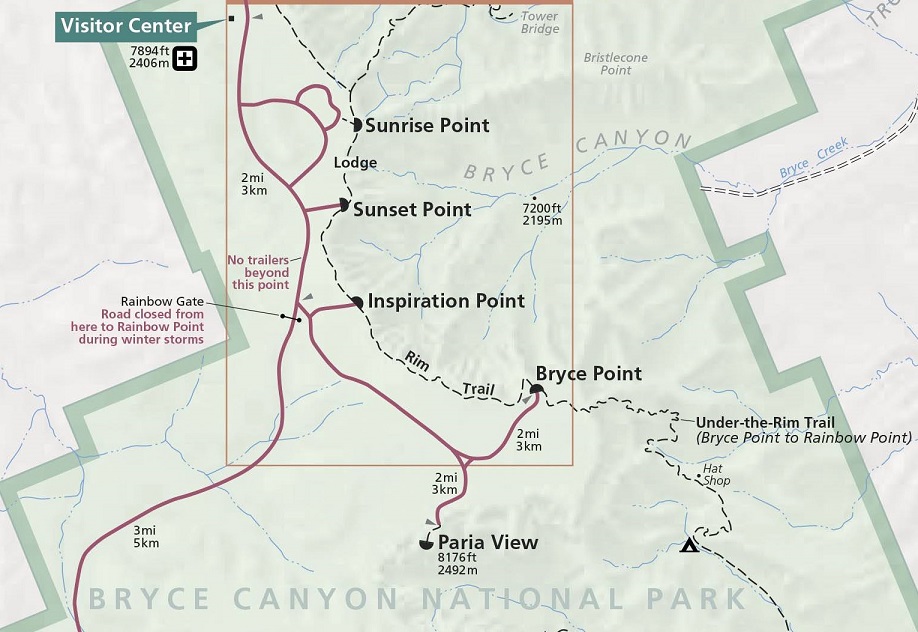
Perhaps every visitor to the park will spend at least some time marvelling at its four main viewpoints, all found within the first few miles of the park: Bryce Point, Inspiration Point, Sunset Point, and Sunrise Point. Between April and October a shuttle service is operated in this area of the park to reduce congestion.
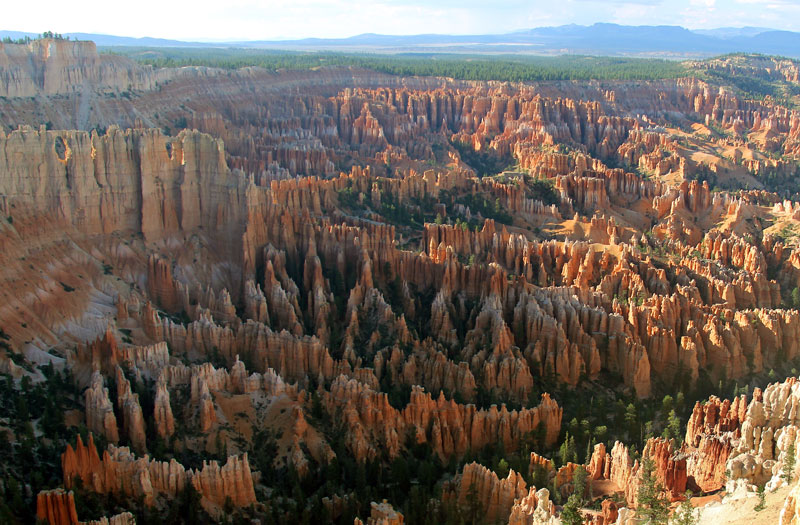
Bryce Canyon has the largest collection of hoodoos in the world, some are up to 200 feet high. Hoodoos are tall skinny spires of rock formed over thousands of years of repeated freezing and thawing of water.
Other viewpoints are found all along the park’s 18-mile main road which travels from park’s only entrance in the north along the plateau rim to its highest elevations in the south (over 9,000 ft / 2,743 m).
Driving through Bryce Canyon will take you approximately 4 hours if you do the full scenic drive and take your time at each stop.
The Bryce Canyon scenic drive includes 13 viewpoints along the 38-mile roundtrip adventure.
BRYCE CANYON MAIN VIEWPOINTS
Sunrise Point
Start your morning at Sunrise Point for one of the most breathtaking views of Bryce Canyon. The viewing point is just off the scenic road, along the canyon rim, about a mile from the visitor center.
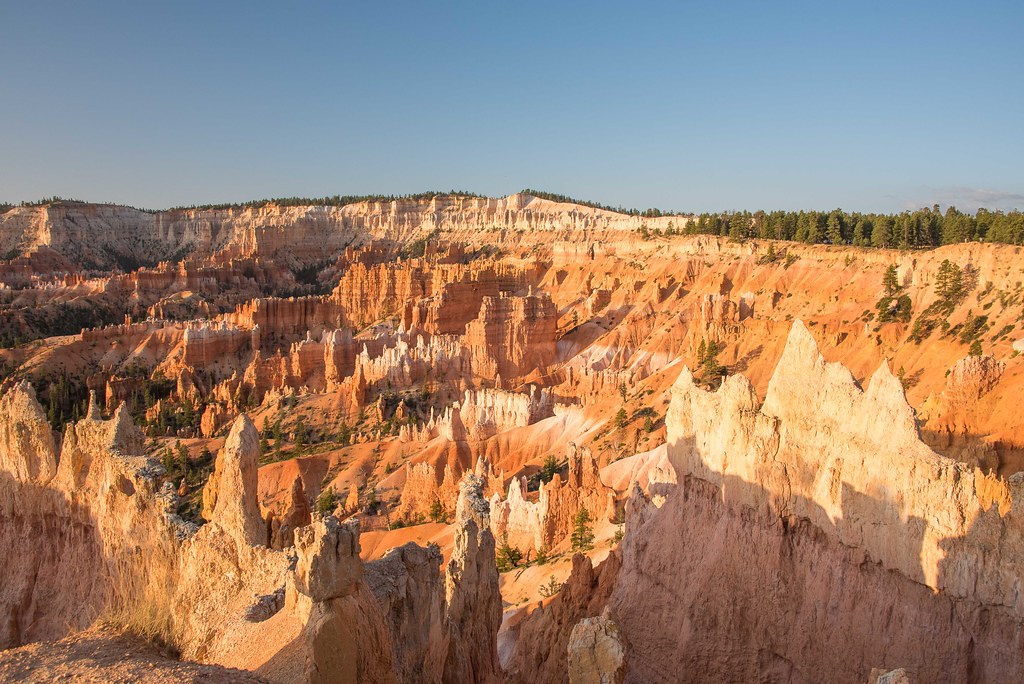
Morning @ Sunrise Point @ Bryce Canyon National Park
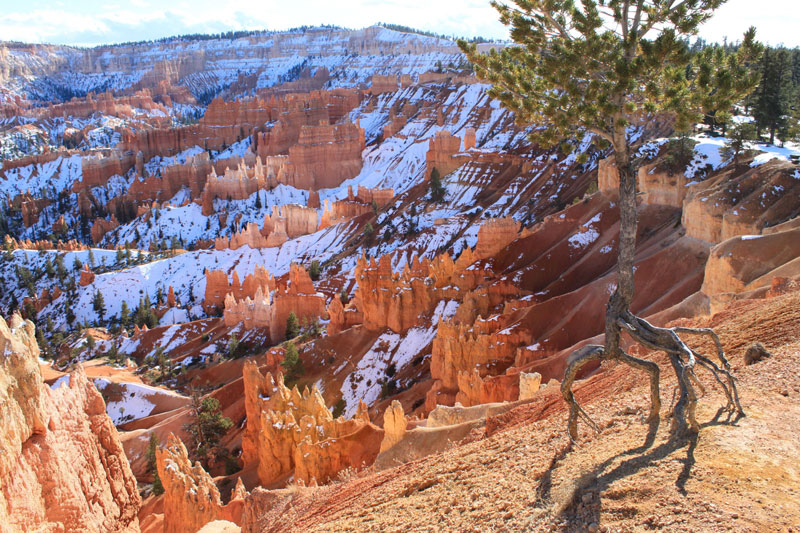
Sunrise Point offers incredibly colorful vistas at sunrise—hence the name—as the sun casts an early morning glow on the red rock hoodoos. Cast your gaze northeast to see the Boat Mesa and Sinking Ship, incredible rock formations set against the majestic Pink Cliffs and the backdrop of the Aquarius Plateau. Boat Mesa is especially notable, rising 8,073 feet above the Fairyland Canyon floor. The Sinking Ship tips in a precarious reminder of 15 million years of tectonic shifts. Also take note of the Limber Pine’s elegant balancing act on exposed roots on the eroding rim. The early morning light is exceptional at Sunrise Point, making it the ideal location for photography or just enjoying dawn’s peace and quiet.
Sunset Point
Sunset Point is a well-visited overlook due to the popular Thor’s Hammer and Silent City you can see from here. The name Sunset Point is deceptive thought because it’s NOT a good location for sunset photography. At this viewpoint, the best Bryce Canyon photos happen at sunrise when the light illuminates the hoodoos.
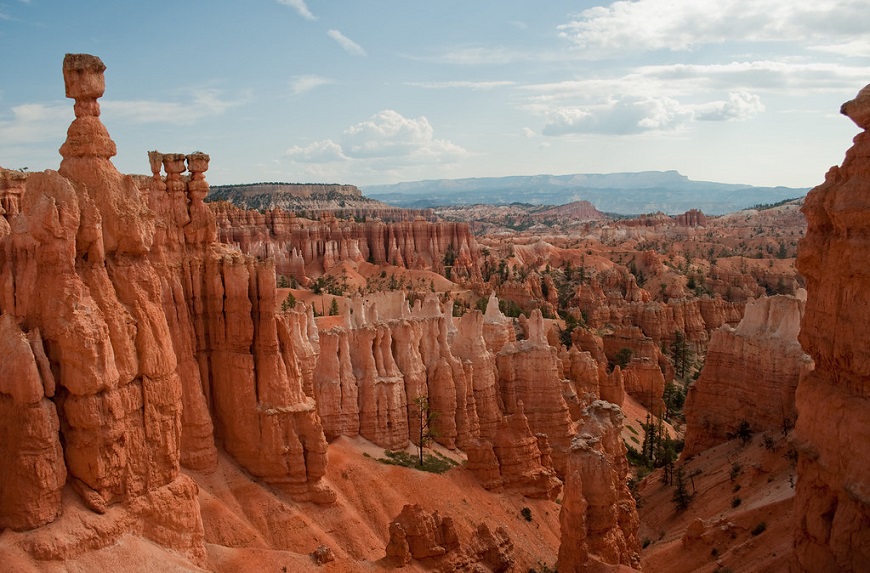
Thor’s Hammer and many formations, below Sunset Point.
Sunset Point is home to some of Bryce Canyon’s most famous hoodoos, including the Silent City, a maze of hoodoos and fins concentrated in a tight formation, and Thor’s Hammer, located just below the overlook on the northern edge. Because Thor’s Hammer stands alone, it’s easy to spot. The colors of the rock at Sunset Point are quite striking, with iron oxide minerals making the bright reds, oranges and yellows stand out.
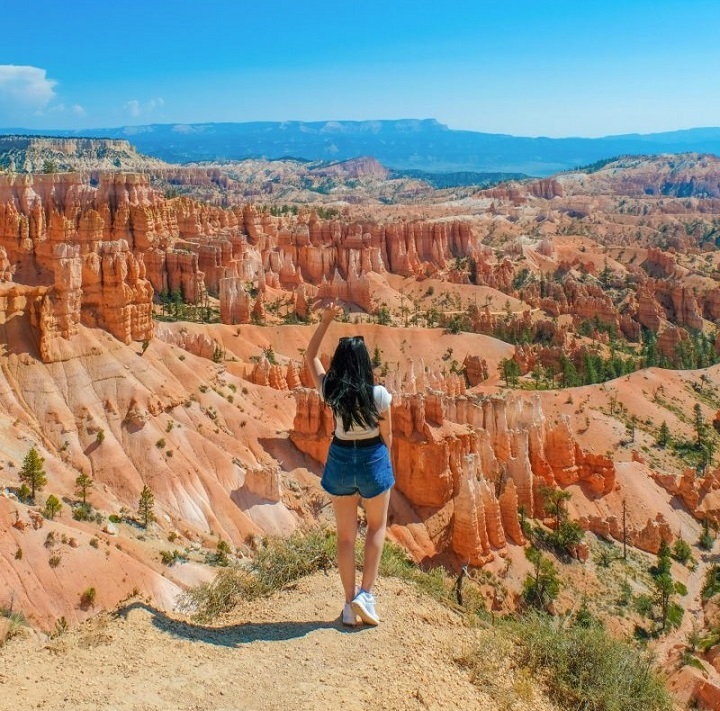
Sunset Poin
Ancient Douglas fir trees accent the landscape, making it a popular spot also for birds and bird watchers. Sunset Point is located about a mile from the Visitor Center between Sunrise Point and Inspiration Point. The Navajo Loop Trail starts here, descending 550 feet into Bryce Canyon.
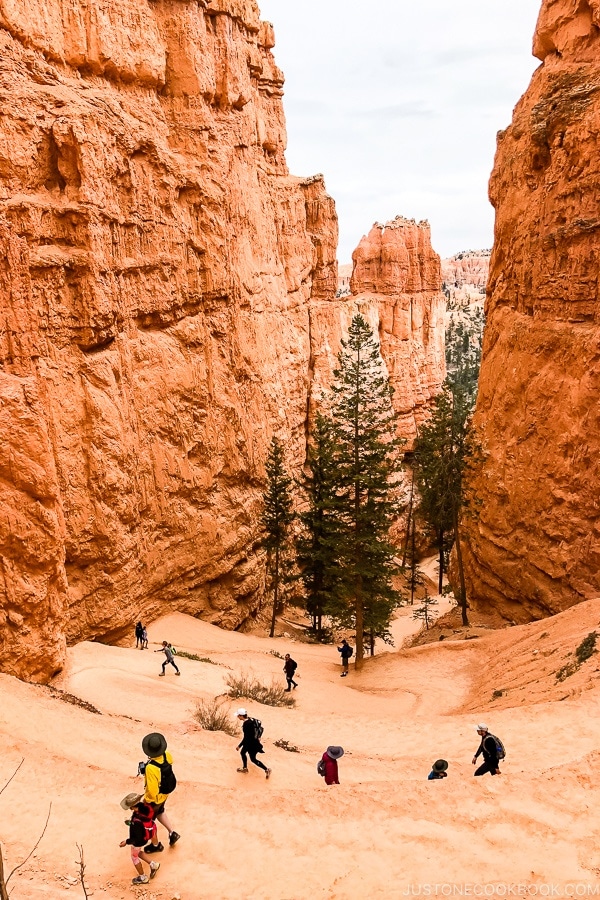
Navajo Loop Switchback
If you park at Sunset Point in Bryce Canyon and hike down the trailhead to Navajo Loop Trail to the switchbacks (around 500 ft), you will have seen the prettiest part of the hike. This area is really gorgeous and you shouldn’t miss it.
The Navajo Loop trail has a steep switchback that sits between two canyons. Both canyon walls are hundreds of feet high.
Inspiration Point
Hop back into your car and drive the short distance to Inspiration Point. Now that’s a lot of hoodoos!
Three-quarters of a mile south of Sunset Point, Inspiration Point beckons Bryce Canyon National Park’s visitors throughout the day. Beautiful from sunrise to sunset, Inspiration Point was named by early Utah settlers, and it’s easy to see why. From here, the view stretches seemingly forever, as light catches the fins, spires, hoodoos and ever-eroding canyon walls. It’s like Bryce Canyon’s main amphitheater is on fire, glowing with reds, oranges, pinks and more. The Claron Formations Pink and White members are clearly evident here, and Boat Mesa is easily viewed. Bristlecone pine trees of mixed ages dot the red rock cliffs and slopes.
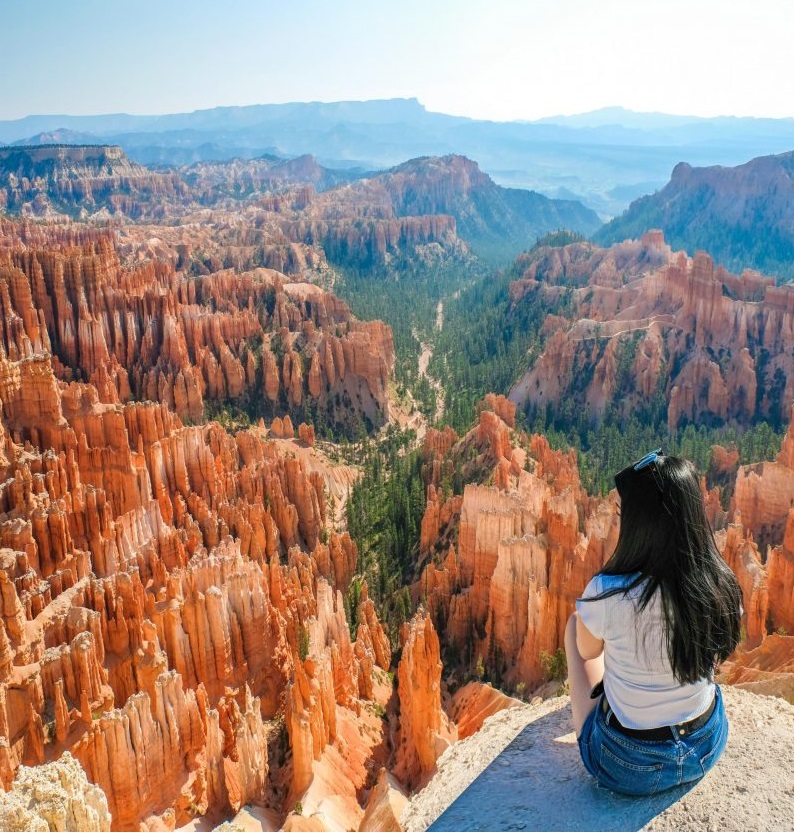
Inspiration Point
Inspiration Point consists of three levels that provide spectacular perspectives of the Bryce Canyon Amphitheater. From its lofty vantage points, visitors look toward the Silent City’s hoodoo forest.
Bryce Point
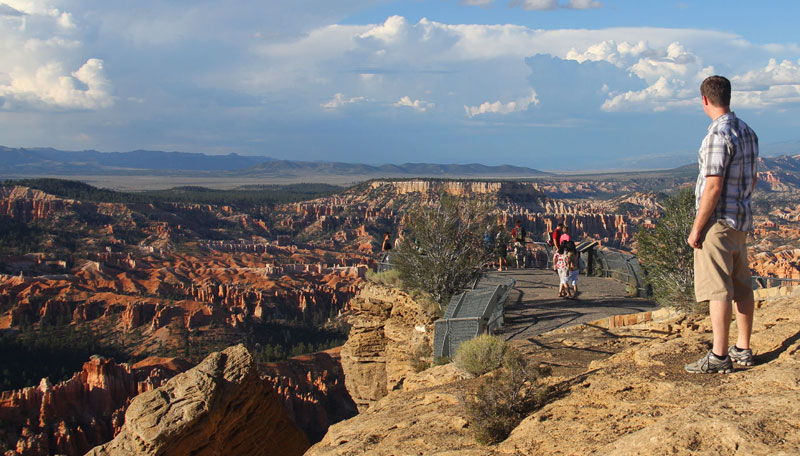
Bryce Point gives visitors fantastic panoramic views and photo opportunities.
Famous for its astonishing sunrise as the sunlight floods the top of the hoodoos with a brilliant burst of light and then works its way down into all but the deepest crevices, this north-facing viewpoint is also beautiful throughout the day. Catch a great view of Boat Mesa and the rich colors of the Claron Formation. Bryce Point is also a popular birding spot; keep an eye out for a rare glimpse of the California condor.
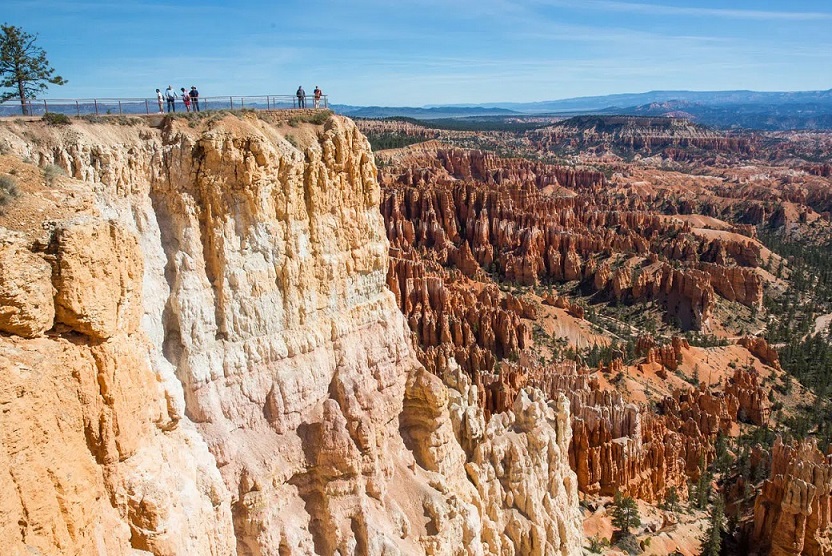
This Bryce Canyon viewpoint is named for Ebenezer Bryce, who settled the area in 1870. Due to its elevation at 8,300 feet, Bryce Point offers one of the most scenic vistas of the hoodoo-filled red rock amphitheater.
Take a driving tour to the south end of the park
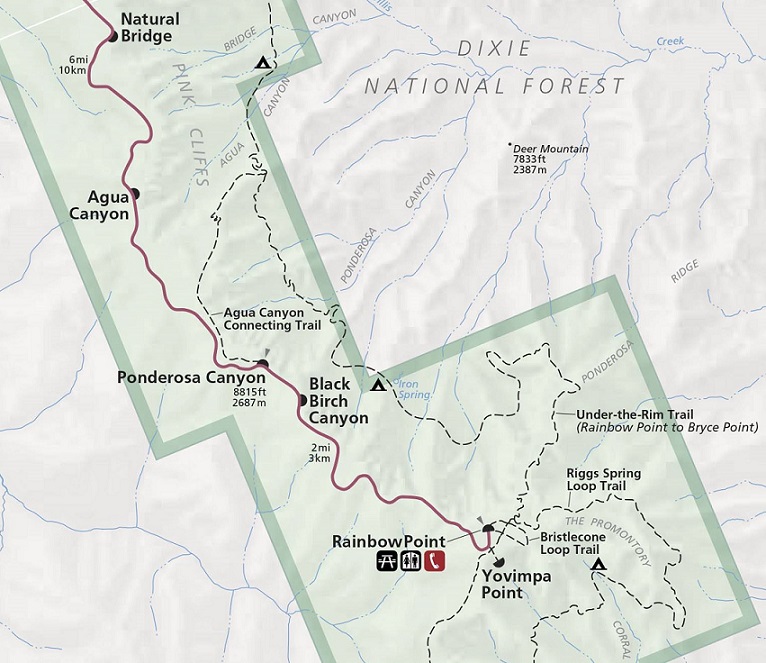
While many of the park’s attractions are north, don’t skip driving the park road to the south. From the park entrance to the end of the road at Rainbow and Yovimpa Points, the main park road is 18 miles. The road beyond the amphitheater is called the Southern Scenic Drive because of the many viewpoints along the way.
Swamp Canyon
This unusual canyon is surrounded by fins and hoodoos on both sides.
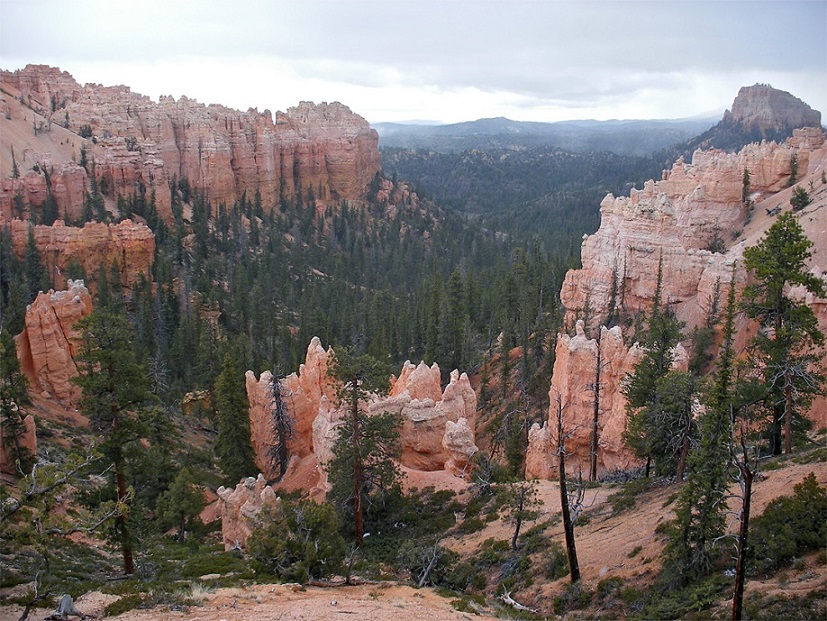
Hoodoos and fir trees along Swamp Canyon
Swamp Canyon is Bryce Canyon National Park’s tiniest overlook and is bounded by fins and hoodoos, formed from collapsed arches. At 7,998 feet elevation, it offers an intimate vantage point for appreciating the scale of these magnificent formations.
The overlook makes the area look sheltered and small, but below is a lush waterland where two tiny creeks and a natural spring provide enough water to upkeep the lavish green surroundings.
Natural Bridge
Known as the Natural Bridge, this natural arch is one of favorite Bryce Canyon photos.
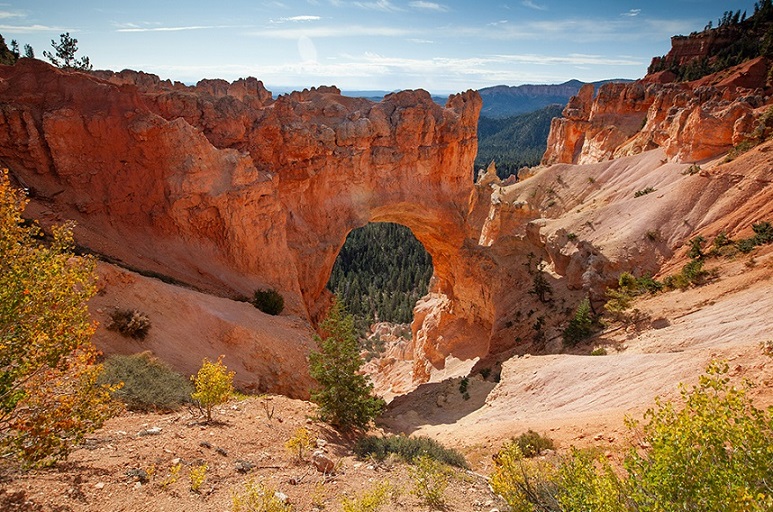
The structure called Natural Bridge is technically an arch. Formed originally as a small ice window in a large prominent fin, the forces of erosion have made Natural Bridge one of the most popular Bryce Canyon views along the scenic drive. You will see similar features within the park as you go on various Bryce Canyon hikes, but none as impressive at nearly 125 feet tall.
Rainbow Points & Yovimpa Points
Located as far south as you can drive in Bryce, this viewpoint is good, but not nearly as great as Inspiration Point or the views from the Rim Trail. To get here, it takes about 20 minutes of driving from Bryce Point.
Rainbow and Yovimpa Points are the highest points, share the same parking lot. From Rainbow Point, the views are to the north and Yovimpa Point views are to the south.
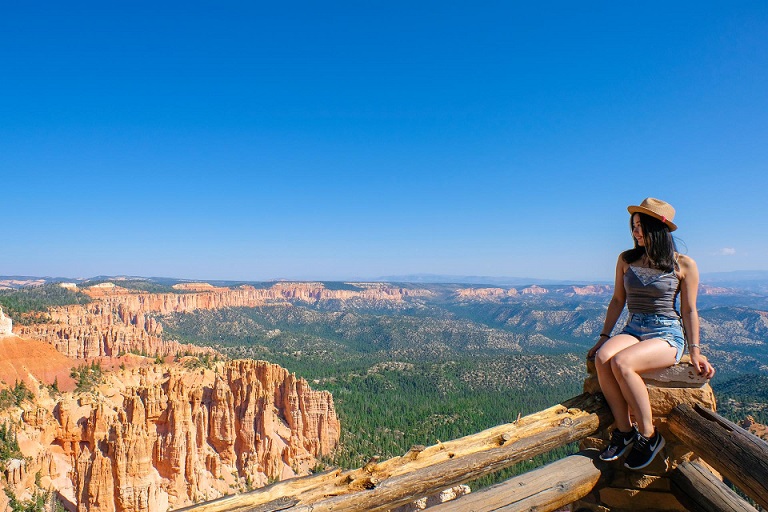
At an elevation of 9,100 feet, Rainbow Point provides expansive views of the whole of Bryce Canyon and beyond. It is at the park’s far southern end, and its views looking north toward the hoodoos are some of the best you’ll see.
SEE THE GRAND STAIRCASE AT YOVIMPA POINT
For a totally different experience, walk from the Rainbow Point parking lot down to Yovimpa Point and look to the south for a clear view of the dazzling sequence of rock layers known as the Grand Staircase. This spectacular showcase of the planet’s natural processes stretches hundreds of miles through Bryce Canyon, Zion National Park, and the Grand Canyon.
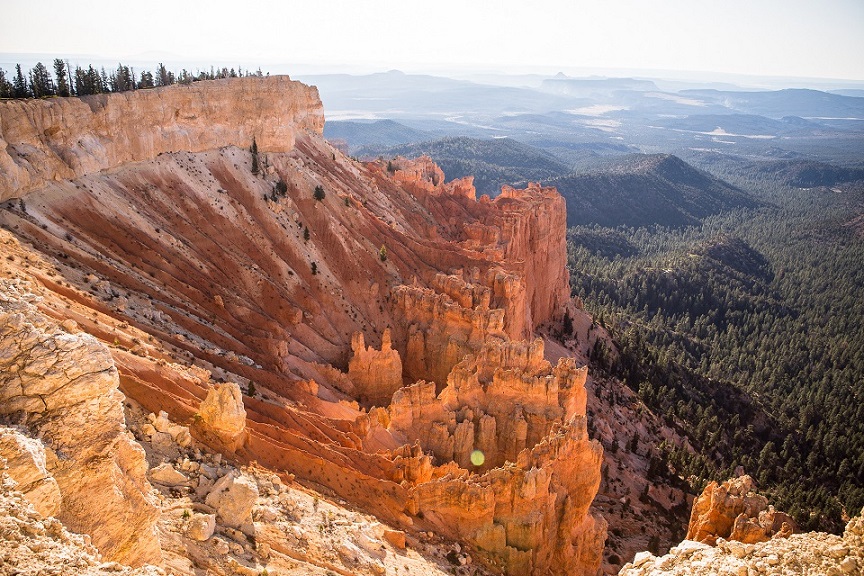
Yovimpa Poin
The layers of rainbow sedimentary rocks of the Grand Staircase are the result of hundreds of millions of years of tectonic activity and weather. You can clearly see five distinctly colored steps: Pink Cliffs, Grey Cliffs, White Cliffs, Vermilion Cliffs, and Chocolate Cliffs.
Bryce Canyon Lodge
After visiting Bryce, we stopped by Bryce Canyon Lodge for a quick lunch and to catch our breath a bit.
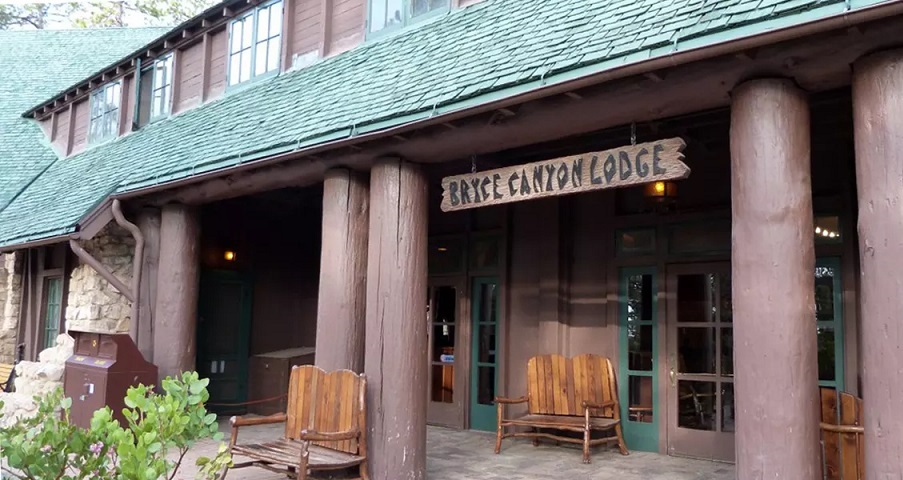
Bryce Canyon Lodge sits a few hundred feet back from the rim of the canyon. It’s a historic lodge that dates back to 1924. With 114 rooms, the lodge has suites, motel-style rooms, and cabins. The lodge and cabins are the work of master architect Gilbert Stanley Underwood and are excellent examples of the type of rustic architecture sometimes called “parkitecture.” Encouraged by the National Park Service and often built by the railroads, these classic park structures evoke the golden era of the national park service.
The food was actually pretty good and decently priced for a national park.
Lunch Menu:
https://www.brycecanyonforever.com/dining
Red Canyon
Red Canyon is the sister canyon to Bryce Canyon. Red Canyon is located along Scenic Byway 12, 15 miles outside of Bryce. This all-American byway is one of the most scenic drives in the southwest. You’ll pass under rock arches spanning across the road that were featured in the Pixar Cars movie.
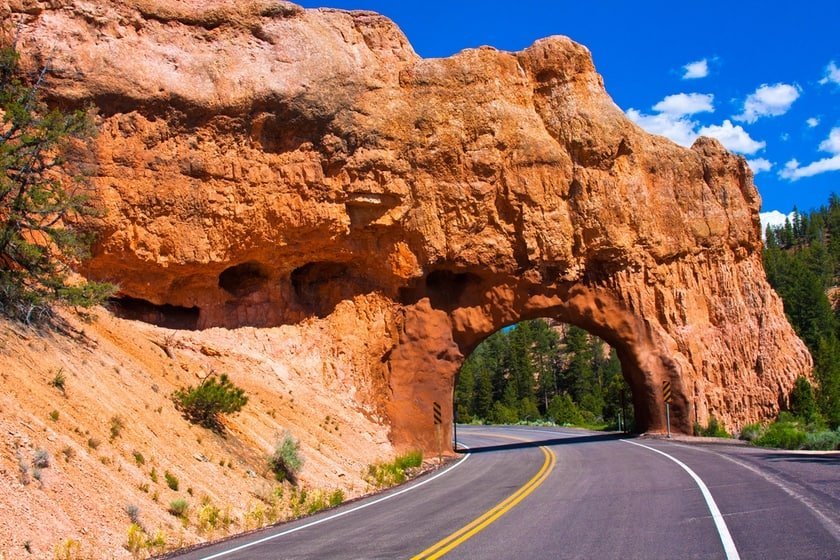
Because Red Canyon is part of Dixie National Forest, rather than a national park or monument, there is no fee to enter the canyon. Your first stop when visiting Red Canyon should be the new visitor center, which was completed in the winter of 2004.
The road through the heart of the Red Canyon is 4 miles long, and most people keep driving without ever stopping, settling for what they can see along the way. For this reason, the clearings on the sides of the road are often deserted or almost deserted, but you can also take advantage of them, in case you want to take some pictures or head on a trail to reach a better vista point.
One of the most characteristic and unforgettable moments of this short scenic road inside the Red Canyon is when you drive under the two red rock tunnels. There could not be a more appropriate entrance to the landscape of pinnacles and rocks with bizarre shapes in Bryce Canyon than this canyon.
 Chú Tiểu Đi Hoang