Croatia & Montenegro – 15 days
with the 4 most famous world heritage sites
Dubrovnik (World Heritage) – Split (World Heritage) – Trogir (World Heritage) – Kotor (World Heritage)
Your itinerary
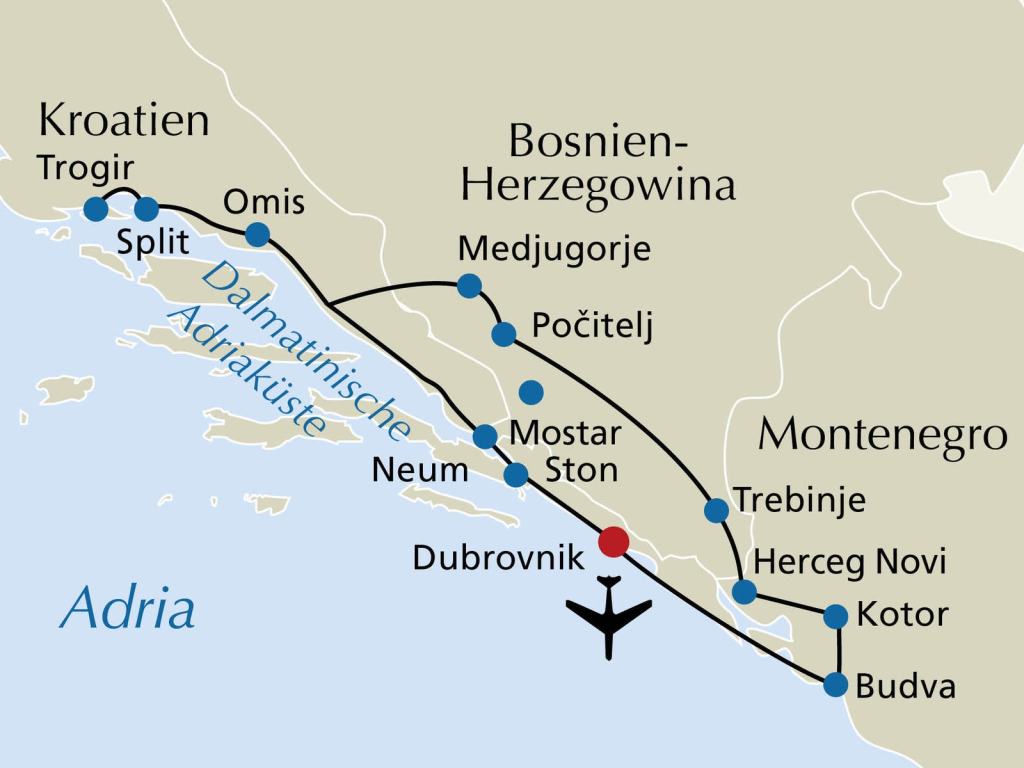
Look forward to an exciting study trip through Croatia, Montenegro and Bosnia-Herzegovina. In addition to breathtaking stretches of coastline along the Adriatic Sea, numerous cultural highlights await you, including 4 World Heritage Sites, such as Split or Dubrovnik.
Day 1: Arrival in Dubrovnik
Flight to Dubrovnik in the heart of Croatia. Our friendly German speaking tour guide welcomes us at the airport. With our modern coach we drive directly to our 4-star hotel in the Dubrovnik area.
Day 2: Dubrovnik (UNESCO World Heritage), Adriatic coast, Ston & Neum
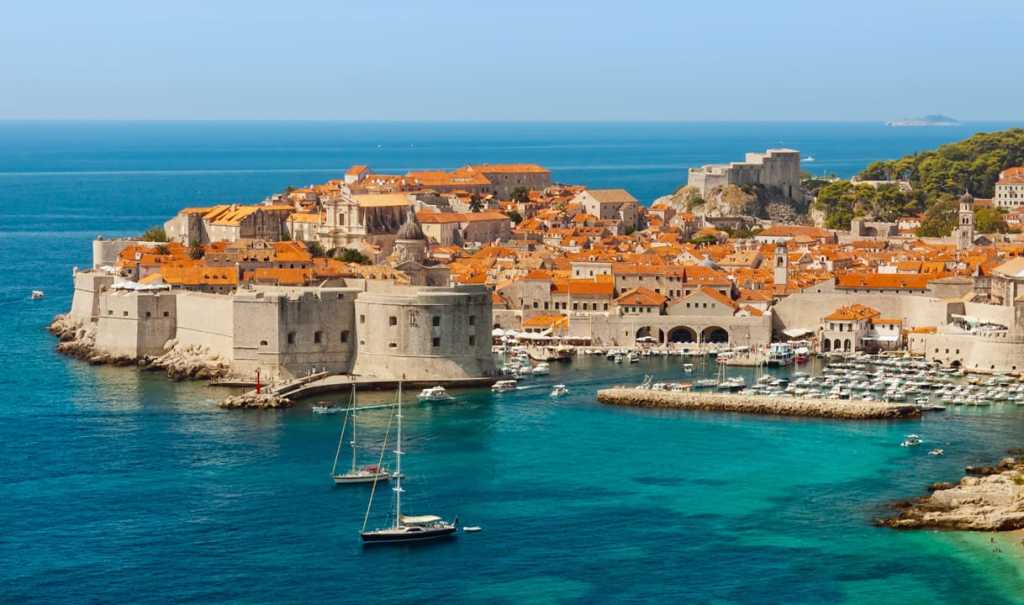
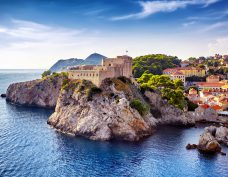
Today we explore the port city of Dubrovnik, the pearl of the Adriatic. The picturesque historic old town lies on a peninsula. We stroll through the narrow streets and marvel at palaces, churches and magnificent houses surrounded by a mighty fortress wall. The old town is a UNESCO World Heritage Site. We drive north along the Adriatic Sea, one of the most beautiful coasts in the world. A special building awaits us in the city of Ston: the 5.5 km long fortress wall, which was built in the 14th century to protect the once valuable salt extraction facilities. After the Great Wall of China, it is the second longest in the world. Not far away is the port city of Neum, a picturesque coastal town. We then drive to our 4-star hotel on the Dalmatian Adriatic coast, where we will spend the next 2 nights.
Day 3: Split, Trogir (2 × UNESCO World Heritage) & Omis
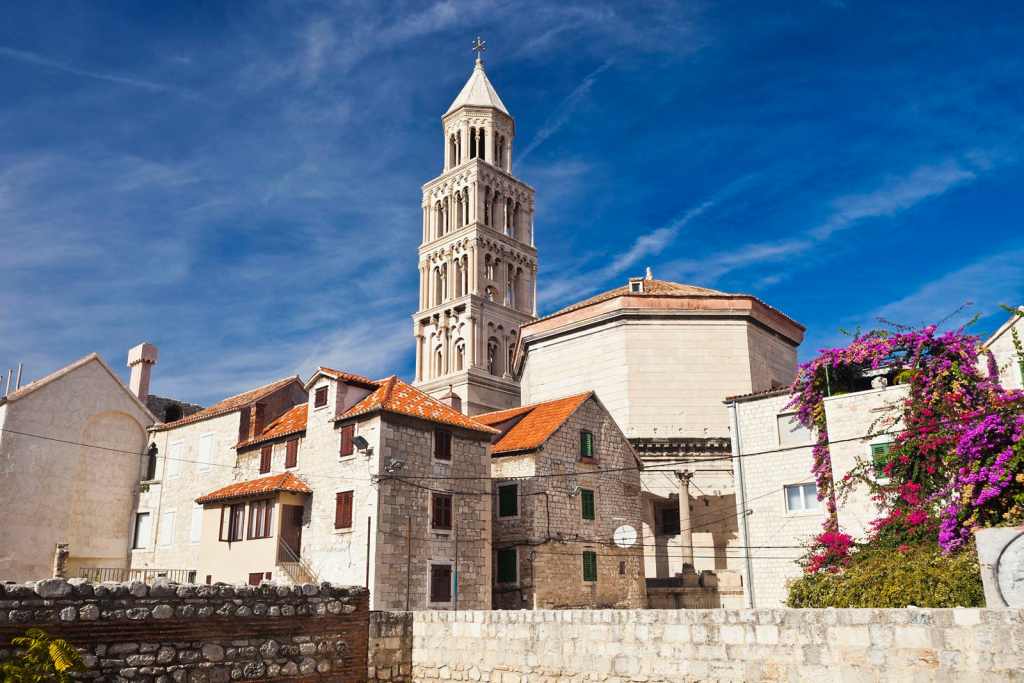
Today we are amazed by 2 UNESCO World Heritage Sites. After a wonderful panoramic drive we reach Split. A tour of the historic city is like a journey back in time to the ancient world. Mighty palaces, columns and squares are reminiscent of Roman rule. Outstanding is the Palace of Diocletian (entrance included), one of the best preserved works of Roman architecture in the world. Rightly a UNESCO World Heritage Site. Only a few kilometers away we visit the old town of Trogir, also a UNESCO World Heritage Site. This is separated from the mainland by a canal and is therefore on a small island. On the way back there is also the small Dalmatian town of Omis, a former pirate settlement.
Day 4: Počitelj & Medjugorje
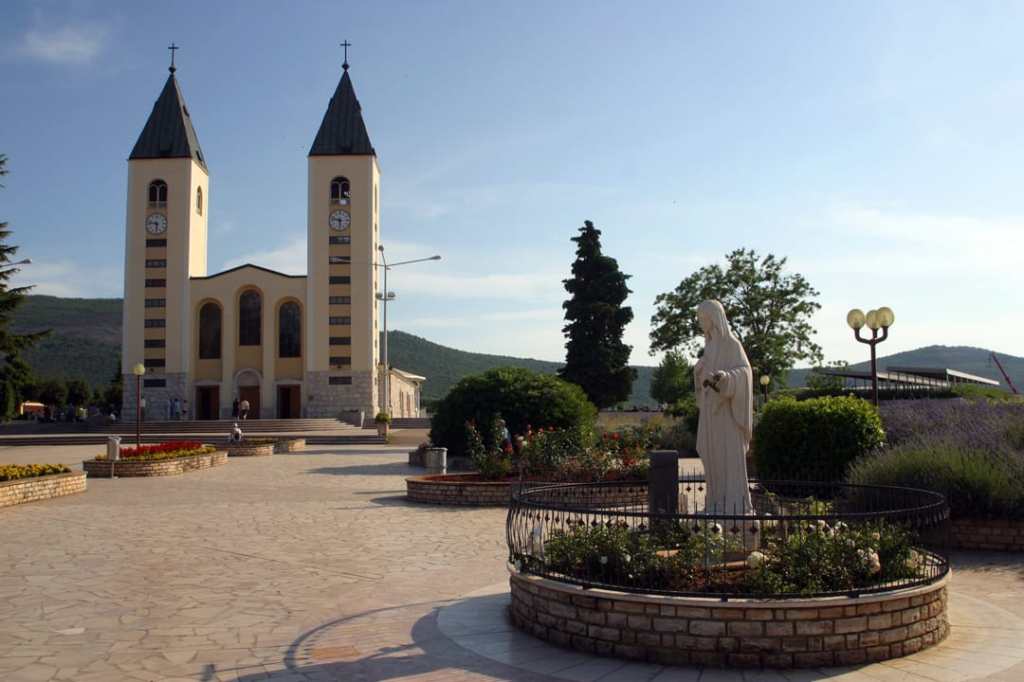
In the morning we continue to Pocitelj, one of the most interesting villages in the Balkans. Due to its historical importance and historical buildings, Pocitelj has already been proposed as a UNESCO World Heritage Site. Our way takes us to Medjugorje, with 2.5 million pilgrims annually one of the most famous Christian pilgrimage sites in the world. There we visit this well-known holy place, where 6 young people the Mother of God appeared. In the afternoon you have free time. The famous Pocitelj “Old Bridge” from Mostar (UNESCO World Heritage) is worthwhile. We spend the night in a 4-star hotel in the Medjugorje area.
Day 5: Trebinje & Herceg Novi
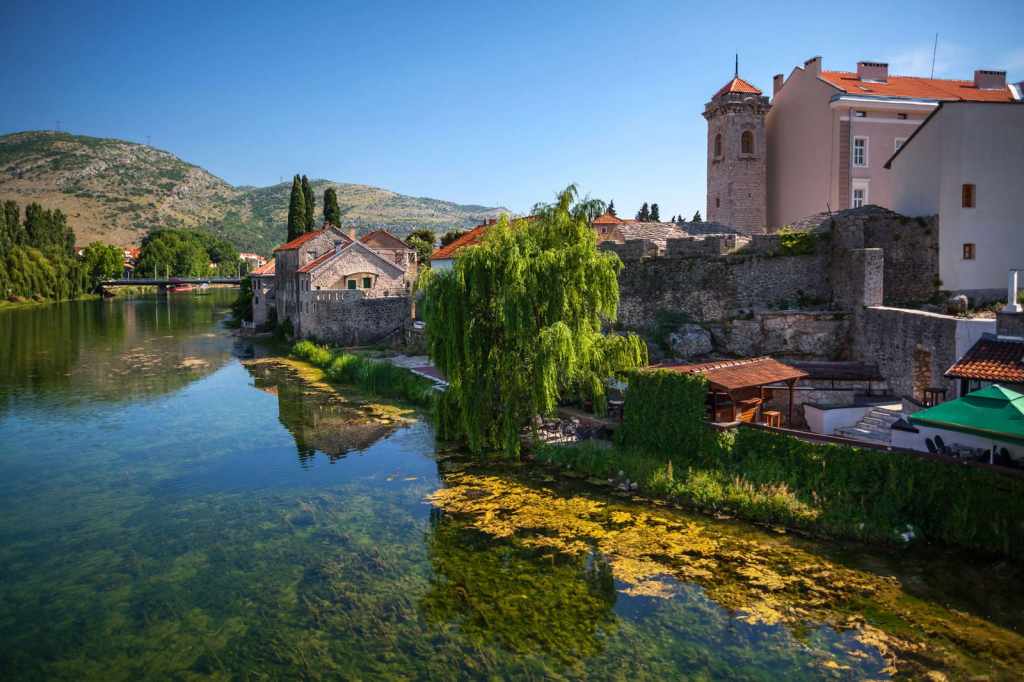
After breakfast we drive to the town of Trebinje, which is picturesquely situated on a river. Particularly worth seeing is the historic city center “Kastel” and the Osman Pasha Mosque, the famous landmark of the city. We also visit a traditional carpet knotting workshop and admire this centuries-old handicraft. In the afternoon we reach one of the most popular vacation spots in Montenegro: Herceg Novi. We also stay here.
Day 6: Kotor (UNESCO World Heritage) & Porto Montenegro
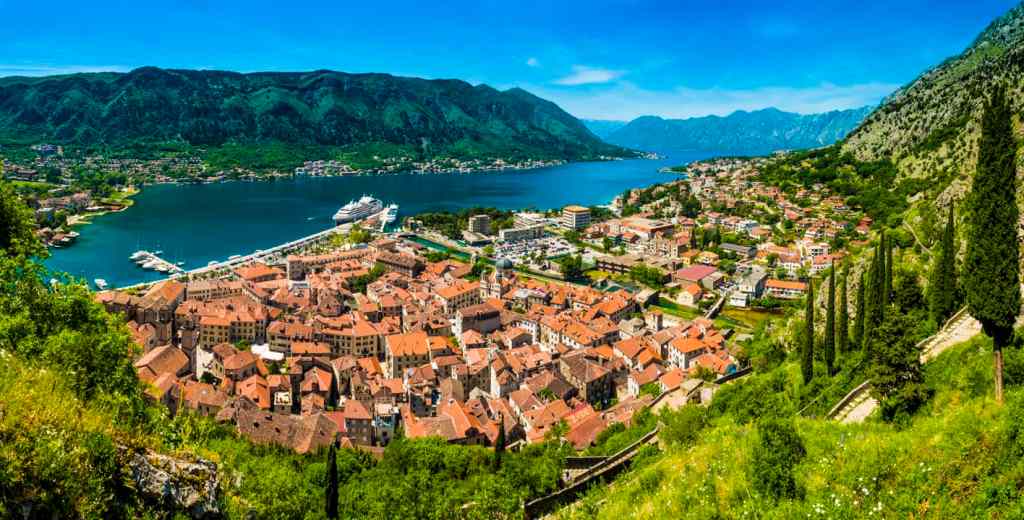
First we drive along the famous Gulf of Kotor before we reach one of the most famous bays in the world, the Bay of Kotor. The sight is simply breathtaking. In the shadow of the mighty St. Ivan mountain we walk through the old town of Kotor and are thrilled by this picturesque UNESCO World Heritage Site. Now the fashionable marina of Porto Montenegro in Tivat is waiting for us. We marvel at the super yachts of the rich and beautiful. We spend the night in the Budva area.
Day 7: Budva & Sveti Stefan
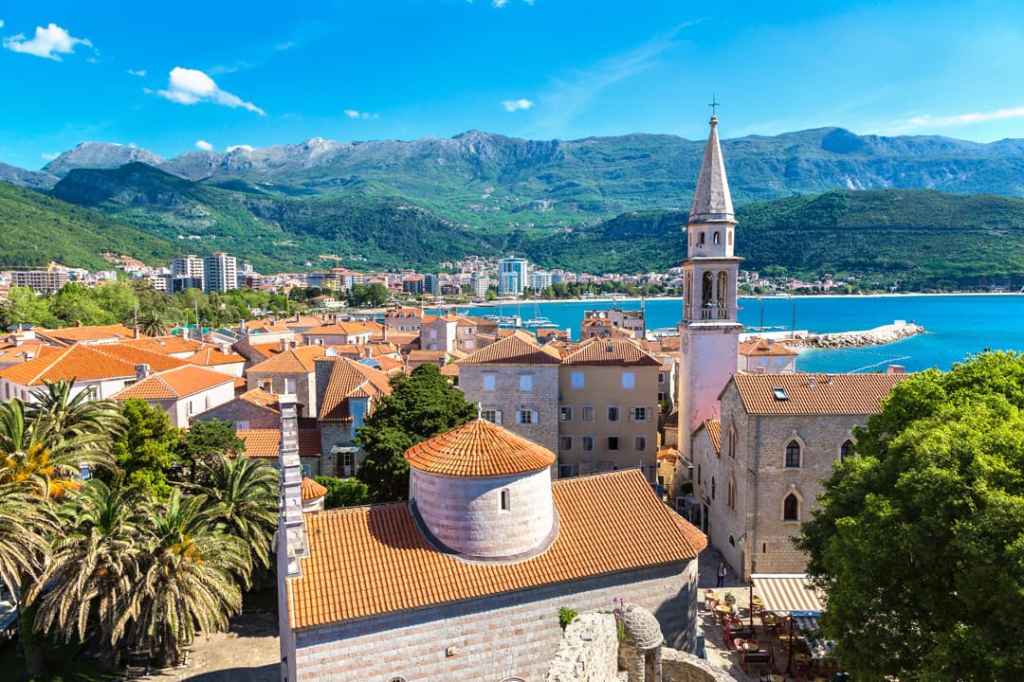
Our day begins with Budva, the next highlight of the trip. With over 2,500 years, the old town is one of the oldest on the Adriatic coast. We stroll through the numerous narrow streets and enjoy the southern flair. Of course we also visit the famous statue of the ballerina – a truly magical place. In the afternoon, the landmark of Montenegro, the famous island of Sveti Stefan, is on the program. From a great viewpoint, we have a fantastic view of this magical island, one of the most sought-after photo opportunities on our trip. The craft tradition then leads us to a jewelry and a leather studio. Here we learn interesting things about the production and have the chance to choose a personal holiday souvenir. We spend the night in the Budva area again.
Day 8 – 15: Relaxation in the beautiful 4-star beach hotel directly on the Adriatic
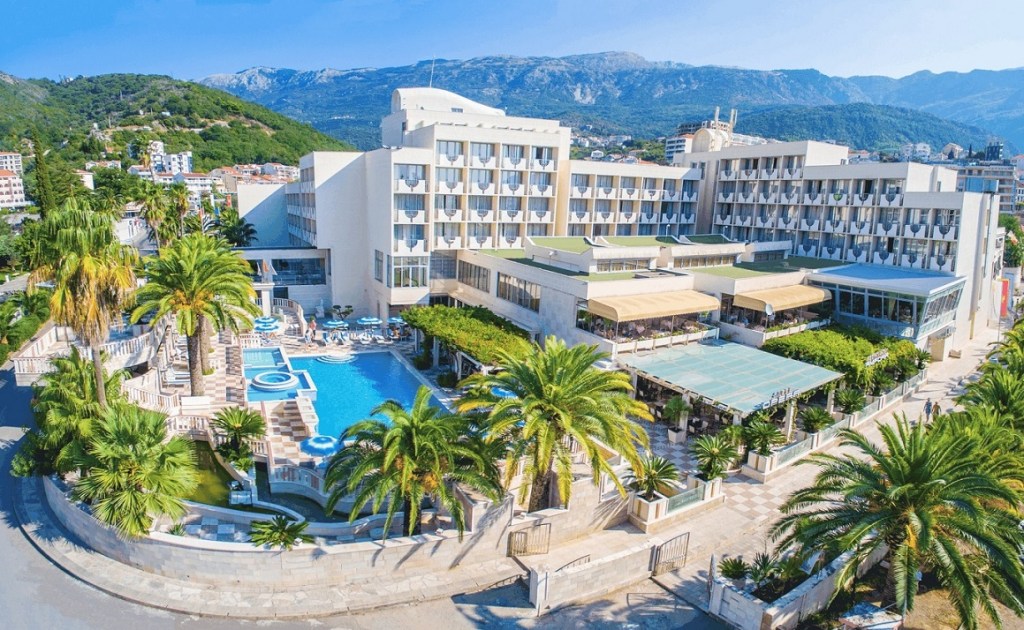
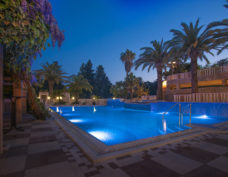
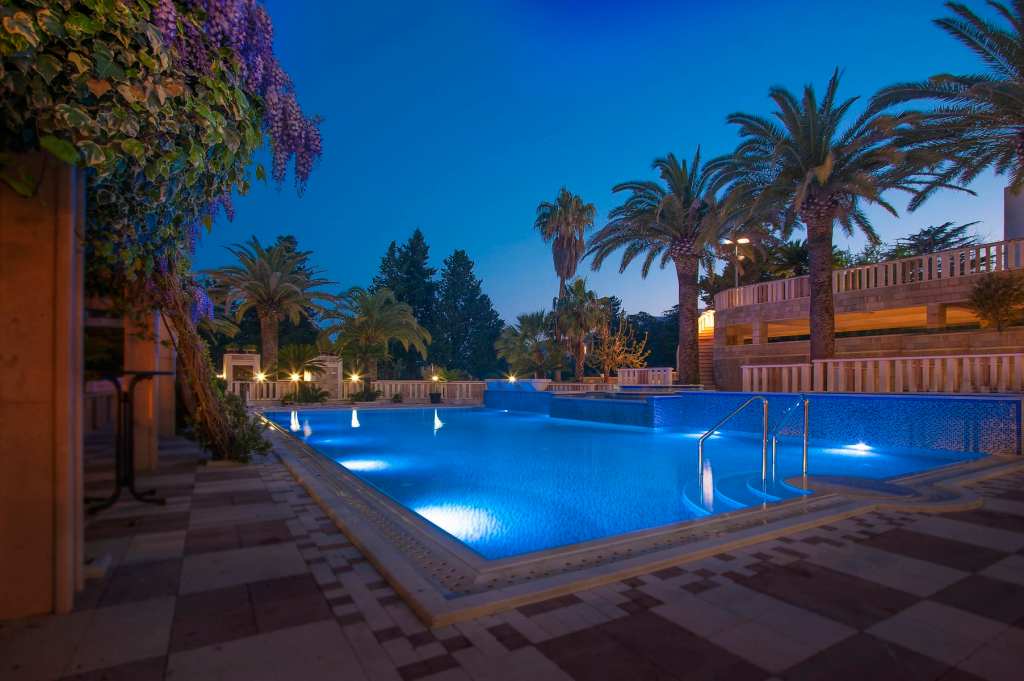
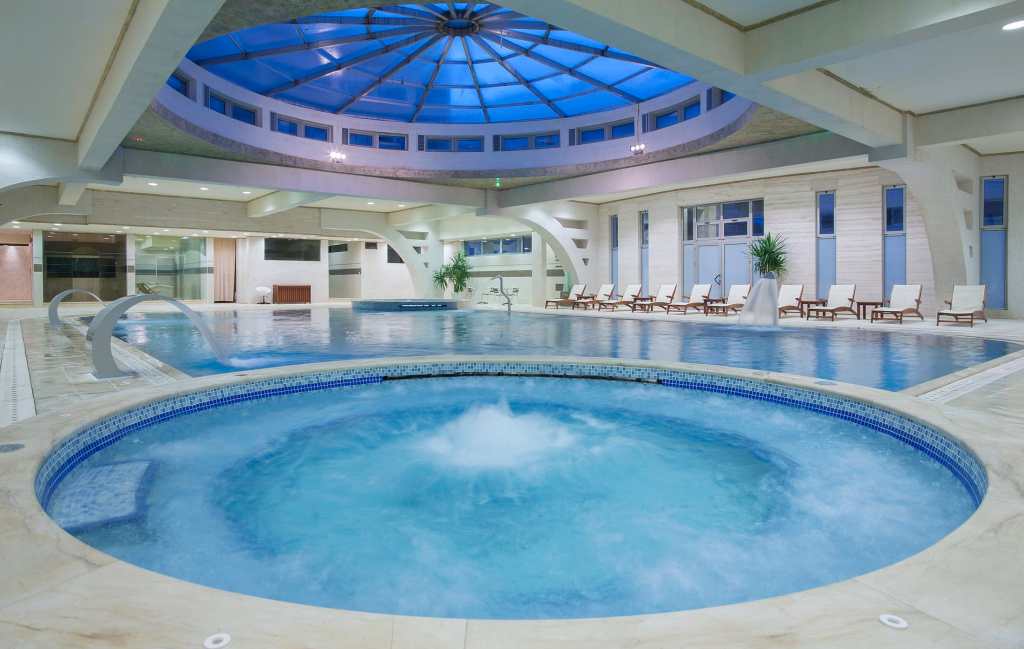
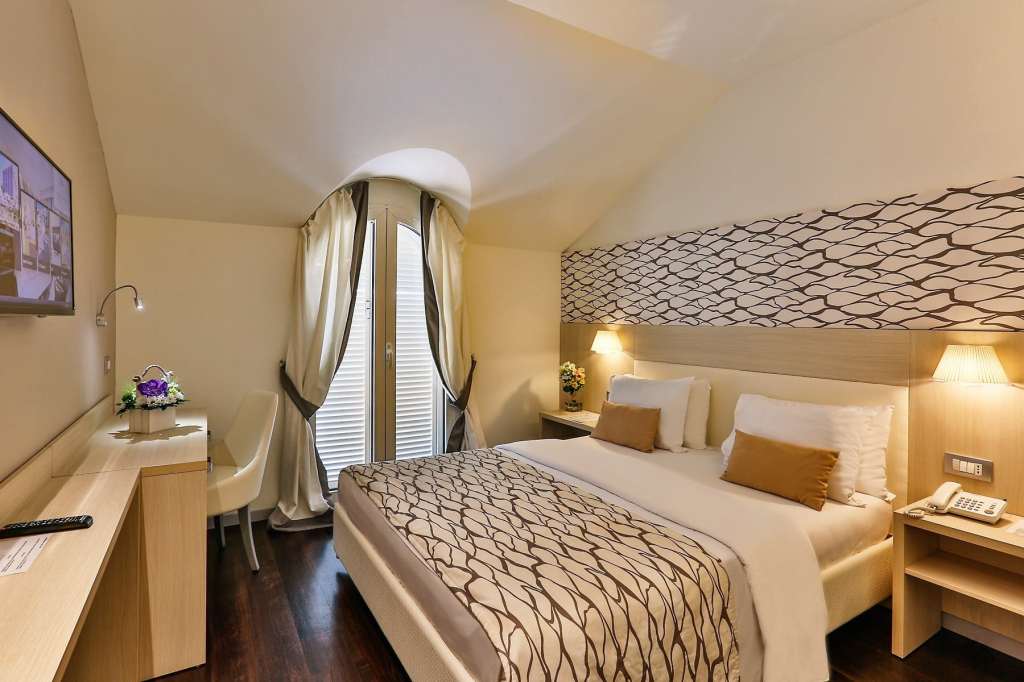
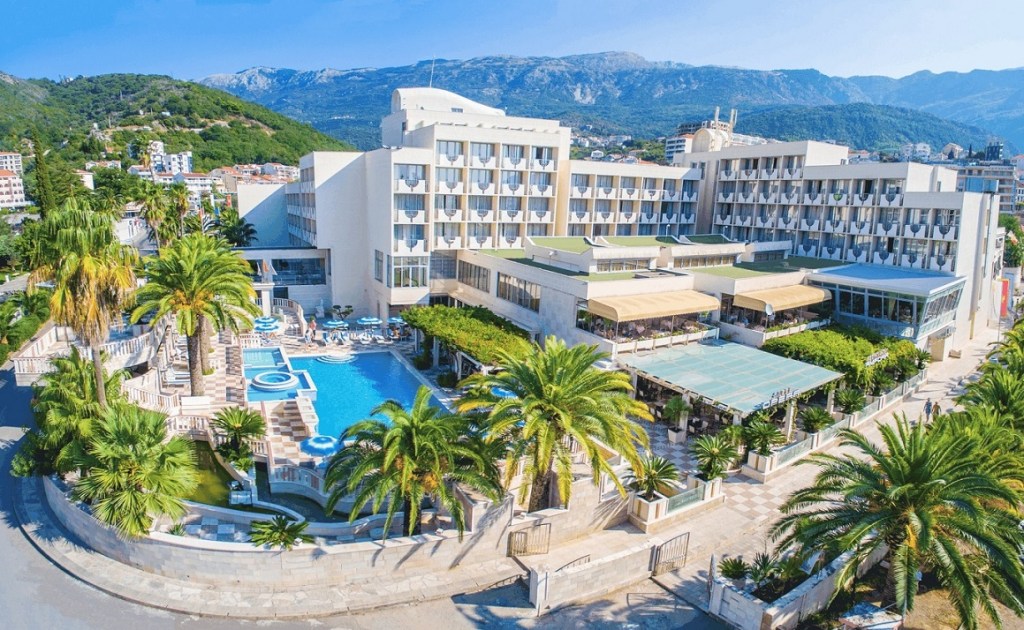
Relax in the coming days in your special 4-star hotel directly on the beach of the beautiful Montenegrin Adriatic coast! The comfortable rooms are modernly equipped with air conditioning, bathroom / toilet and flat-screen TV. Enjoy yourself in the dreamlike wellness area of the hotel. Take a break by the pool or stroll along the beach. For a relaxed journey home we drive to Dubrovnik in the afternoon of the 14th day, where we spend a nice final evening in the 4-star hotel there and spend the night. Full of beautiful memories, we will fly back to Germany on the 15th day.
Your inclusive services

- Round-trip flight with renowned airline 1 to Dubrovnik
including hotel transfers - 7 days 4-star study trip to Croatia & Montenegro with the 4 most famous UNESCO World Heritage Sites
– 7 nights in a double room in selected 4-star hotels (national category)
– 7 × extensive breakfast buffet
– Fascinating tour in a modern, air-conditioned coach with a spectacular excursion program and Entries (according to the program) include:
• Dubrovnik (UNESCO World Heritage)
• Split (UNESCO World Heritage)
• Trogir (UNESCO World Heritage)
• Kotor (UNESCO World Heritage)
• Adriatic Coast
• Ston
• Neum
• Omis
• Počitelj
• Medjugorje
• Trebinje
• Herceg Novi
• Porto Montenegro
• Budva
- 8 days of relaxation in a 4-star beach hotel directly on the Adriatic:
– 7 nights in a double room in a wonderful 4-star hotel (national category)
– 7 × extensive breakfast buffet
– free use of the hotel’s own facilities: attractive outdoor pool, heated indoor pool and wonderful wellness area - Specialistly trained, German speaking tour guide
- 24 hour medical on-call service
1 e.g. Aegean Airlines (best European regional airline 2014 – 2017 according to Sky Trax World Airline Award), Freebird Airlines (well-known charter airline)
Your additional services
Indulgence Package:
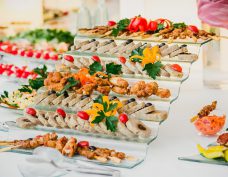
The package includes comfortable half board, ie daily rich buffet in the evening with international specialties during the 7-day study trip: only € 138 pp
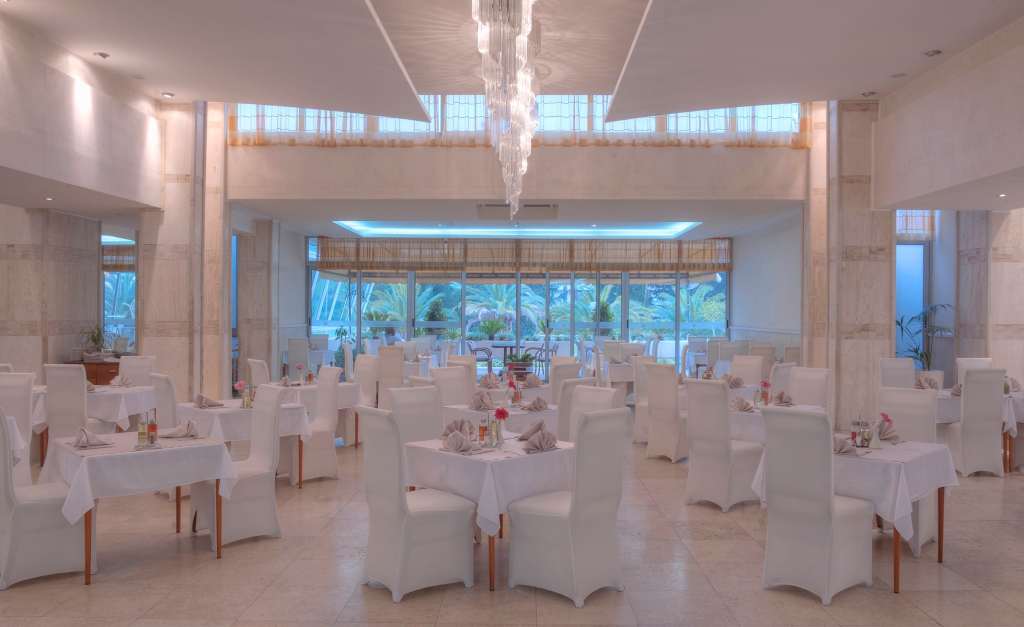
Our 4-star study travel hotels!
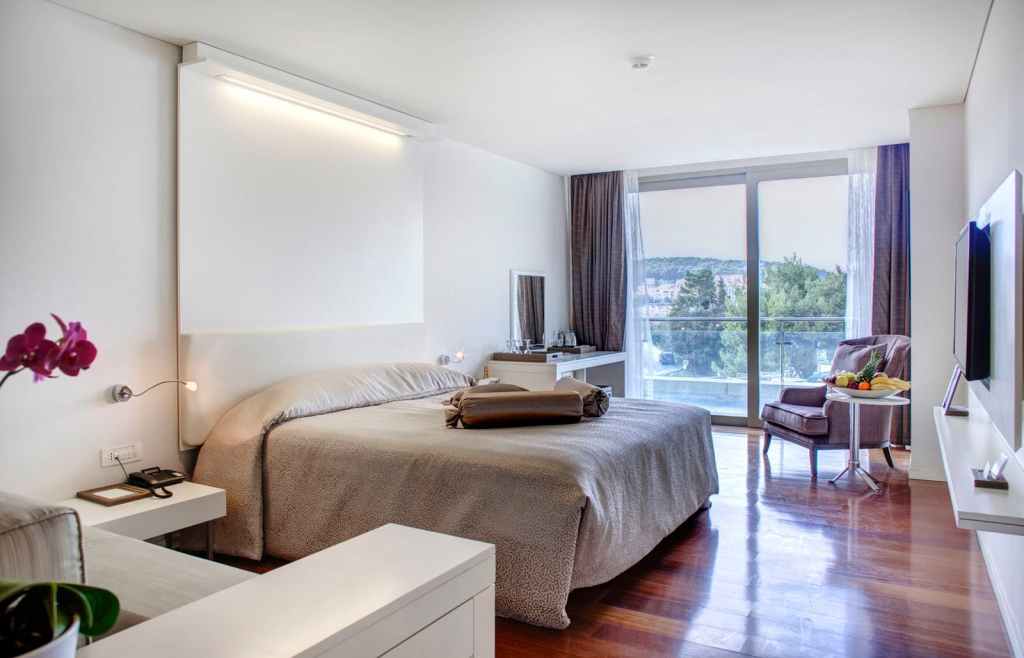
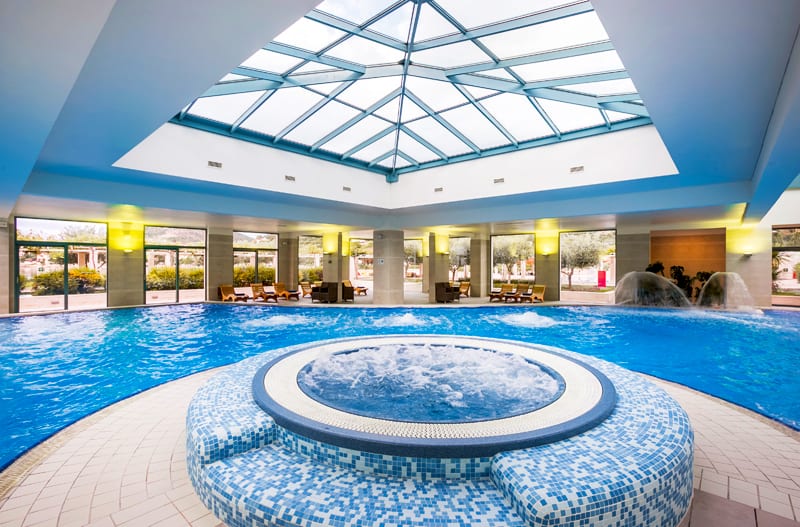
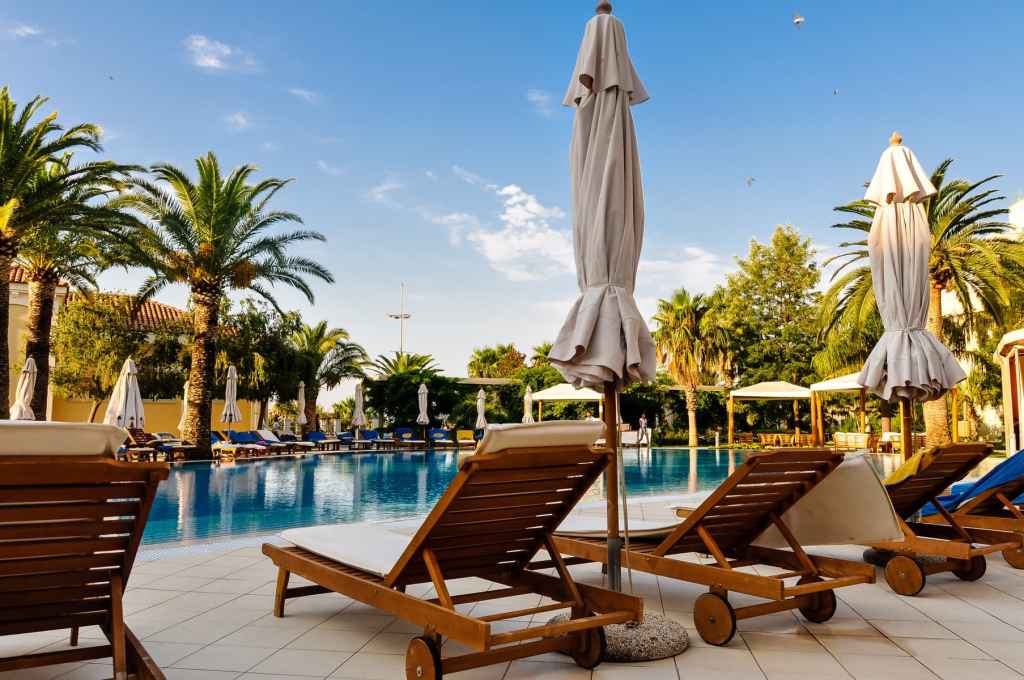
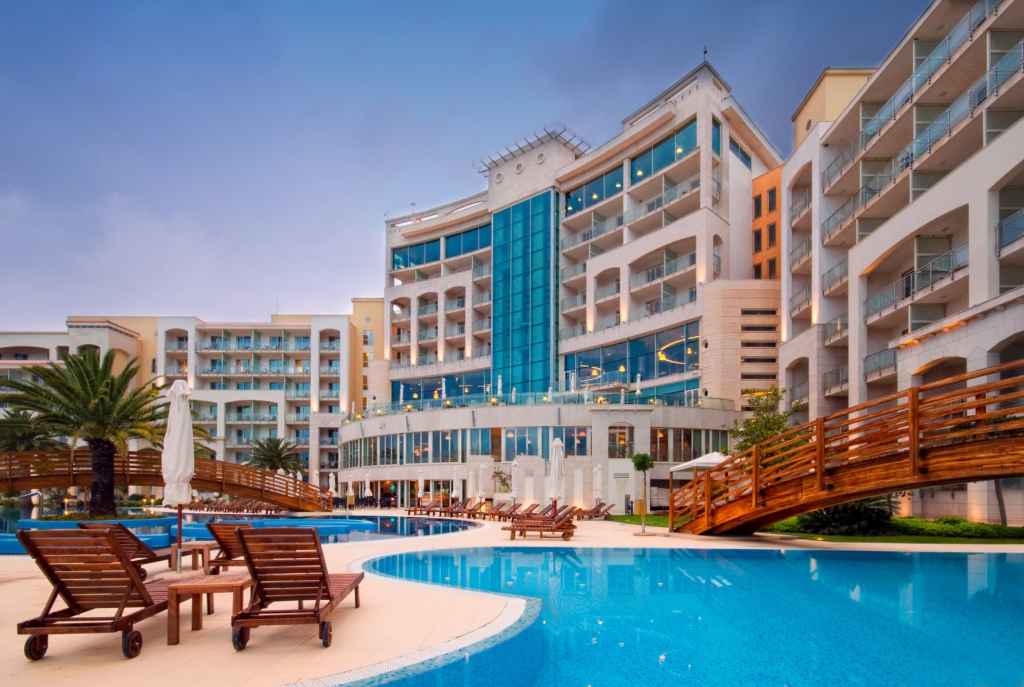
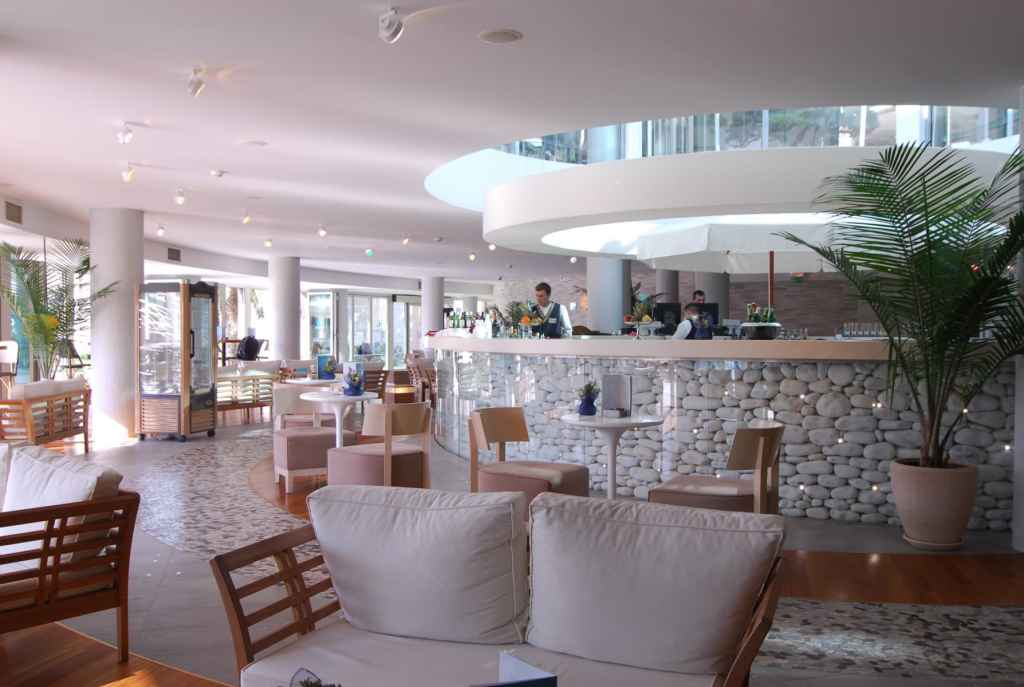
8 days of relaxation in a 4-star beach hotel right on the Adriatic!
Country information Croatia
Comparison of maximum temperatures
| Jan | Feb | Mar | Apr | May | Jun | Jul | Aug | Sep | Oct | Nov | Dec | |
|---|---|---|---|---|---|---|---|---|---|---|---|---|
| Zagreb | 11 | 11 | 14 | 18 | 20 | 25 | 26 | 26 | 24 | 20 | 15 | 11 |
| Berlin | 2 | 3 | 7 | 12 | 18 | 22 | 24 | 23 | 19 | 14 | 7 | 3 |
Government:
Croatia: Parliamentary democracy
Montenegro: Republic of
Bosnia-Herzegovina: Democratic state with two largely autonomous entities: Federation of Bosnia and Herzegovina (FBiH) and Republika Srpska (RS)
Capital:
Croatia: Zagreb
Montenegro: Podgorica
Bosnia-Herzegovina: Sarajevo
Religion:
Croatia: 86% Catholic, 4% Serbian Orthodox, 1% Muslim, 0.3% Evangelical, 0.01% Jewish
Montenegro: 72% Serbian Orthodox, 3.5% Catholic, 16% Muslim
Bosnia-Herzegovina: 50, 7% Muslim, 30.7% Serbian Orthodox, 15.2% Catholic
Language:
Croatia: Croatian; in areas with strong ethnic minorities also in official use: Serbian, Italian, Hungarian
Montenegro: Montenegrin (mostly Latin script, but Cyrillic is still common). Albanian is the official language of instruction in schools in the predominant settlement area of this population group. Students can choose between Montenegrin and Albanian.
Bosnia-Herzegovina: Bosnian, Croatian with the Latin alphabet and Serbian with the Cyrillic alphabet.
Climate:
Mediterranean on the Adriatic coast, temperate continental inland
local time:
Central European Time (CET) applies with the change from summer to winter time. So there is no time difference to Germany all year round.
Electricity:
230 V, 50 Hz. An adapter is not required.
Currency:
Croatia: The currency unit is the Croatian kuna (HRK). 1 kuna = 100 lipa. Course (05.07.2018): 1 EUR = 7.38 HRK; 1 HRK = 0.14 EUR.
Montenegro: Montenegro belongs to the European monetary union; The currency is therefore the euro.
Bosnia-Herzegovina: The currency unit is the convertible mark (BAM). 1 mark = 100 fening. Course (05.07.2018): 1 EUR = 1.96 BAM; 1 BAM = EUR 0.5
Banks / credit cards:
Croatia:
Credit cards are accepted in most hotels, restaurants, petrol stations and shops. Cash withdrawals are possible at most ATMs with the EC Maestro card or credit card. In many places, the calculation is made in euros, but is to be paid in kuna. Currency exchange is possible in banks (closed on Saturday and Sunday) and in the many exchange offices.
Montenegro:
Major credit cards are accepted across the country. ATMs are common. The acceptance of V-Pay and Maestro bank cards is limited. These can only be used to withdraw cash from a few ATMs, but not for general payment transactions.
Bosnia Herzegovina:
Cash can be withdrawn from the machine using a credit card and PIN. Credit cards are increasingly accepted in hotels, restaurants and shops, however cash payment is recommended. For smooth payment transactions, it is advisable to carry banknotes of smaller denominations. Public institutions (e.g. post office) only accept payments in BAM.
To phone:
The area code for long-distance calls from Germany to Croatia is 00385, to Montenegro 00382 and to Bosnia-Herzegovina 00387. For calls to Germany, dial 0049. The 0 before the area code is omitted.
Entry requirements for German citizens:
Entry for German citizens is possible with the following documents:
| Travel documents adults / adolescents | Entry possible / conditions |
|---|---|
| passport | Yes |
| temporary passport | Yes |
| identity card | Yes |
| provisional identity card | Yes (Croatia) No (Montenegro & Bosnia-Herzegovina) |
Notes:
Croatia:
Documents must be valid for the length of stay.
Montenegro:
Documents must be valid for at least 3 months upon entry. Entry is free of visas for up to 90 days. Persons who are not only German nationals but also have Montenegrin citizenship are regarded by the Montenegrin authorities only as their own citizens and are obliged to use Montenegrin travel documents when entering and leaving the country.
Bosnia-Herzegovina:
Documents must be valid for at least 3 months after departure. Attempting to travel with documents that are not valid or accepted can result in high fines.
Entry with a travel document that has been reported as stolen / lost and retrieved is strongly discouraged. Even if the search for this document has been lifted, there is no guarantee, even after several years, that this information is also available at the border inspection posts. This leads to the refusal of entry and the obligation to return immediately, the German embassy cannot exert any influence. You can only obtain legally binding information and / or information about the entry requirements beyond this information directly from the embassy or one of the consulates general of your target country.
Citizens of other countries are advised to inquire about the entry requirements applicable to them at the respective embassy. You are responsible for applying for and showing any visas that may be required. RSD assumes no liability if you fail to do so. Please note that entry depends on the approval of the immigration authority.
Customs regulations:
Croatia:
There are upper limits for goods for personal use, within which no customs duties are due and which do not have to be declared at customs. The exact quantities can be obtained from the Croatian customs administration (https://carina.gov.hr/). The value of the goods to be imported may not exceed EUR 430 per person in aviation. Cash and checks must be registered in writing from an amount of EUR 10,000 (or equivalent). The import and transit of objects that are suitable for an attack, such as pepper spray, knives must be indicated when crossing the border. Violators are punished with high fines.
Montenegro:
The import and export of foreign exchange is permitted up to an amount equivalent to EUR 10,000. Goods for personal use can be temporarily imported duty-free, but must be exported again. Certain items (cameras, laptops, etc.) have numerical restrictions. The following goods are subject to duty-free import restrictions: alcoholic beverages (2l wine or 1l spirits over 22%), tobacco products (200 cigarettes or 50 cigars or 250 g smoking tobacco), perfume or eau de toilette (50 grams).
Bosnia-Herzegovina:
Foreign currencies can be declared, but this is not expressly required. Gun owners are rejected at the border. The same regulations apply to the import of cigarettes and alcohol as in the EU countries.
You can obtain further customs information on the import of goods from the embassy of the respective target country. Only there can you be given legally binding information.
You can view the customs regulations for Germany on the website of the German customs office www.zoll.de or inquire by phone.
Country-specific safety instructions:
Small crime tends to be lower in cities than in some other European metropolises. Nevertheless, tourists should also exercise the usual care here. European driver’s licenses and travel documents as well as travel documents with European residence permits are coveted stolen goods.
Special criminal law provisions:
Croatia: There are no special indications.
Montenegro: Sexual acts on minors have been punishable since 01/01/2006. The purchase, sale or possession of drugs is punished severely. This also applies to smaller quantities intended exclusively for personal use.
Bosnia-Herzegovina: Photography is prohibited for certain buildings and facilities, which is indicated by appropriate signs (including the U.S. Embassy in Sarajevo). Failure to do so will result in a fine.
Medical information:
The Federal Foreign Office recommends vaccination against tetanus, diphtheria and hepatitis A. In some countries, tick bites can transmit early summer meningoencephalitis (TBE), Lyme disease or tick bite fever. Therefore, you should inform yourself about possible vaccinations before the trip and how appropriate diseases can be avoided or recognized quickly. Hygienic eating and drinking and mosquito repellent can prevent diarrhea and other infectious diseases.
A guarantee for the correctness and completeness of the medical information as well as a liability for possible damage cannot be assumed. You stay responsible for your healthy
Medical supplies:
Croatia:
Acute medical treatment is possible on presentation of the European health insurance card from a German statutory health insurance company. Additional payments may have to be made. In individual cases, prompt payment of the treatment costs is required; in such cases it is advisable to have a detailed invoice issued. Repatriation costs are not covered by the statutory health insurance funds; It is therefore advisable to take out private travel health insurance. In addition to resident doctors, health centers exist in many places (“Dom Zdravlja”). Most polyclinics are private institutions. If necessary, the embassy can provide you with a list of German-speaking doctors.
Montenegro:
Medical care according to German standards is not always guaranteed. Hospitals do not always have adequate equipment and are sometimes unable to provide adequate medical care for patients with certain clinical pictures. Hygiene is generally not sufficient.
Bosnia-Herzegovina:
Medical care in the country is often problematic in many ways. There are few German / English speaking doctors, especially outside the big cities.
It is recommended that foreign health insurance be taken out with the option of repatriation to Germany. An individual first aid kit should be taken with you.
The customer must ensure that his physical and mental condition is compatible with the selected trip. He has to inquire about the physical mobility and mental autonomy associated with this trip.
All information without guarantee / status: October 2019
 Chú Tiểu Đi Hoang